JackHitsBack

Category: Commercial Truck / Car

  • Truck Underride: The Deadly Gap a Missing Guard Leaves Now

    Truck Underride: The Deadly Gap a Missing Guard Leaves Now

    Truck underride: the short answer

    A truck underride crash happens when a car slides under the back or side of a trailer, so the trailer hits the windshield and roof instead of the bumper. Federal rules require most big trailers to carry a rear impact guard built to a federal safety standard. 49 C.F.R. § 393.86(a)(1). A guard that is missing, bent, or too high off the ground is one of the first things to check after a truck underride wreck.

    A truck underride wreck is one of the worst kinds of crashes on a Texas freeway. I’ll use I-45, the North Freeway in Houston, as the example, since 18-wheelers share it with commuters every day. But the rules below are federal and statewide. They work the same way on I-10 in Katy or a farm road in the Panhandle.
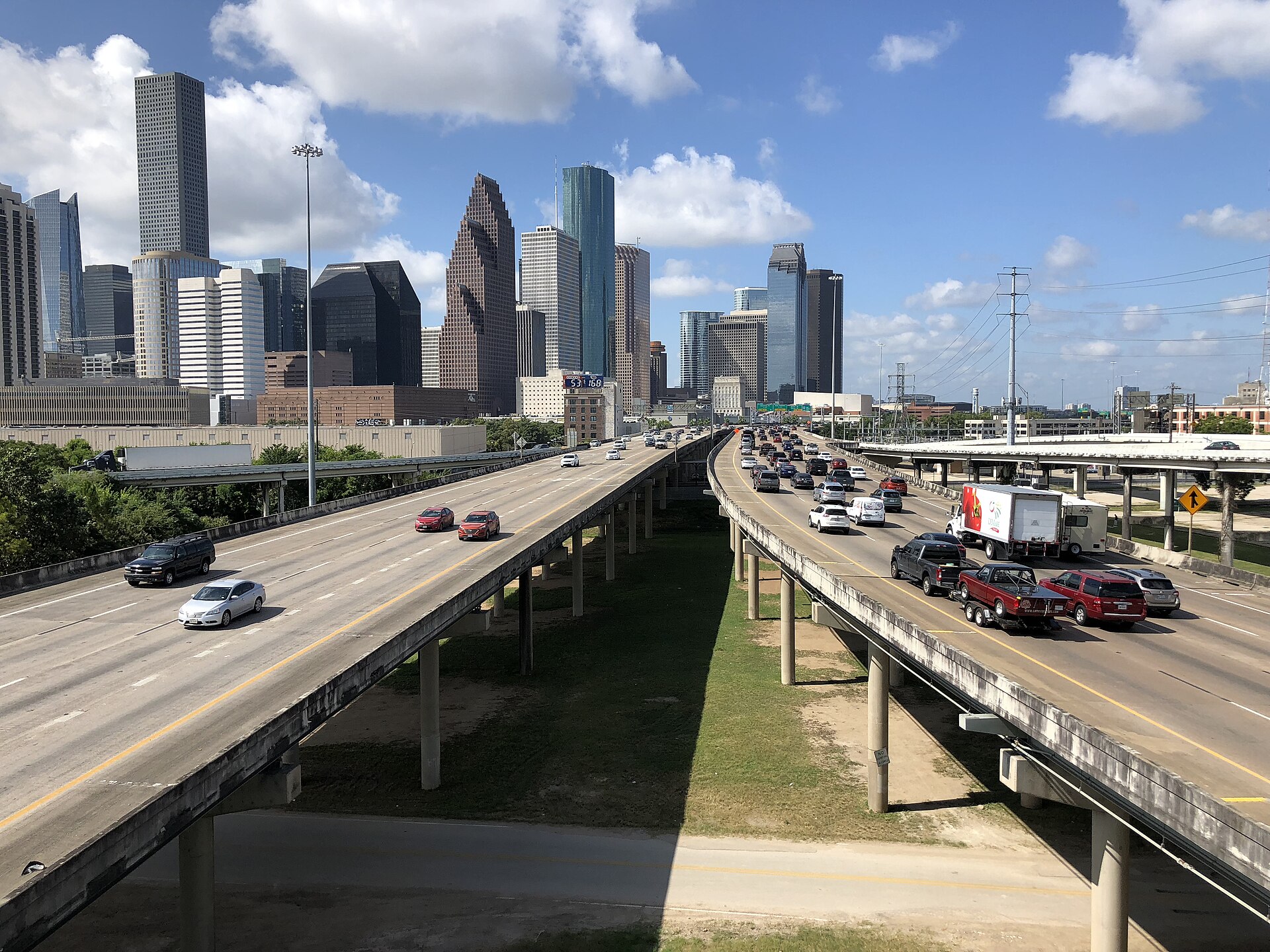
    I-45 North Freeway heading into downtown Houston, the setting for this truck underride example
    I-45 (the North Freeway) heading south into downtown Houston. Photo: Famartin, Wikimedia Commons, CC BY-SA 4.0.

    What is a truck underride crash?

    In most wrecks, the bumper and crumple zones take the hit. That’s what they’re built for. In a truck underride crash, the car goes under the trailer, and those parts never touch anything.

    For example, say Marisol is driving south on I-45 near downtown Houston after dark. A trailer is stopped in her lane. She brakes, but her car slides under the back of it. The trailer bed sits at about the height of her windshield.

    That’s why the rear guard exists. Trailers and semitrailers rated at 10,000 pounds or more and built on or after January 26, 1998, must have a rear impact guard that meets the federal safety standard. 49 C.F.R. § 393.86(a)(1). The bottom of that guard can’t sit more than 22 inches off the ground at any point across its width. Id. § 393.86(a)(3).

    Older trailers, and trucks that ride high in the back, fall under a separate rule. If the rear sits more than 30 inches off the ground when empty, they need a guard whose bottom is no more than 30 inches up. Id. § 393.86(b)(1). Not every trailer is covered by the 1998 rule. Pole trailers and some low chassis and special purpose vehicles are left out. Id. § 393.86(a)(1).

    So the first question in any truck underride case is plain. Was a guard required, and was it there?

    Who can be responsible for a truck underride crash in Houston?

    Often more than one party. That matters, because more than one party can mean more than one insurance policy.

    First, the truck driver. Before driving, the driver has to be satisfied that the vehicle is in safe operating condition. 49 C.F.R. § 396.13(a).

    Second, the trucking company. Every motor carrier must systematically inspect, repair, and maintain the vehicles under its control. 49 C.F.R. § 396.3(a). Parts covered by the federal equipment rules, which include the rear guard, must be in safe and proper operating condition at all times. Id. § 396.3(a)(1). A rusted or missing guard is a maintenance problem. And maintenance is the carrier’s job.

    Third, visibility. Most big trailers built on or after December 1, 1993, must carry reflective sheeting, reflectors, or both, so other drivers can see them. 49 C.F.R. § 393.11(b). Dirty or missing tape is worth a close look in any nighttime wreck on the North Freeway.

    When someone dies, Texas law also makes a person liable for a death caused by the wrongful act or neglect of that person’s agent or servant. Tex. Civ. Prac. & Rem. Code Ann. § 71.002(b). In other words, the company can’t simply point at its driver.

    Money matters too. A for-hire interstate carrier hauling ordinary freight in a vehicle rated at 10,001 pounds or more must carry at least $750,000 in liability coverage. 49 C.F.R. § 387.9. For more on why truck cases differ from car wrecks, see this Houston 18-wheeler article.

    How long do I have to sue after a truck underride crash in Texas?

    Two years, in most cases. A personal injury suit has to be filed no later than two years after the day the claim accrues. Tex. Civ. Prac. & Rem. Code Ann. § 16.003(a). A death claim also has two years, and that clock starts on the day the person dies. Id. § 16.003(b).

    Two years sounds like plenty. In a trucking case, it isn’t, because the company’s own records run on a shorter clock. More on that below. For how the deadline works in general, see the statute of limitations article.

    What will the insurer argue after a truck underride crash?

    Here’s the catch. In a rear underride wreck, the car hits the truck from behind. So the other side will often say the car’s driver was following too close or looking at a phone.

    That argument doesn’t end the claim. Texas uses proportionate responsibility. An injured person is barred only if their share of responsibility is greater than 50 percent. Tex. Civ. Prac. & Rem. Code Ann. § 33.001. At 50 percent or less, the damages are reduced by that percentage. Tex. Civ. Prac. & Rem. Code Ann. § 33.012(a).

    So if a jury puts Marisol at 20 percent and the trucking company at 80 percent, she still recovers, minus 20 percent. Also, a defendant found more than 50 percent responsible is jointly and severally liable for the damages the claimant can recover. Tex. Civ. Prac. & Rem. Code Ann. § 33.013(b)(1). The 51 percent rule article walks through the math.

    Expect an early phone call, too. An adjuster may ask for a recorded statement within days. That call comes from the side that pays the claim, and the answers can be used later to argue shared fault.

    What can someone hurt in a truck underride crash recover?

    Texas sorts most damages into two buckets. Economic damages pay for actual money losses, like medical bills and lost pay. Tex. Civ. Prac. & Rem. Code Ann. § 41.001(4). Noneconomic damages cover the rest, including physical pain and suffering, mental anguish, disfigurement, physical impairment, and loss of enjoyment of life. Id. § 41.001(12).

    In an underride wreck, the trailer meets the car at windshield level. So the people in the front seats take the impact directly, and the losses can be severe.

    When the crash is fatal, the wrongful death claim belongs to the surviving spouse, children, and parents. Tex. Civ. Prac. & Rem. Code Ann. § 71.004(a). One or more of them can bring it for the benefit of all. Id. § 71.004(b).

    Steps that protect a truck underride claim

    First, the crash report. An officer who investigates a wreck with an injury or death has to write a report. Tex. Transp. Code Ann. § 550.062(a). It must be filed electronically within 10 days. Id. § 550.062(b). For what that report can and can’t do, see the police report article.

    Second, the trailer itself. Photos of the rear guard, or the empty spot where it should be, matter. So do photos of the reflective tape and the lights. A damaged trailer can be repaired and back on the road quickly.

    Third, the maintenance file. A carrier has to keep its inspection and repair records where the vehicle is housed or maintained for one year, and for six months after the vehicle leaves its control. 49 C.F.R. § 396.3(c). After that, this rule stops requiring them. That’s the shorter clock. The 18-wheeler evidence article covers the other trucking records and how fast they go.

    Finally, the medical records. Treatment notes from the first visit on are what tie the injuries to the crash.

    This article is general information about Texas law. If you need legal advice about your own situation, contact a licensed attorney.

    Supporting text

    The exact language behind each part of this truck underride article, in the order it is cited.

    Truck underride guard rules: the regulation text

    49 C.F.R. § 393.86(a)(1)

    Supports: the truck underride guard requirement for newer trailers and its exceptions, because this paragraph sets the 10,000 pound and January 26, 1998 lines and lists the excluded trailers.

    (1) General requirements for trailers and semitrailers manufactured on or after January 26, 1998. Each trailer and semitrailer with a gross vehicle weight rating of 4,536 kg (10,000 pounds) or more, and manufactured on or after January 26, 1998, must be equipped with a rear impact guard that meets the requirements of Federal Motor Vehicle Safety Standard No. 223 (49 CFR 571.223) in effect at the time the vehicle was manufactured. … The requirements of paragraph (a) of this section do not apply to pole trailers (as defined in § 390.5 of this chapter); pulpwood trailers, low chassis vehicles, special purpose vehicles, wheels back vehicles, and road construction controlled horizontal discharge trailers (as defined in § 393.5); and trailers towed in driveaway-towaway operations (as defined in § 390.5).

    49 C.F.R. § 393.86(a)(3)

    Supports: the 22 inch height limit, because this paragraph caps the gap between the guard and the ground.

    (3) Guard height. The vertical distance between the bottom edge of the horizontal member of the guard and the ground shall not exceed 560 mm (22 inches) at any point across the full width of the member.

    Older trailers and drivers: the regulation text

    49 C.F.R. § 393.86(b)(1)

    Supports: the 30 inch rule for older trailers and high-riding trucks, because this paragraph covers vehicles outside the 1998 trailer rule.

    (1) Requirements for motor vehicles manufactured after December 31, 1952 (except trailers or semitrailers manufactured on or after January 26, 1998). Each motor vehicle manufactured after December 31, 1952, (except truck tractors, pole trailers, pulpwood trailers, road construction controlled horizontal discharge trailers, or vehicles in driveaway-towaway operations) in which the vertical distance between the rear bottom edge of the body (or the chassis assembly if the chassis is the rearmost part of the vehicle) and the ground is greater than 76.2 cm (30 inches) when the motor vehicle is empty, shall be equipped with a rear impact guard(s). The rear impact guard(s) must be installed and maintained in such a manner that: (i) The vertical distance between the bottom of the guard(s) and the ground does not exceed 76.2 cm (30 inches) when the motor vehicle is empty; …

    49 C.F.R. § 396.13(a)

    Supports: the driver’s duty in a truck underride case, because this rule makes the driver confirm the vehicle is safe before driving.

    Before driving a motor vehicle, the driver shall: (a) Be satisfied that the motor vehicle is in safe operating condition;

    Trucking company duties: the regulation text

    49 C.F.R. § 396.3(a)

    Supports: the carrier’s maintenance duty, because this paragraph requires systematic inspection, repair, and maintenance.

    (a) General. Every motor carrier and intermodal equipment provider must systematically inspect, repair, and maintain, or cause to be systematically inspected, repaired, and maintained, all motor vehicles and intermodal equipment subject to its control.

    49 C.F.R. § 396.3(a)(1)

    Supports: the point that the rear guard must work at all times, because the guard is one of the part 393 parts this paragraph names.

    (1) Parts and accessories shall be in safe and proper operating condition at all times. These include those specified in part 393 of this subchapter …

    49 C.F.R. § 393.11(b)

    Supports: the reflective tape and reflector rule, because this paragraph requires a conspicuity system on most large trailers built since December 1, 1993.

    (b) Conspicuity Systems. Each trailer of 2,032 mm (80 inches) or more overall width, and with a GVWR over 4,536 kg (10,000 pounds), manufactured on or after December 1, 1993, except pole trailers and trailers designed exclusively for living or office use, shall be equipped with either retroreflective sheeting that meets the requirements of FMVSS No. 108 (S5.7.1), reflex reflectors that meet the requirements FMVSS No. 108 (S5.7.2), or a combination of retroreflective sheeting and reflex reflectors that meet the requirements of FMVSS No. 108 (S5.7.3).

    Death claims and insurance: the text

    Tex. Civ. Prac. & Rem. Code Ann. § 71.002(b)

    Supports: the point that a company answers for its agent’s or servant’s conduct in a death case, because this subsection says so directly.

    (b) A person is liable for damages arising from an injury that causes an individual’s death if the injury was caused by the person’s or his agent’s or servant’s wrongful act, neglect, carelessness, unskillfulness, or default.

    49 C.F.R. § 387.9

    Supports: the $750,000 minimum for a truck underride defendant hauling ordinary freight, because this row of the federal table sets that limit.

    (1) For-hire (In interstate or foreign commerce, with a gross vehicle weight rating of 10,001 or more pounds) Property (nonhazardous) $750,000

    The deadline to sue: the statute text

    Tex. Civ. Prac. & Rem. Code Ann. § 16.003(a)

    Supports: the two-year deadline for a truck underride injury claim, because this subsection lists personal injury suits.

    (a) Except as provided by Sections 16.010, 16.0031, and 16.0045, a person must bring suit for … personal injury … not later than two years after the day the cause of action accrues.

    Tex. Civ. Prac. & Rem. Code Ann. § 16.003(b)

    Supports: the two-year deadline for a death claim, because this subsection starts the clock on the date of death.

    (b) A person must bring suit not later than two years after the day the cause of action accrues in an action for injury resulting in death. The cause of action accrues on the death of the injured person.

    Shared fault: the statute text

    Tex. Civ. Prac. & Rem. Code Ann. § 33.001

    Supports: the more-than-50-percent bar, because this section stops recovery only above that line.

    In an action to which this chapter applies, a claimant may not recover damages if his percentage of responsibility is greater than 50 percent.

    Tex. Civ. Prac. & Rem. Code Ann. § 33.012(a)

    Supports: the percentage reduction in the Marisol example, because this subsection reduces damages by the claimant’s share.

    (a) If the claimant is not barred from recovery under Section 33.001, the court shall reduce the amount of damages to be recovered by the claimant with respect to a cause of action by a percentage equal to the claimant’s percentage of responsibility.

    Tex. Civ. Prac. & Rem. Code Ann. § 33.013(b)(1)

    Supports: joint and several liability, because this subsection applies it to a defendant found more than 50 percent responsible.

    (b) Notwithstanding Subsection (a), each liable defendant is, in addition to the defendant’s liability under Subsection (a), jointly and severally liable for the damages recoverable by the claimant under Section 33.012 with respect to a cause of action if: (1) the percentage of responsibility attributed to the defendant with respect to a cause of action is greater than 50 percent;

    Damages: the statute text

    Tex. Civ. Prac. & Rem. Code Ann. § 41.001(4)

    Supports: the economic damages bucket, because this definition covers actual money losses.

    (4) “Economic damages” means compensatory damages intended to compensate a claimant for actual economic or pecuniary loss; the term does not include exemplary damages or noneconomic damages.

    Tex. Civ. Prac. & Rem. Code Ann. § 41.001(12)

    Supports: the list of noneconomic losses, because this definition names pain, anguish, disfigurement, impairment, and lost enjoyment of life.

    (12) “Noneconomic damages” means damages awarded for the purpose of compensating a claimant for physical pain and suffering, mental or emotional pain or anguish, loss of consortium, disfigurement, physical impairment, loss of companionship and society, inconvenience, loss of enjoyment of life, injury to reputation, and all other nonpecuniary losses of any kind other than exemplary damages.

    Tex. Civ. Prac. & Rem. Code Ann. § 71.004(a)

    Supports: who owns a wrongful death claim after a fatal truck underride crash, because this subsection names the spouse, children, and parents.

    (a) An action to recover damages as provided by this subchapter is for the exclusive benefit of the surviving spouse, children, and parents of the deceased.

    Tex. Civ. Prac. & Rem. Code Ann. § 71.004(b)

    Supports: the point that one family member can sue for all, because this subsection allows it.

    (b) The surviving spouse, children, and parents of the deceased may bring the action or one or more of those individuals may bring the action for the benefit of all.

    Truck underride evidence: crash reports and records

    Tex. Transp. Code Ann. § 550.062(a)

    Supports: the officer’s duty to write a report, because this subsection requires one for injury or death crashes.

    (a) A law enforcement officer who in the regular course of duty investigates a motor vehicle collision shall make a written report of the collision if the collision resulted in injury to or the death of a person or damage to the property of any one person to the apparent extent of $1,000 or more.

    Tex. Transp. Code Ann. § 550.062(b)

    Supports: the 10-day filing deadline, because this subsection sets it.

    (b) The report required by Subsection (a) must be filed electronically with the department not later than the 10th day after the date of the collision.

    49 C.F.R. § 396.3(c)

    Supports: the one-year record clock in a truck underride case, because this paragraph sets how long maintenance records must be kept.

    (c) Record retention. The records required by this section shall be retained where the vehicle is either housed or maintained for a period of 1 year and for 6 months after the motor vehicle leaves the motor carrier’s control.

  • Company Vehicle Accident: The Hidden Employer Can Owe Now

    Company Vehicle Accident: The Hidden Employer Can Owe Now

    Company vehicle accident: the short answer

    After a company vehicle accident in Texas, the injured person can often hold the driver’s employer responsible, not just the driver. In short, the injured person shows the driver was an employee acting in the course and scope of the job. Painter v. Amerimex Drilling I, Ltd., 561 S.W.3d 125, 131 (Tex. 2018).

    For example, say Dana is rear-ended on Woodlands Parkway in The Woodlands by a plumbing company’s van. Also, the driver works for the company and is heading to a service call. Because the rule for a company vehicle accident is statewide, The Woodlands is only the example.

    A boat on The Woodlands Waterway beside office buildings in The Woodlands, the setting for this company vehicle accident example
    The Woodlands Waterway in The Woodlands, Texas. Photo: Social Woodlands, Wikimedia Commons, CC BY 2.0.

    Two things a company vehicle accident claim must show

    First, Dana shows the driver was an employee. Then, she shows he was acting in the course and scope of his employment when he hit her. Id.

    However, a company may argue its driver was off on a personal errand. Instead of taking that at face value, the court asks an objective question: was the employee performing the tasks generally assigned to him in furtherance of the employer’s business? Id. at 138–39.

    The deadline after a company vehicle accident

    Also, a Texas personal injury lawsuit generally must be filed within two years after the claim arises. Tex. Civ. Prac. & Rem. Code Ann. § 16.003(a). For more detail, see the Texas deadlines tool and this article on the Texas statute of limitations.

    This article is general information about Texas law. If you need legal advice about your own situation, contact a licensed attorney.

    Supporting text

    The exact language behind each part of this company vehicle accident article, in the order it is cited.

    Painter v. Amerimex Drilling I, Ltd., 561 S.W.3d 125, 131 (Tex. 2018)

    Supports: first, the two things an injured person shows to hold an employer responsible, because this passage lists employee status and course and scope.

    In other words, to prove an employer’s vicarious liability for a worker’s negligence, the plaintiff must show that, at the time of the negligent conduct, the worker (1) was an employee and (2) was acting in the course and scope of his employment.

    Painter, 561 S.W.3d at 138–39

    Supports: in addition, the question a court asks when a company claims its driver was on a personal errand, because this passage sets out the objective course-and-scope test.

    The course-and-scope inquiry under step two involves an objective analysis, hinging on whether the employee was performing the tasks generally assigned to him in furtherance of the employer’s business. That is, the employee must be acting with the employer’s authority and for the employer’s benefit.

    Tex. Civ. Prac. & Rem. Code Ann. § 16.003(a)

    Supports: finally, the two-year deadline to sue, because this subsection sets the limitations period for personal injury suits.

    (a) Except as provided by Sections 16.010, 16.0031, and 16.0045, a person must bring suit for trespass for injury to the estate or to the property of another, conversion of personal property, taking or detaining the personal property of another, personal injury, forcible entry and detainer, and forcible detainer not later than two years after the day the cause of action accrues.
  • Bad Weather Driving: Do Big Rigs Have to Slow Down Now?

    Bad Weather Driving: Do Big Rigs Have to Slow Down Now?

    Bad weather driving: the short answer

    Bad weather driving rules require truck drivers to use extreme caution and reduce speed when fog, rain, or smoke hurts visibility or traction. 49 C.F.R. § 392.14 (2025). Then, if conditions become dangerous enough, the driver must stop until the truck can be safely operated. Id..

    Bad weather driving is also covered by Texas law, which bars any driver from going faster than is reasonable and prudent under the circumstances. Tex. Transp. Code Ann. § 545.351(a). For example, say Maria is crossing the Fred Hartman Bridge on State Highway 146 toward Baytown (77520) when heavy fog rolls in. Because the Texas speed rule applies statewide, the bridge is just the setting.

    The Fred Hartman Bridge on State Highway 146 between La Porte and Baytown, the setting for this bad weather driving example
    The Fred Hartman Bridge on State Highway 146 between La Porte and Baytown. Photo: Roy Luck, Wikimedia Commons, CC BY 2.0.

    Bad weather driving duties for truckers

    First, the federal rule lists snow, ice, sleet, fog, mist, rain, dust, and smoke as examples of hazardous conditions. 49 C.F.R. § 392.14. As a result, a fog bank that cuts visibility on the bridge triggers the duty to slow down. In short, these rules protect drivers like Maria who share the road with big rigs.

    Bad weather driving on the Fred Hartman Bridge

    In addition, every Texas driver must control speed as necessary to avoid colliding with another vehicle lawfully on or entering the highway. Tex. Transp. Code Ann. § 545.351(b)(2). Also, drivers must slow to an appropriate reduced speed when weather or highway conditions create a special hazard. Id. § 545.351(c)(5). For more detail, see the Baytown city guide, truck driver hours of service, and the after-a-crash checklist.

    This article is general information about Texas law. If you need legal advice about your own situation, contact a licensed attorney.

    Supporting text

    The exact language behind each part of these bad weather driving rules, in the order it is cited.

    49 C.F.R. § 392.14

    Supports: the short answer and the list of hazardous conditions, because this section requires extreme caution, reduced speed, and a stop when conditions become sufficiently dangerous.

    Extreme caution in the operation of a commercial motor vehicle shall be exercised when hazardous conditions, such as those caused by snow, ice, sleet, fog, mist, rain, dust, or smoke, adversely affect visibility or traction. Speed shall be reduced when such conditions exist. If conditions become sufficiently dangerous, the operation of the commercial motor vehicle shall be discontinued and shall not be resumed until the commercial motor vehicle can be safely operated. . . .

    Tex. Transp. Code Ann. § 545.351(a)

    Supports: the statewide speed rule in the intro, because this subsection bars driving faster than is reasonable and prudent under the circumstances.

    (a) An operator may not drive at a speed greater than is reasonable and prudent under the circumstances then existing.

    Tex. Transp. Code Ann. § 545.351(b)(2)

    Supports: the duty to control speed, because this paragraph requires every operator to control speed as necessary to avoid a collision.

    (b) An operator: . . . (2) shall control the speed of the vehicle as necessary to avoid colliding with another person or vehicle that is on or entering the highway in compliance with law and the duty of each person to use due care.

    Tex. Transp. Code Ann. § 545.351(c)(5)

    Supports: the reduced-speed duty in bad weather driving, because this subsection names weather or highway conditions as a special hazard.

    (c) An operator shall, consistent with Subsections (a) and (b), drive at an appropriate reduced speed if: . . . (5) a special hazard exists with regard to traffic, including pedestrians, or weather or highway conditions.
  • CDL Drug Testing Rules: Essential Limits That Guard You Now

    CDL Drug Testing Rules: Essential Limits That Guard You Now

    CDL drug testing rules: the short answer

    CDL drug testing rules require every covered truck driver to submit to random drug and alcohol testing. 49 C.F.R. § 382.305(a) (2025). They also bar a driver from safety-sensitive duty with an alcohol concentration of 0.04 or greater. Id. § 382.201.

    CDL drug testing rules protect everyone sharing the road with big rigs and reach companies whose drivers need a commercial license. Id. § 382.103(a). For example, say Luis is hit by an 18-wheeler on State Highway 225 in Pasadena (77506). They apply statewide, so Pasadena is just the setting.

    Aerial view of State Highway 225 running through Pasadena, Texas, the setting for this CDL drug testing rules example
    State Highway 225 in Pasadena, seen from the air. Photo: formulanone, Wikimedia Commons, CC BY-SA 2.0.

    What the federal limits forbid

    First, a driver may not do safety-sensitive work within four hours after using alcohol. Id. § 382.207. In addition, a driver may not report for duty when using a Schedule I drug. Id. § 382.213(a).

    When CDL drug testing rules call for a test

    Before a new driver’s first safety-sensitive work, the company generally must receive a verified negative drug test result. Id. § 382.301(a). Then, the company must require an alcohol test when it has reasonable suspicion based on specific observations of the driver’s appearance, behavior, speech, or body odors. Id. § 382.307(a). For post-crash tests, see the trucking records that matter after a wreck.

    Why CDL drug testing rules matter after a Pasadena truck crash

    Finally, the company must keep verified positive drug results, and alcohol results of 0.02 or greater, for at least five years. Id. § 382.401(b)(1). For more detail, see the trucking company lookup and the Pasadena city guide.

    This article is general information about Texas law. If you need legal advice about your own situation, contact a licensed attorney.

    Supporting text

    The exact language behind each part of these CDL drug testing rules, in the order it is cited.

    49 C.F.R. § 382.305(a)

    Supports: the short answer’s point on random testing, because this paragraph says every driver shall submit to random alcohol and controlled substance testing.

    (a) Every employer shall comply with the requirements of this section. Every driver shall submit to random alcohol and controlled substance testing as required in this section.

    49 C.F.R. § 382.201

    Supports: the 0.04 limit in the short answer, because this section bars a driver from safety-sensitive duty at that level.

    No driver shall report for duty or remain on duty requiring the performance of safety-sensitive functions while having an alcohol concentration of 0.04 or greater. No employer having knowledge that a driver has an alcohol concentration of 0.04 or greater shall permit the driver to perform or continue to perform safety-sensitive functions.

    49 C.F.R. § 382.103(a)

    Supports: who the rules reach, because this paragraph applies the part to employers of drivers subject to the commercial license requirements.

    (a) This part applies to service agents and to every person and to all employers of such persons who operate a commercial motor vehicle in commerce in any State and are subject to: (1) The commercial driver’s license requirements of part 383 of this subchapter; . . .

    49 C.F.R. § 382.207

    Supports: the four-hour rule, because this section bars safety-sensitive work within four hours after using alcohol.

    No driver shall perform safety-sensitive functions within four hours after using alcohol. No employer having actual knowledge that a driver has used alcohol within four hours shall permit a driver to perform or continue to perform safety-sensitive functions.

    49 C.F.R. § 382.213(a)

    Supports: the Schedule I point in the drug testing rules, because this paragraph bars reporting for duty while using a Schedule I drug.

    (a) No driver shall report for duty or remain on duty requiring the performance of safety sensitive functions when the driver uses any drug or substance identified in 21 CFR 1308.11 Schedule I.

    49 C.F.R. § 382.301(a)

    Supports: the pre-hire drug test, because this paragraph requires a verified negative result before a new driver’s first safety-sensitive work, subject to one listed exception.

    (a) Prior to the first time a driver performs safety-sensitive functions for an employer, the driver shall undergo testing for controlled substances as a condition prior to being used, unless the employer uses the exception in paragraph (b) of this section. No employer shall allow a driver, who the employer intends to hire or use, to perform safety-sensitive functions unless the employer has received a controlled substances test result from the MRO or C/TPA indicating a verified negative test result for that driver.

    49 C.F.R. § 382.307(a)

    Supports: the reasonable-suspicion test under the drug testing rules, because this paragraph requires an alcohol test based on specific observations of the driver.

    (a) An employer shall require a driver to submit to an alcohol test when the employer has reasonable suspicion to believe that the driver has violated the prohibitions of subpart B of this part concerning alcohol. The employer’s determination that reasonable suspicion exists to require the driver to undergo an alcohol test must be based on specific, contemporaneous, articulable observations concerning the appearance, behavior, speech or body odors of the driver.

    49 C.F.R. § 382.401(b)(1)

    Supports: the five-year record rule in the CDL drug testing rules, because this paragraph lists positive drug results and alcohol results of 0.02 or greater among the five-year records.

    (1) Five years. The following records shall be maintained for a minimum of five years: (i) Records of driver alcohol test results indicating an alcohol concentration of 0.02 or greater, (ii) Records of driver verified positive controlled substances test results, . . .
  • Truck Warning Triangles: What Must a Disabled Rig Quickly Post?

    Truck Warning Triangles: What Must a Disabled Rig Quickly Post?

    Truck warning triangles: the short answer

    Truck warning triangles are required safety gear on big rigs. In short, with limited exceptions, when a commercial truck stops on a highway or its shoulder, other than for a necessary traffic stop, the driver must turn on the hazard flashers right away and set out warning devices within 10 minutes. 49 C.F.R. § 392.22(a) (2025); id. § 392.22(b)(1).

    Truck warning triangles protect drivers who come upon a stalled 18-wheeler, such as on I-45 near The Woodlands. For example, picture Lena, an invented commuter, driving north at night when a rig breaks down on the shoulder ahead. Because the rule is federal, it applies the same way across Texas. For local detail, see The Woodlands city guide and the Houston city guide.

    Reflective warning triangle set out on a road, the kind of device behind this truck warning triangles example
    A reflective warning triangle set out on a road. Photo: Jaller94, Wikimedia Commons, CC0.

    What truck warning triangles a rig must carry

    First, a truck must carry three bidirectional emergency reflective triangles, or at least six fusees. Id. § 393.95(f)(1); id. § 393.95(f)(2). Also, the stopped driver must keep the flashers on until the warning devices are in place. Id. § 392.22(a).

    Truck warning triangles on I-45 near The Woodlands

    On a divided highway such as I-45, one triangle goes within 10 feet of the truck’s rear on the traffic side. Then one goes 100 feet back and one 200 feet back, toward approaching traffic. Id. § 392.22(b)(2)(v). In other words, the rule puts warnings in Lena’s path before she reaches the truck. For more, see which trucking records matter after a crash and the trucking company lookup.

    This article is general information about Texas law. If you need legal advice about your own situation, contact a licensed attorney.

    Supporting text

    The exact language behind each part of this truck warning triangles explainer, in the order it is cited. In addition, each heading links to the official eCFR text. Also, each quote matches that text word for word.

    49 C.F.R. § 392.22(a) (2025); id. § 392.22(b)(1)

    Supports: the short answer and the flasher rule, because these paragraphs require flashers at once and truck warning triangles within 10 minutes.

    Whenever a commercial motor vehicle is stopped upon the traveled portion of a highway or the shoulder of a highway for any cause other than necessary traffic stops, the driver of the stopped commercial motor vehicle shall immediately activate the vehicular hazard warning signal flashers and continue the flashing until the driver places the warning devices required by paragraph (b) of this section.
    . . .
    Except as provided in paragraph (b)(2) of this section, whenever a commercial motor vehicle is stopped upon the traveled portion or the shoulder of a highway for any cause other than necessary traffic stops, the driver shall, as soon as possible, but in any event within 10 minutes, place the warning devices required by § 393.95 of this subchapter, in the following manner:

    Id. § 393.95(f)(1); id. § 393.95(f)(2)

    Supports: the gear a rig must carry, because this paragraph requires three reflective triangles or at least six fusees.

    Except as provided in paragraph (g) of this section, one of the following options must be used: (1) Three bidirectional emergency reflective triangles that conform to the requirements of Federal Motor Vehicle Safety Standard No. 125, § 571.125 of this title; or (2) At least 6 fusees.

    Id. § 392.22(b)(2)(v)

    Supports: the placement on a divided highway like I-45, because this paragraph sets the 10-foot, 100-foot, and 200-foot spots. As a result, the farthest triangle sits 200 feet back from the truck.

    If a commercial motor vehicle is stopped upon the traveled portion or the shoulder of a divided or one-way highway, the driver shall place the warning devices required by paragraph (b)(1) of this section, one warning device at a distance of 200 feet and one warning device at a distance of 100 feet in a direction toward approaching traffic in the center of the lane or shoulder occupied by the commercial motor vehicle. He/she shall place one warning device at the traffic side of the commercial motor vehicle within 10 feet of the rear of the commercial motor vehicle.
  • Truck Driver Hours of Service: Tired Truckers Must Park Now

    Truck Driver Hours of Service: Tired Truckers Must Park Now

    Truck driver hours of service: the short answer

    In short, truck driver hours of service rules are federal limits on trucker driving time. Specifically, a driver needs 10 hours off first, may drive 11 hours, and stops driving 14 hours after coming on duty. 49 C.F.R. § 395.3(a) (2025).

    Truck driver hours of service rules protect everyone sharing I-10, the Katy Freeway, with 18-wheelers in Katy (77494). For example, Dale, an invented trucker, starts work at 5:00 a.m. and is still driving past Katy at 8:00 p.m. Because the rule is federal, it works the same across Texas. For more, see the Katy and Houston city guides.

    Tractor-trailers parked side by side at a highway rest area, the kind of stop behind this truck driver hours of service example
    Trucks at a California rest area. Photo: Thank You (21 Millions+) views, Wikimedia Commons, CC BY 2.0.

    Truck driver hours of service: the daily limits

    First, a driver may not drive without 10 straight hours off duty. Id. § 395.3(a)(1). Then a 14-hour window opens, with driving capped at 11 hours. Id. § 395.3(a)(2); id. § 395.3(a)(3)(i). As a result, Dale may not be driving 15 hours into his day. Also, most drivers need a 30-minute break after 8 hours of driving. Id. § 395.3(a)(3)(ii).

    Truck driver hours of service bind the carrier, too

    However, the rule also bars any motor carrier from permitting or requiring a violation. Id. § 395.3(a). In addition, weekly caps apply: 60 hours on duty in 7 days, or 70 in 8 days for carriers running daily. Id. § 395.3(b)(1); id. § 395.3(b)(2).

    Hours records after a Katy Freeway truck crash

    Finally, carriers must keep duty-status records and supporting documents for at least six months. Id. § 395.8(k)(1). For more, see which trucking records matter after a crash and the trucking company lookup.

    This article is general information about Texas law. If you need legal advice about your own situation, contact a licensed attorney.

    Supporting text

    The exact language behind each part of this truck driver hours of service explainer, in the order it is cited. In addition, each heading links to the official eCFR text. Also, each quote matches that text word for word.

    49 C.F.R. § 395.3(a) (2025)

    Supports: the short answer and the point that carriers share the duty, because this passage binds both the motor carrier and the driver to the truck driver hours of service limits.

    Except as otherwise provided in § 395.1, no motor carrier shall permit or require any driver used by it to drive a property-carrying commercial motor vehicle, nor shall any such driver drive a property-carrying commercial motor vehicle, regardless of the number of motor carriers using the driver’s services, unless the driver complies with the following requirements:

    Id. § 395.3(a)(1)

    Supports: the 10-hour rest rule, because this paragraph bars driving without that time off first.

    A driver may not drive without first taking 10 consecutive hours off duty;

    Id. § 395.3(a)(2); id. § 395.3(a)(3)(i)

    Supports: the 14-hour window and the 11-hour cap in the truck driver hours of service rules, because these paragraphs set both limits.

    A driver may not drive after a period of 14 consecutive hours after coming on-duty following 10 consecutive hours off-duty.
    . . .
    A driver may drive a total of 11 hours during the period specified in paragraph (a)(2) of this section.

    Id. § 395.3(a)(3)(ii)

    Supports: the 30-minute break, because this paragraph stops driving after 8 hours without one, except for short-haul drivers.

    Except for drivers who qualify for either of the short-haul exceptions in § 395.1(e)(1) or (2), driving is not permitted if more than 8 hours of driving time have passed without at least a consecutive 30-minute interruption in driving status.

    Id. § 395.3(b)(1); id. § 395.3(b)(2)

    Supports: the weekly caps, because these paragraphs set the 60-hour and 70-hour limits by carrier schedule.

    (1) Having been on duty 60 hours in any period of 7 consecutive days if the employing motor carrier does not operate commercial motor vehicles every day of the week; or
    (2) Having been on duty 70 hours in any period of 8 consecutive days if the employing motor carrier operates commercial motor vehicles every day of the week.

    Id. § 395.8(k)(1)

    Supports: the six-month record rule, because this paragraph sets how long truck driver hours of service records must be kept. As a result, those records must exist for at least six months after the carrier receives them.

    (1) A motor carrier shall retain records of duty status and supporting documents required under this part for each of its drivers for a period of not less than 6 months from the date of receipt.
  • After an 18-wheeler crash in Texas: the trucking records that decide the case, and how fast they disappear

    The short answer

    After an 18-wheeler crash, the trucking company holds most of the evidence: the driver’s logs, drug and alcohol tests, maintenance records, and the driver’s hiring file. Federal rules require companies to keep those records only for set periods, some as short as six months, and a test that is never given cannot be recovered. A written demand to preserve evidence, sent early, is what keeps the record intact. A 2025 Texas Supreme Court ruling also shows that proving the truck caused the crash, not just that it was there, decides these cases.

    This is a practical guide to the evidence. For why truck cases differ from car cases in the first place, see why a Houston 18-wheeler accident is different.

    The records clock starts at the crash

    Federal motor carrier rules set minimum periods for keeping records. After those periods, a company can lawfully discard them unless it has a duty to preserve them for a lawsuit.

    • Alcohol and drug tests. After a fatal crash, or a crash where the truck driver is cited and someone is taken for treatment or a vehicle is towed, the company must test the driver. If the alcohol test is not done within two hours, the company must write down why, and it stops trying at eight hours. For drugs, the cutoff is 32 hours. 49 C.F.R. § 382.303(a), (b), (d) (2025).
    • Test results. Positive results and refusals are kept five years. Negative results are kept one year. 49 C.F.R. § 382.401(b)(1), (3) (2025).
    • Hours of service. The driver’s records of duty status and supporting documents are kept six months. 49 C.F.R. § 395.8(k)(1) (2025).
    • Maintenance. Inspection, repair, and maintenance records are kept one year, and six months after the truck leaves the company’s control. 49 C.F.R. § 396.3(b)(3), (c) (2026).
    • The driver’s file. Every carrier keeps a qualification file on each driver, with the application, driving records, and medical certificate, for as long as the driver works there plus three years. 49 C.F.R. § 391.51(a), (c) (2025).
    • The accident register. Carriers log every reportable crash and keep copies of the crash reports for three years. 49 C.F.R. § 390.15(b) (2025).

    Other evidence has no federal retention rule at all. Dash camera video, engine control module data, and dispatch messages can be overwritten in the ordinary course of business.

    Why a preservation letter matters

    Texas law imposes a duty to preserve evidence once a party “knows or reasonably should know that there is a substantial chance that a claim will be filed” and that the evidence will matter. Brookshire Bros., Ltd. v. Aldridge, 438 S.W.3d 9, 20 (Tex. 2014). A letter that identifies the crash and lists the specific evidence, such as logs, test results, camera video, engine data, and the driver’s file, removes any doubt about when that duty began.

    If evidence is lost after the duty arises, the trial court decides what to do about it. A jury can be told to presume the lost evidence would have hurt the company only if the loss was intentional, or in the rare case where a negligent loss leaves the injured person with no meaningful way to prove the claim. Brookshire Bros., 438 S.W.3d at 14. The practical lesson is to make sure the evidence is never lost in the first place.

    The crash report

    When a crash injures or kills someone, or causes at least $1,000 in property damage, the investigating officer must file a written report within 10 days. Tex. Transp. Code Ann. § 550.062(a), (b). People involved in the crash and their representatives can get a copy for $6. Tex. Transp. Code Ann. § 550.065(c)(4)(A)–(B), (d). The report is a starting point. It names the carrier, records what the officer saw, and lists witnesses, but the officer’s conclusions are not the last word on fault.

    Finding the company that answers for the truck

    Many trucks are owned by one business and driven under another’s authority. When a carrier leases a truck, federal rules require the lease to give that carrier “exclusive possession, control, and use” of the truck and “complete responsibility for the operation” of it during the lease. 49 C.F.R. § 376.12(c)(1) (2025). The lease, the markings on the cab, and the shipping papers together show which company was responsible at the time of the crash.

    Proving the truck caused the crash

    In June 2025, the Texas Supreme Court threw out a jury verdict against a trucking company in a crash on an icy stretch of Interstate 20 near Odessa. A pickup lost control, crossed a 42-foot median, and hit the company’s 18-wheeler. One passenger was killed and three others were badly hurt. Werner Enters., Inc. v. Blake, No. 23-0493, slip op. at 2 (Tex. June 27, 2025). The trial showed the truck, though below the speed limit, was going too fast for the ice. The Court held that his speed only “furnished the condition” for the crash and did not legally cause it, and it rendered judgment for the company. Werner, slip op. at 3–4. Three justices disagreed in part, pointing to evidence that the road was a sheet of ice and the driver had passed three other crashes on the way. Werner, slip op. at 1 (Bland, J., dissenting in part).

    The case shows where truck trials are won and lost: timing, speed, distance, and what the driver could see and do in the seconds before impact. That is the evidence engine data, video, and logs supply.

    The deadline

    Most Texas injury suits must be filed within two years of the crash. Tex. Civ. Prac. & Rem. Code Ann. § 16.003(a). The evidence deadlines above run much faster, which is why the first weeks matter more than the last months.

    Truck cases at the Capitol

    In 2021 the Legislature split many trucking trials into two phases and limited what juries hear about the company in the first phase. In 2025, Senate Bill 39 by Sen. Brian Birdwell (R) and House Bill 4688 by Rep. Jeff Leach (R) and Rep. Janie Lopez (R) would have removed the remaining exceptions that let a jury hear about a driver’s record and safety violations. SB 39 passed the Senate 21 to 10 and died in a House committee. Our tracker has the full record on SB 39, including who voted for it and who funds its authors, and every 2025 tort bill.

    This article is general information about Texas law. If you need legal advice about your own situation, contact a licensed attorney.

    Supporting text

    The exact language of each source cited above, in the order it is cited.

    49 C.F.R. § 382.303(a), (b), (d) (2025).

    Supports: When the trucking company must test the driver for alcohol and drugs, and the deadlines.

    (a) As soon as practicable following an occurrence involving a commercial motor vehicle operating on a public road in commerce, each employer shall test for alcohol for each of its surviving drivers: (1) Who was performing safety-sensitive functions with respect to the vehicle, if the accident involved the loss of human life; or (2) Who receives a citation within 8 hours of the occurrence under State or local law for a moving traffic violation arising from the accident, if the accident involved: (i) Bodily injury to any person who, as a result of the injury, immediately receives medical treatment away from the scene of the accident; or (ii) One or more motor vehicles incurring disabling damage as a result of the accident, requiring the motor vehicle to be transported away from the scene by a tow truck or other motor vehicle. … (d)(1) Alcohol tests. If a test required by this section is not administered within two hours following the accident, the employer shall prepare and maintain on file a record stating the reasons the test was not promptly administered. If a test required by this section is not administered within eight hours following the accident, the employer shall cease attempts to administer an alcohol test and shall prepare and maintain the same record. … (2) Controlled substance tests. If a test required by this section is not administered within 32 hours following the accident, the employer shall cease attempts to administer a controlled substances test, and prepare and maintain on file a record stating the reasons the test was not promptly administered.

    49 C.F.R. § 382.401(b)(1), (3) (2025).

    Supports: How long test results are kept.

    (1) Five years. The following records shall be maintained for a minimum of five years: (i) Records of driver alcohol test results indicating an alcohol concentration of 0.02 or greater, (ii) Records of driver verified positive controlled substances test results, (iii) Documentation of refusals to take required alcohol and/or controlled substances tests, … (3) One year. Records of negative and canceled controlled substances test results and MRO reversal of canceled controlled substances test results (as defined in part 40 of this title) and alcohol test results with a concentration of less than 0.02 shall be maintained for a minimum of one year.

    49 C.F.R. § 395.8(k)(1) (2025).

    Supports: Hours-of-service records are kept six months.

    A motor carrier shall retain records of duty status and supporting documents required under this part for each of its drivers for a period of not less than 6 months from the date of receipt.

    49 C.F.R. § 396.3(b)(3), (c) (2026).

    Supports: Inspection, repair, and maintenance records.

    (b) … These records must include: … (3) A record of inspection, repairs, and maintenance indicating their date and nature; … (c) Record retention. The records required by this section shall be retained where the vehicle is either housed or maintained for a period of 1 year and for 6 months after the motor vehicle leaves the motor carrier’s control.


    49 C.F.R. § 391.51(a), (c) (2025).

    Supports: The driver qualification file and how long it is kept.

    (a) Each motor carrier shall maintain a driver qualification file for each driver it employs. … (c) Except as provided in paragraph (d) of this section, each driver’s qualification file shall be retained for as long as a driver is employed by that motor carrier and for three years thereafter.

    49 C.F.R. § 390.15(b) (2025).

    Supports: The company’s accident register.

    Motor carriers must maintain an accident register for 3 years after the date of each accident. Information placed in the accident register must contain at least the following: (1) A list of accidents as defined at § 390.5 of this chapter containing for each accident: … (2) Copies of all accident reports required by State or other governmental entities or insurers.

    Brookshire Bros., Ltd. v. Aldridge, 438 S.W.3d 9, 20 (Tex. 2014).

    Supports: When the duty to preserve evidence begins.

    [s]uch a duty arises only when a party knows or reasonably should know that there is a substantial chance that a claim will be filed and that evidence in its possession or control will be material and relevant to that claim.

    Brookshire Bros., 438 S.W.3d at 14.

    Supports: What counts as spoliation, and when a jury hears about it.

    To conclude that a party spoliated evidence, the court must find that (1) the spoliating party had a duty to reasonably preserve evidence, and (2) the party intentionally or negligently breached that duty by failing to do so. … A failure to preserve evidence with a negligent mental state may only underlie a spoliation instruction in the rare situation in which a nonspoliating party has been irreparably deprived of any meaningful ability to present a claim or defense.

    Tex. Transp. Code Ann. § 550.062(a), (b).

    Supports: The officer’s report and its 10-day deadline.

    (a) A law enforcement officer who in the regular course of duty investigates a motor vehicle collision shall make a written report of the collision if the collision resulted in injury to or the death of a person or damage to the property of any one person to the apparent extent of $1,000 or more. (b) The report required by Subsection (a) must be filed electronically with the department not later than the 10th day after the date of the collision.

    Tex. Transp. Code Ann. § 550.065(c)(4)(A)–(B), (d).

    Supports: Who can get the report, and the fee.

    (c) On written request and payment of any required fee, the department or the governmental entity shall release the information to: … (4) any person directly concerned in the collision or having a proper interest therein, including: (A) any person involved in the collision; (B) the authorized representative of any person involved in the collision; … (d) The fee for a copy of the collision report is $6.

    49 C.F.R. § 376.12(c)(1) (2025).

    Supports: The carrier that leases a truck takes responsibility for it.

    The lease shall provide that the authorized carrier lessee shall have exclusive possession, control, and use of the equipment for the duration of the lease. The lease shall further provide that the authorized carrier lessee shall assume complete responsibility for the operation of the equipment for the duration of the lease.

    Werner Enters., Inc. v. Blake, No. 23-0493, slip op. at 2 (Tex. June 27, 2025).

    Supports: The facts of the 2025 case.

    The driver of a pickup truck traveling too fast on an icy, divided interstate highway suddenly lost control, hurtled across a 42-foot-wide median, and collided with the defendant’s 18-wheeler before the defendant had time to react. The collision killed one of the pickup’s occupants and severely injured three others.

    Werner, slip op. at 3–4.

    Supports: The holding: the truck’s speed was a condition, not a cause.

    The defendant’s presence on the highway, combined with his speed, furnished the condition that made the injuries possible, but it did not proximately cause the injuries. … The judgment of the court of appeals is reversed, and judgment is rendered in favor of the defendants.

    Werner, slip op. at 1 (Bland, J., dissenting in part).

    Supports: Three justices disagreed.

    This accident, however, arose during driving conditions that were far from ordinary. The jury heard evidence that the highway was a sheet of ice. The Werner Enterprises driver, Shiraz Ali, had passed no fewer than three highway accidents on the road to this one.

    Tex. Civ. Prac. & Rem. Code Ann. § 16.003(a).

    Supports: The two-year deadline.

    (a) Except as provided by Sections 16.010, 16.0031, and 16.0045, a person must bring suit for trespass for injury to the estate or to the property of another, conversion of personal property, taking or detaining the personal property of another, personal injury, forcible entry and detainer, and forcible detainer not later than two years after the day the cause of action accrues.
  • Why a Houston 18-wheeler accident is different from a car crash

    The short answer

    A crash with an 18-wheeler is not just a bigger car wreck. Trucks are far heavier, their drivers and companies follow a separate book of federal safety rules, the company keeps electronic records about the driver and the truck, more businesses can share responsibility, insurance limits are higher, and Texas has special trial rules for these cases.

    Picture a Houston 18-wheeler accident on I-10: a loaded tractor-trailer rear-ends a pickup in stop-and-go traffic. On the surface it looks like any other rear-end collision. Legally, it plays out very differently from a crash between two cars. This article walks through the six biggest differences, starting with the simplest one.

    1. The physics: weight changes everything

    A typical passenger car weighs a few thousand pounds. Federal law lets a loaded truck on the Interstate weigh up to 80,000 pounds. 23 U.S.C. § 127(a)(2). More weight means more force in a collision and a longer distance to stop. That is why truck crashes tend to cause more serious injuries, and why the questions about what the driver could have done to avoid the crash get so much attention.

    2. A separate rulebook: the federal safety regulations

    Car drivers follow the traffic laws in the Texas Transportation Code. Truck drivers and trucking companies follow those too, plus the Federal Motor Carrier Safety Regulations, found mainly in Parts 390 through 396 of Title 49 of the Code of Federal Regulations, which apply to commercial vehicles in interstate commerce. See 49 C.F.R. pts. 390–396 (2025); id. § 390.3T(a)(1). A “commercial motor vehicle” includes one with a weight rating of 10,001 pounds or more, which covers every 18-wheeler. Id. § 390.5T. Texas law requires the state’s own truck-safety rules to be consistent with the federal ones and allows the state to adopt the federal rules by reference. Tex. Transp. Code Ann. § 644.051(b)–(c).

    The rules cover who may drive, how long they may drive, and how the truck must be inspected and maintained. A few examples:

    • Hours of service. A driver hauling freight generally needs 10 straight hours off duty before driving, may drive no more than 11 hours within a 14-hour window, and must take a 30-minute break after 8 hours of driving. 49 C.F.R. § 395.3(a)(1)–(3) (2025).
    • Inspections. At the end of each day, a driver must prepare a written report covering parts like the brakes, steering, lights, tires, and coupling devices, listing any defect found, and the company must repair safety-related defects before the truck goes back out. Id. § 396.11(a)(1), (a)(2)(i), (a)(3)(i).

    When a crash happens, these rules give everyone a measuring stick. If a driver had been behind the wheel for 13 hours, or a known brake problem went unrepaired, that violation can become central evidence.

    3. The evidence: trucks keep records that cars don’t

    Most trucks must carry an electronic logging device (ELD) that records the driver’s duty status. Id. § 395.8(a)(1)(i). Trucking companies also keep inspection reports, maintenance files, and driver-qualification files. Many trucks also carry engine and GPS data that can show speed and braking in the seconds before impact.

    The catch is time. A company must keep a driver’s duty-status records and supporting documents for at least six months, and daily inspection reports for only three months. Id. §§ 395.8(k)(1), 396.11(a)(4). After that, routine records can be lawfully discarded. That is one reason truck cases tend to move quickly at the start, with requests that the company preserve its evidence.

    4. More people who can be responsible after a Houston 18-wheeler accident

    In a car crash, the usual question is whether the other driver was careless. In a truck crash, the list can be longer:

    • The driver, for unsafe driving.
    • The motor carrier, which is generally responsible for its drivers’ conduct on the job. The federal rules treat even an independent-contractor driver as an “employee” while operating the truck. Id. § 390.5T. A carrier can also be responsible for its own choices, like hiring an unqualified driver or skipping maintenance.
    • The freight broker that arranged the load. In May 2026, the U.S. Supreme Court held that federal law does not block state-law claims that a company negligently hired another to haul goods, the kind of claim brought against brokers that choose unsafe carriers. Montgomery v. Caribe Transp. II, LLC, 608 U.S. ___, No. 24-1238, slip op. at 5 (2026); see 49 U.S.C. § 14501(c)(2)(A).
    • Others, such as a shipper that loaded cargo badly, a repair shop, or a parts manufacturer.

    The site’s trucking company lookup explains how to find a carrier’s public safety record.

    5. Bigger insurance policies

    Texas requires car owners to carry at least $30,000 per person and $60,000 per crash for injuries, plus $25,000 for property damage. Tex. Transp. Code Ann. § 601.072(a-1). An interstate for-hire carrier hauling ordinary freight must carry at least $750,000, and more for hazardous materials. 49 C.F.R. § 387.9 tbl.1 (2025). Higher limits mean an insurer with more at stake, which usually means a faster, more organized defense. The insurance minimums tool compares the numbers.

    6. Special Texas trial rules for commercial vehicle cases

    Texas has a set of rules that apply only to lawsuits over crashes involving commercial motor vehicles. If a defendant asks in time, the court must split the trial in two. The first phase decides liability and compensatory damages; the second phase, if needed, decides punitive (exemplary) damages. Tex. Civ. Prac. & Rem. Code Ann. § 72.052(a), (c)–(d). And if the trucking company admits that the driver was its employee acting within the scope of the job, claims like negligent entrustment that depend on the driver’s negligence generally can’t be presented in the first phase. Id. § 72.054(a)–(b).

    Imagine that Dana, an invented driver, is hit by a truck owned by Gulf Coast Freight, an invented carrier. If Gulf Coast admits its driver was on the job, the first phase of Dana’s trial focuses mostly on how the crash happened. Evidence about the company’s hiring practices may wait for the second phase.

    Common misconceptions

    • “A truck crash is just a bigger car crash.” The traffic laws overlap, but the federal safety rules, record-keeping, insurance, and Texas trial procedure make these cases their own category.
    • “Only the driver can be responsible.” The carrier, a broker, a shipper, or a manufacturer may share responsibility, depending on the facts.
    • “The trucking company keeps its records forever.” Some key records only have to be kept for months. 49 C.F.R. §§ 395.8(k)(1), 396.11(a)(4) (2025).

    For more background, see the 18-wheeler truck accidents overview, why people file personal injury lawsuits in Texas, and the Texas deadlines tool.

    This article is general information about Texas law. If you need legal advice about your own situation, contact a licensed attorney.

    Supporting text

    The exact language of each source cited above, in the order it is cited.

    23 U.S.C. § 127(a)(2)

    Supports: the 80,000-pound limit for trucks on the Interstate.

    (2) However, the maximum gross weight to be allowed by any State for vehicles using The Dwight D. Eisenhower System of Interstate and Defense Highways shall be twenty thousand pounds carried on one axle, including enforcement tolerances, and a tandem axle weight of thirty-four thousand pounds, including enforcement tolerances … : Provided, That such overall gross weight may not exceed eighty thousand pounds, including all enforcement tolerances …

    49 C.F.R. pts. 390–396 (2025); 49 C.F.R. § 390.3T(a)(1)

    Supports: the federal safety regulations apply to commercial vehicles in interstate commerce.

    (a)(1) The rules in this subchapter are applicable to all employers, employees, and commercial motor vehicles that transport property or passengers in interstate commerce.

    49 C.F.R. § 390.5T

    Supports: the 10,001-pound threshold for a “commercial motor vehicle,” and that an independent-contractor driver counts as an “employee.”

    Commercial motor vehicle means any self-propelled or towed motor vehicle used on a highway in interstate commerce to transport passengers or property when the vehicle— (1) Has a gross vehicle weight rating or gross combination weight rating, or gross vehicle weight or gross combination weight, of 4,536 kg (10,001 pounds) or more …

    Employee means any individual, other than an employer, who is employed by an employer and who in the course of his or her employment directly affects commercial motor vehicle safety. Such term includes a driver of a commercial motor vehicle (including an independent contractor while in the course of operating a commercial motor vehicle), a mechanic, and a freight handler. …

    Tex. Transp. Code Ann. § 644.051(b)–(c)

    Supports: Texas truck-safety rules must be consistent with the federal rules and may adopt them by reference.

    (b) A rule adopted under this chapter must be consistent with federal regulations, including federal safety regulations.
    (c) The director may adopt all or part of the federal safety regulations by reference.

    49 C.F.R. § 395.3(a)(1)–(3) (2025)

    Supports: the 10-hour, 14-hour, 11-hour, and 30-minute-break rules.

    (1) Start of work shift. A driver may not drive without first taking 10 consecutive hours off duty;
    (2) 14-hour period. A driver may not drive after a period of 14 consecutive hours after coming on-duty following 10 consecutive hours off-duty.
    (3) Driving time and interruptions of driving periods—(i) Driving time. A driver may drive a total of 11 hours during the period specified in paragraph (a)(2) of this section.
    (ii) Interruption of driving time. Except for drivers who qualify for either of the short-haul exceptions in § 395.1(e)(1) or (2), driving is not permitted if more than 8 hours of driving time have passed without at least a consecutive 30-minute interruption in driving status. …

    49 C.F.R. § 396.11(a)(1), (a)(2)(i), (a)(3)(i), (a)(4) (2025)

    Supports: the daily inspection report, the duty to repair safety defects, and the three-month retention period.

    (1) Report required. Every motor carrier shall require its drivers to report, and every driver shall prepare a report in writing at the completion of each day’s work on each vehicle operated, except for intermodal equipment tendered by an intermodal equipment provider. The report shall cover at least the following parts and accessories: (i) Service brakes including trailer brake connections; (ii) Parking brake; (iii) Steering mechanism; (iv) Lighting devices and reflectors; (v) Tires; (vi) Horn; (vii) Windshield wipers; (viii) Rear vision mirrors; (ix) Coupling devices; (x) Wheels and rims; (xi) Emergency equipment.
    (2) … (i) The report must identify the vehicle and list any defect or deficiency discovered by or reported to the driver which would affect the safety of operation of the vehicle or result in its mechanical breakdown. …
    (3) … (i) Prior to requiring or permitting a driver to operate a vehicle, every motor carrier or its agent shall repair any defect or deficiency listed on the driver vehicle inspection report which would be likely to affect the safety of operation of the vehicle.
    (4) Retention period for reports. Every motor carrier shall maintain the driver vehicle inspection report, the certification of repairs, and the certification of the driver’s review for three months from the date the written report was prepared.

    49 C.F.R. § 395.8(a)(1)(i), (k)(1) (2025)

    Supports: the ELD requirement and the six-month retention period for duty-status records.

    (a)(1)(i) Subject to paragraph (a)(1)(ii) of this section, a motor carrier operating commercial motor vehicles must install and require each of its drivers to use an ELD to record the driver’s duty status in accordance with subpart B of this part no later than December 18, 2017.
    (k)(1) A motor carrier shall retain records of duty status and supporting documents required under this part for each of its drivers for a period of not less than 6 months from the date of receipt.

    Montgomery v. Caribe Transp. II, LLC, 608 U.S. ___, No. 24-1238, slip op. at 5 (2026)

    Supports: state-law negligent-hiring claims like those brought against freight brokers are not preempted.

    The preemption question thus boils down to whether negligent-hiring claims of the type Montgomery presses are claims “with respect to motor vehicles.” §14501(c)(2)(A). We conclude that they are.

    49 U.S.C. § 14501(c)(2)(A)

    Supports: the safety exception the Court relied on in Montgomery.

    (2) Matters not covered.—Paragraph (1)— (A) shall not restrict the safety regulatory authority of a State with respect to motor vehicles, the authority of a State to impose highway route controls or limitations based on the size or weight of the motor vehicle or the hazardous nature of the cargo, or the authority of a State to regulate motor carriers with regard to minimum amounts of financial responsibility relating …

    Tex. Transp. Code Ann. § 601.072(a-1)

    Supports: Texas’s 30/60/25 minimum auto liability coverage.

    (a-1) Effective January 1, 2011, the minimum amounts of motor vehicle liability insurance coverage required to establish financial responsibility under this chapter are: (1) $30,000 for bodily injury to or death of one person in one collision; (2) $60,000 for bodily injury to or death of two or more persons in one collision, subject to the amount provided by Subdivision (1) for bodily injury to or death of one of the persons; and (3) $25,000 for damage to or destruction of property of others in one collision.

    49 C.F.R. § 387.9 tbl.1 (2025)

    Supports: the $750,000 minimum for ordinary freight and higher minimums for hazardous materials.

    Type of carriage: (1) For-hire (In interstate or foreign commerce, with a gross vehicle weight rating of 10,001 or more pounds) — Commodity transported: Property (nonhazardous) — $750,000.
    Type of carriage: (3) For-hire and Private (In interstate or foreign commerce, in any quantity; or in intrastate commerce, in bulk only; with a gross vehicle weight rating of 10,001 or more pounds) — Commodity transported: Oil listed in 49 CFR 172.101; hazardous waste, hazardous materials, or hazardous substances defined in 49 CFR 171.8 and listed in 49 CFR 172.101, but not mentioned in entry (2) or (4) of this table — 1,000,000.

    Tex. Civ. Prac. & Rem. Code Ann. § 72.052(a), (c)–(d)

    Supports: the two-phase (bifurcated) trial on a defendant’s motion.

    (a) In a civil action under this subchapter, on motion by a defendant, the court shall provide for a bifurcated trial under this section.
    (c) The trier of fact shall determine liability for and the amount of compensatory damages in the first phase of a bifurcated trial under this section.
    (d) The trier of fact shall determine liability for and the amount of exemplary damages in the second phase of a bifurcated trial under this section.

    Tex. Civ. Prac. & Rem. Code Ann. § 72.054(a)–(b)

    Supports: the effect of the employer’s stipulation on first-phase evidence.

    (a) Except as provided by Subsection (d), in a civil action under this subchapter, an employer defendant’s liability for damages caused by the ordinary negligence of a person operating the defendant’s commercial motor vehicle shall be based only on respondeat superior if the defendant stipulates, within the time provided by Section 72.052 for filing a motion to bifurcate, that, at the time of the collision, the person operating the vehicle was: (1) the defendant’s employee; and (2) acting within the scope of employment.
    (b) Except as provided by Subsection (c), if an employer defendant stipulates in accordance with Subsection (a) and the trial is bifurcated under Section 72.052, a claimant may not, in the first phase of the trial, present evidence on an ordinary negligence claim against the employer defendant, such as negligent entrustment, that requires a finding by the trier of fact that the employer defendant’s employee was negligent in operating a vehicle as a prerequisite to the employer defendant being found negligent in relation to the employee defendant’s operation of the vehicle. …