Traumatic brain injury: the short answer
A traumatic brain injury from a Texas crash can support a claim against the driver who caused it, and sometimes against that driver’s employer. Painter v. Amerimex Drilling I, Ltd., 561 S.W.3d 125, 131 (Tex. 2018). In most cases, the lawsuit must be filed within two years. Tex. Civ. Prac. & Rem. Code Ann. § 16.003(a). Texas law also lets an injured person recover both money losses and losses such as pain and mental anguish. Tex. Civ. Prac. & Rem. Code Ann. § 41.001(4), (12).
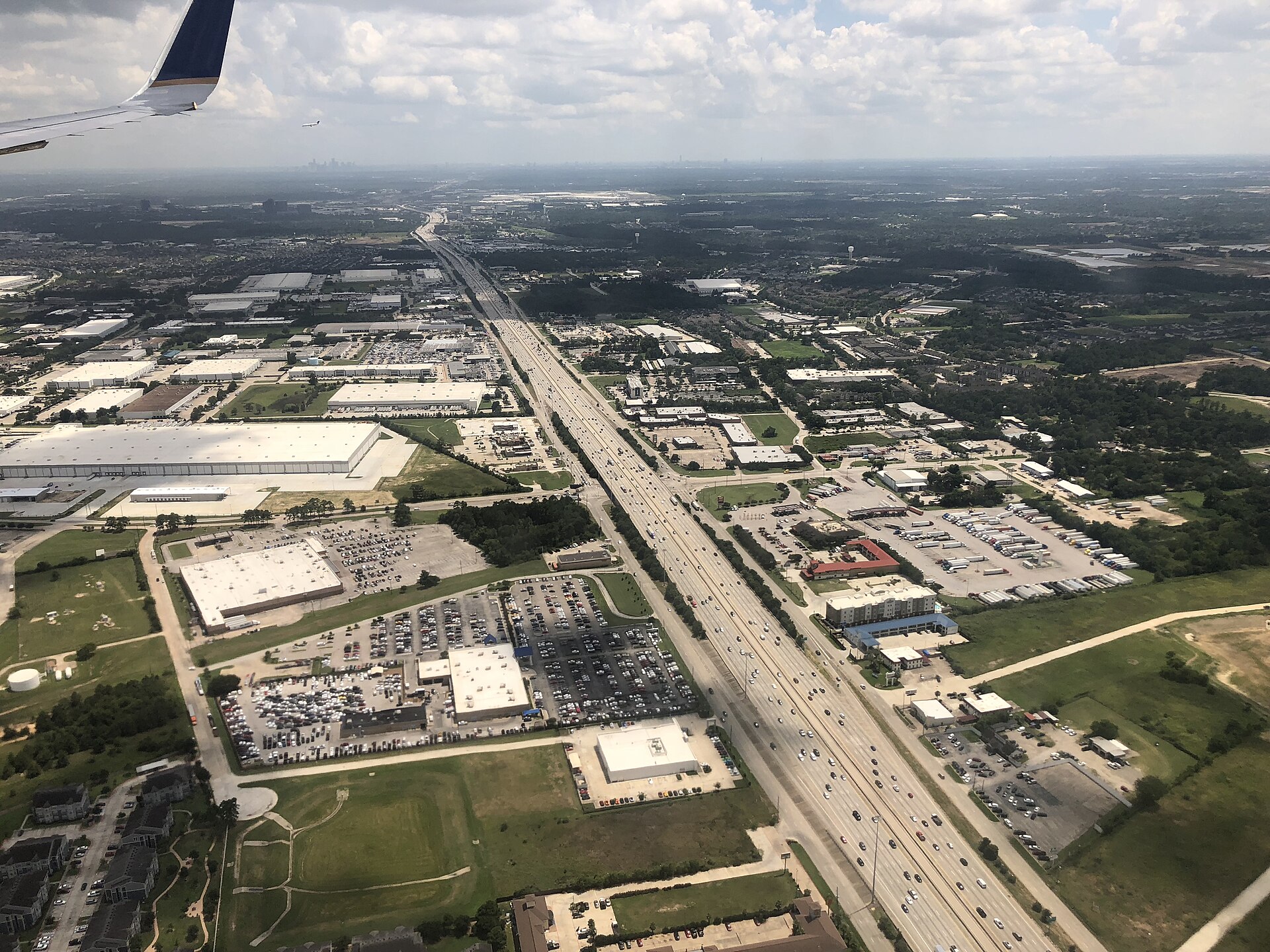
A traumatic brain injury does not always look serious at the scene of a Houston crash. For example, say Marcus is rear-ended in slow traffic on Interstate 45, the North Freeway, on the north side of Houston. At first, he feels shaken but drives home. Then, two days later, he has headaches and trouble focusing at work. This article uses I-45 in Houston as the example, but the rules below apply across Texas. For more background, see the traumatic brain injuries topic page.
Why traumatic brain injury symptoms can show up days later
Some symptoms of a mild traumatic brain injury or concussion appear right away. However, others may not show up for hours or days after the injury. Ctrs. for Disease Control & Prevention, Symptoms of Mild TBI and Concussion. In addition, symptoms may change during recovery. Id.
The CDC lists symptoms such as dizziness, headaches, trouble with attention or concentration, feeling foggy, memory problems, and trouble falling asleep. Id. Because of that delay, the timing of medical visits matters. For example, a doctor’s note from the day Marcus first reports headaches ties those symptoms to a date close to the crash.
The CDC also notes that after a concussion, a person may not recognize or admit having problems. In addition, problems may be overlooked by the person, family members, or even a healthcare provider. Id. Finally, the CDC lists danger signs that call for emergency care right away, such as a headache that gets worse and does not go away, repeated vomiting, or slurred speech. Id.
Who is responsible for a crash injury on I-45 in Houston?
First, Texas law looks at each person whose conduct helped cause the harm. When a case goes to trial, the jury or judge assigns a percentage of responsibility to each injured person, each defendant, and each settling person. Tex. Civ. Prac. & Rem. Code Ann. § 33.003(a). For example, in Marcus’s case, that starts with the driver who hit him.
Second, an employer can be responsible too. Under Texas law, an employer is vicariously liable for an employee’s negligent acts within the course and scope of the job. Painter, 561 S.W.3d at 131. Therefore, if the driver who hit Marcus was making deliveries for work, the company may share liability for his traumatic brain injury.
Third, the location of the crash affects where a lawsuit is filed. In general, a Texas lawsuit belongs in the county where all or a substantial part of the events happened. Tex. Civ. Prac. & Rem. Code Ann. § 15.002(a)(1). For a crash on I-45 in north Houston, that points to Harris County. If the driver who caused the crash had no insurance, see the uninsured driver article.
How long do I have to sue for a traumatic brain injury in Texas?
In most cases, a Texas personal injury lawsuit must be filed within two years after the day the claim accrues. Tex. Civ. Prac. & Rem. Code Ann. § 16.003(a). In other words, the deadline is for bringing suit. As a result, an insurance claim that is still being negotiated does not meet it.
However, the rule has exceptions. For example, when the injured person is under 18 at the time of the injury, the time before turning 18 is not counted. Tex. Civ. Prac. & Rem. Code Ann. § 16.001(a)(1), (b). For more detail, see the statute of limitations article and the Texas deadlines tool.
What the at-fault driver’s insurer may argue
Next, the at-fault driver’s insurer will test each part of the claim. For example, an adjuster may point to the two days between the crash and Marcus’s first doctor visit. Even so, the CDC’s guidance explains that some symptoms appear hours or days after the injury. CDC, supra.
Also, medical bills are another target. In Texas, recovery of medical expenses is limited to the amount actually paid or incurred by or for the injured person. Tex. Civ. Prac. & Rem. Code Ann. § 41.0105. Because of this rule, the insurer may compare the billed amounts with what was actually paid.
The insurer may also argue that Marcus was partly at fault, for example by braking suddenly. That matters because any share of fault assigned to him lowers what he can recover, as the shared-fault section below explains.
What can be recovered for a traumatic brain injury in Texas?
In general, Texas law sorts compensatory damages into two groups. First, economic damages cover actual economic or pecuniary loss. Tex. Civ. Prac. & Rem. Code Ann. § 41.001(4). For Marcus, that could include medical bills, therapy, and lost pay from missed work.
Second, noneconomic damages cover losses such as physical pain and suffering, mental or emotional pain or anguish, physical impairment, and loss of enjoyment of life. Id. § 41.001(12). These losses matter in a traumatic brain injury case, because memory problems or mood changes can affect daily life long after the bills stop. For more detail, see the economic and noneconomic damages article, and for a way to organize bills, see the medical expense tracker.
Steps that protect the claim
First, there is the crash report. A Texas officer who investigates a crash must write a report when someone is hurt or killed, or when one person’s property has apparent damage of $1,000 or more. Tex. Transp. Code Ann. § 550.062(a). In addition, the report form must ask for enough detail to show the cause and conditions of the crash and the people and vehicles involved. Id. § 550.064(b)(1). Then, the officer’s report must be filed electronically with the Texas Department of Transportation within 10 days. Id. § 550.062(b); id. § 550.0601.
Second, there are the medical records. Federal privacy law gives a patient the right to inspect and get a copy of their own health information, with some exceptions. 45 C.F.R. § 164.524(a)(1) (2025). In general, the provider must act on the request within 30 days. Id. § 164.524(b)(2)(i).
Third, a dated log of symptoms helps. For example, Marcus can write down each headache, missed workday, and appointment as it happens. For other early steps, see the after-a-crash checklist.
How shared fault affects a traumatic brain injury recovery
Finally, Texas uses a shared-fault rule. An injured person who is more than 50 percent responsible recovers nothing. Tex. Civ. Prac. & Rem. Code Ann. § 33.001. Otherwise, the damages are reduced by that person’s own percentage of responsibility. Tex. Civ. Prac. & Rem. Code Ann. § 33.012(a).
For example, say a jury assigns Marcus 10 percent of the fault for the I-45 crash. In that case, the court reduces his damages by 10 percent. In contrast, at 51 percent he would recover nothing. For more detail, see the 51 percent rule article.
This article is general information about Texas law. If you need legal advice about your own situation, contact a licensed attorney.
Supporting text
The exact language behind each part of this traumatic brain injury article, in the order it is cited.
Responsibility, deadlines, and damages: the case and statute text
Painter v. Amerimex Drilling I, Ltd., 561 S.W.3d 125, 131 (Tex. 2018)
Supports: the statement that an employer can be responsible for a traumatic brain injury caused by a working driver, because this passage ties employer liability to the course and scope of the job.
In this context, an employer is vicariously liable for its employee’s negligent acts if those acts are within the course and scope of his employment.
Tex. Civ. Prac. & Rem. Code Ann. § 16.003(a)
Supports: the two-year deadline to sue, because this subsection sets that period for personal injury suits.
(a) Except as provided by Sections 16.010, 16.0031, and 16.0045, a person must bring suit for … personal injury, … not later than two years after the day the cause of action accrues.
Tex. Civ. Prac. & Rem. Code Ann. § 41.001(4), (12)
Supports: the two kinds of damages a traumatic brain injury claim can include, because these definitions separate money losses from losses like pain and mental anguish.
(4) “Economic damages” means compensatory damages intended to compensate a claimant for actual economic or pecuniary loss; the term does not include exemplary damages or noneconomic damages. … (12) “Noneconomic damages” means damages awarded for the purpose of compensating a claimant for physical pain and suffering, mental or emotional pain or anguish, loss of consortium, disfigurement, physical impairment, loss of companionship and society, inconvenience, loss of enjoyment of life, injury to reputation, and all other nonpecuniary losses of any kind other than exemplary damages.
Symptoms: the CDC text
Ctrs. for Disease Control & Prevention, Symptoms of Mild TBI and Concussion
Supports: the timing, symptoms, and danger signs described in this traumatic brain injury article. In addition, it supports the point that problems can be overlooked, because the CDC page says so directly.
Some mild TBI and concussion symptoms may appear right away, while others may not appear for hours or days after the injury. … Symptoms may change during recovery. … Dizziness or balance problems … Headaches … Attention or concentration problems … Foggy or groggy … Problems with short- or long-term memory … Trouble falling asleep … A person may not recognize or admit that they are having problems … Problems may be overlooked by the person with a mild TBI or concussion, their family members, or their healthcare provider … Have a headache that gets worse and does not go away … Vomit repeatedly … Have slurred speech or unusual behavior
Fault, venue, deadlines, and medical bills: the statute text
Tex. Civ. Prac. & Rem. Code Ann. § 33.003(a)
Supports: the statement that the jury or judge assigns percentages of responsibility, because this subsection gives that job to the trier of fact.
(a) The trier of fact, as to each cause of action asserted, shall determine the percentage of responsibility, stated in whole numbers, for the following persons with respect to each person’s causing or contributing to cause in any way the harm for which recovery of damages is sought, whether by negligent act or omission, … (1) each claimant; (2) each defendant; (3) each settling person
Tex. Civ. Prac. & Rem. Code Ann. § 15.002(a)(1)
Supports: the point that a crash on I-45 in Houston points to Harris County, because this rule ties the county to where the events happened.
(a) Except as otherwise provided by this subchapter or Subchapter B or C, all lawsuits shall be brought: (1) in the county in which all or a substantial part of the events or omissions giving rise to the claim occurred;
Tex. Civ. Prac. & Rem. Code Ann. § 16.001(a)(1), (b)
Supports: the exception for injured children, because time under a legal disability such as being under 18 is not counted.
(a) For the purposes of this subchapter, a person is under a legal disability if the person is: (1) younger than 18 years of age, regardless of whether the person is married; … (b) If a person entitled to bring a personal action is under a legal disability when the cause of action accrues, the time of the disability is not included in a limitations period.
Tex. Civ. Prac. & Rem. Code Ann. § 41.0105
Supports: the limit on medical bills, because this section caps recovery at amounts actually paid or incurred.
In addition to any other limitation under law, recovery of medical or health care expenses incurred is limited to the amount actually paid or incurred by or on behalf of the claimant.
Crash reports and medical records: the statute and regulation text
Tex. Transp. Code Ann. § 550.062(a), (b)
Supports: the crash report steps in this traumatic brain injury article, because these subsections require the report and set the 10-day filing deadline.
(a) A law enforcement officer who in the regular course of duty investigates a motor vehicle collision shall make a written report of the collision if the collision resulted in injury to or the death of a person or damage to the property of any one person to the apparent extent of $1,000 or more. (b) The report required by Subsection (a) must be filed electronically with the department not later than the 10th day after the date of the collision.
Tex. Transp. Code Ann. § 550.064(b)(1)
Supports: the description of what the report form asks for, because this subdivision lists the cause, conditions, people, and vehicles.
(b) A collision report form prepared by the department must: (1) require sufficiently detailed information to disclose the cause and conditions of and the persons and vehicles involved in a collision if the form is for the report to be made by a person investigating the collision;
Tex. Transp. Code Ann. § 550.0601
Supports: the reference to the Texas Department of Transportation, because this section defines “department” for the crash report rules.
In this subchapter, “department” means the Texas Department of Transportation.
45 C.F.R. § 164.524(a)(1), (b)(2)(i)
Supports: the right to get copies of medical records, and also the 30-day timeline, because these paragraphs grant access and set the deadline.
(1) Right of access. Except as otherwise provided in paragraph (a)(2) or (a)(3) of this section, an individual has a right of access to inspect and obtain a copy of protected health information about the individual in a designated record set, … (2) Timely action by the covered entity. (i) Except as provided in paragraph (b)(2)(ii) of this section, the covered entity must act on a request for access no later than 30 days after receipt of the request
Shared fault: the statute text
Tex. Civ. Prac. & Rem. Code Ann. § 33.001
Supports: the more-than-50-percent bar on traumatic brain injury recovery, because this section states it directly.
In an action to which this chapter applies, a claimant may not recover damages if his percentage of responsibility is greater than 50 percent.
Tex. Civ. Prac. & Rem. Code Ann. § 33.012(a)
Supports: the reduction for shared fault, because this subsection lowers damages by the injured person’s own percentage.
(a) If the claimant is not barred from recovery under Section 33.001, the court shall reduce the amount of damages to be recovered by the claimant with respect to a cause of action by a percentage equal to the claimant’s percentage of responsibility.
