JackHitsBack

Category: Workplace injuries

  • Mesothelioma: A Hidden Cancer That Can Wait 40 Years

    Mesothelioma: A Hidden Cancer That Can Wait 40 Years

    Mesothelioma: the short answer

    Mesothelioma is a rare cancer of the thin lining of the chest and abdomen, and most cases are thought to come from asbestos. Nat’l Cancer Inst., Asbestos Exposure and Cancer Risk Fact Sheet. The ads point to something real: federal bankruptcy law lets asbestos companies set up trusts that pay asbestos injury claims. 11 U.S.C. § 524(g)(2)(B)(i)(IV). In Texas, the two-year deadline to sue over mesothelioma doesn’t start at the old exposure. Tex. Civ. Prac. & Rem. Code Ann. § 16.0031(a).

    Plenty of people know the word mesothelioma from TV ads before they ever hear it from a doctor. The ads are loud. But the facts underneath them are simple. I’ll use a retired worker from Pasadena as the example, though the law is the same across Texas.
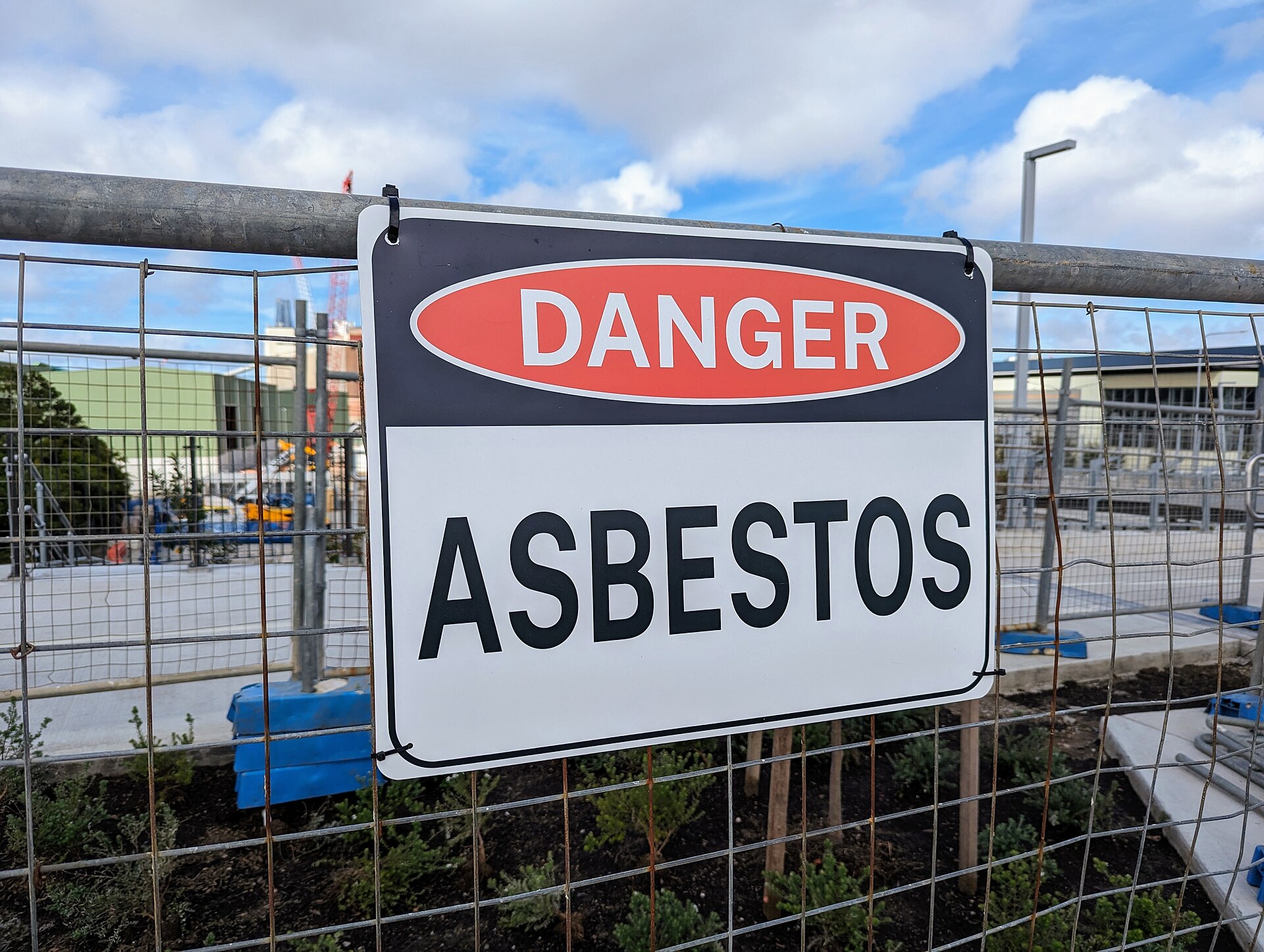
    Danger Asbestos warning sign on a construction fence, a reminder of the exposure behind most mesothelioma cases
    A “Danger: Asbestos” warning sign on a construction fence in Sydney, Australia. Photo: Jpatokal, Wikimedia Commons, CC BY-SA 4.0.

    What is mesothelioma?

    In short, it’s a cancer. The National Cancer Institute calls mesothelioma “a relatively rare cancer of the thin membranes that line the chest and abdomen.” Nat’l Cancer Inst., Asbestos Exposure and Cancer Risk Fact Sheet. And the main cause is well known: “it is thought that most mesotheliomas are due to asbestos exposure.” Id.

    For context, asbestos is a group of six natural minerals made of fibers that can be pulled into thin, durable threads, which is why industry used it for so long. Id.

    Here’s the catch with timing. It can take 10 to 40 years or more for symptoms of an asbestos-related condition to appear. Id. So someone exposed in the 1970s can be getting sick now.

    Why are there so many mesothelioma ads?

    Two plain facts sit behind them. First, that long delay means new mesothelioma cases keep turning up decades after the exposure happened. NCI Asbestos Fact Sheet.

    Second, federal bankruptcy law has a section written for asbestos. It lets a company in bankruptcy set up a trust that takes over its asbestos injury and wrongful death liabilities, and the trust then uses “its assets or income to pay claims and demands.” 11 U.S.C. § 524(g)(2)(B)(i)(I), (IV). In other words, a trust can pay asbestos claims tied to a company that went through bankruptcy.

    Still, an ad is an advertisement. It isn’t a diagnosis, and it isn’t proof that any one person has a claim.

    Who is at risk for mesothelioma? A Pasadena example

    Not everyone who has been near asbestos. In fact, everyone is exposed to small amounts at some point, but “most people do not become ill from their exposure.” NCI Asbestos Fact Sheet. Instead, the people who get sick are usually those exposed on a regular basis, often at work. Id.

    For example, NCI names workers in the shipbuilding trades, asbestos mining and milling, asbestos product manufacturing, and insulation work in construction. Then it adds demolition workers, drywall removers, firefighters, and auto workers. Id. Families matter, too, because there’s some evidence that family members of heavily exposed workers face a higher risk, from fibers carried home on clothes, skin, and hair. Id.

    For instance, picture Ray, a retired insulator from Pasadena who worked construction jobs in the 1970s. Now, decades later, a doctor diagnoses him with mesothelioma. His wife washed his work clothes for years, so she’s in the family group NCI flags. In the end, whether any one person has the disease is a question for a doctor, not an ad.

    What can someone with mesothelioma do under Texas law?

    First, there’s the medical report. A Texas asbestos claim needs a report from a board-certified physician stating that the person “has been diagnosed with malignant mesothelioma or other malignant asbestos-related cancer” and that asbestos was a cause, to a reasonable degree of medical probability. Tex. Civ. Prac. & Rem. Code Ann. § 90.003(a)(1).

    Second, the deadline. Texas usually gives two years to sue for a personal injury. Tex. Civ. Prac. & Rem. Code Ann. § 16.003(a). But for an asbestos injury, that clock starts on the earlier of the person’s death or the date a qualifying medical report is served on a defendant. Tex. Civ. Prac. & Rem. Code Ann. § 16.0031(a). So Ray’s deadline didn’t start back in the 1970s. The statute of limitations article covers the general rule.

    Third, the family. If an injury caused by someone’s wrongful act or neglect leads to a death, Texas allows a wrongful death claim. Tex. Civ. Prac. & Rem. Code Ann. § 71.002(a); id. § 71.002(b). In addition, that claim is for the benefit of “the surviving spouse, children, and parents of the deceased.” Tex. Civ. Prac. & Rem. Code Ann. § 71.004(a). The wrongful death topic page goes further.

    Also, NCI notes that some people with asbestos-related illness may be eligible for Medicare coverage. NCI Asbestos Fact Sheet. For more on job-related illness and injury, see the workplace injuries topic page.

    This article is general information about Texas law. If you need legal advice about your own situation, contact a licensed attorney.

    Show the sources (Supporting text)

    Supporting text

    The exact language behind each part of this mesothelioma article, in the order it is cited.

    What mesothelioma is: the sources

    Nat’l Cancer Inst., Asbestos Exposure and Cancer Risk Fact Sheet

    Supports: the description of mesothelioma as a rare cancer of the chest and abdomen lining, and the link to asbestos, because the fact sheet states both.

    According to IARC, there is sufficient evidence that asbestos causes mesothelioma (a relatively rare cancer of the thin membranes that line the chest and abdomen), and cancers of the lung, larynx, and ovary (8). In fact, it is thought that most mesotheliomas are due to asbestos exposure (9).

    11 U.S.C. § 524(g)(2)(B)(i)(I), (IV)

    Supports: the asbestos trusts behind many mesothelioma ads, since this section describes a trust that takes on asbestos liabilities and pays claims.

    (I) is to assume the liabilities of a debtor which at the time of entry of the order for relief has been named as a defendant in personal injury, wrongful death, or property-damage actions seeking recovery for damages allegedly caused by the presence of, or exposure to, asbestos or asbestos-containing products; … (IV) is to use its assets or income to pay claims and demands

    Tex. Civ. Prac. & Rem. Code Ann. § 16.0031(a)

    Supports: the rule that the two-year clock for an asbestos injury starts at death or service of the medical report, so an old exposure does not start it.

    (a) In an action for personal injury or death resulting from an asbestos-related injury, as defined by Section 90.001, the cause of action accrues for purposes of Section 16.003 on the earlier of the following dates: (1) the date of the exposed person’s death; or (2) the date that the claimant serves on a defendant a report complying with Section 90.003 or 90.010(f).

    NCI Asbestos Fact Sheet

    Supports: the plain description of asbestos, because this passage explains what it is and why industry used it.

    Asbestos is the name given to six minerals that occur naturally in the environment as bundles of fibers that can be separated into thin, durable threads for use in commercial and industrial applications.

    NCI Asbestos Fact Sheet

    Supports: the 10 to 40 year delay before symptoms, which is why new mesothelioma cases keep appearing.

    Generally, those who develop asbestos-related diseases show no signs of illness for a long time after exposure. It can take from 10 to 40 years or more for symptoms of an asbestos-related condition to appear (2).

    Who is at risk: the NCI fact sheet

    NCI Asbestos Fact Sheet

    Supports: the point that most exposed people do not get sick and regular exposure at work is the usual pattern, as this passage says.

    Everyone is exposed to asbestos at some time during their life. Low levels of asbestos are present in the air, water, and soil. However, most people do not become ill from their exposure. People who become ill from asbestos are usually those who are exposed to it on a regular basis, most often in a job where they work directly with the material or through substantial environmental contact.

    NCI Asbestos Fact Sheet

    Supports: the list of trades with recognized asbestos hazards, because NCI names each of them here.

    Health hazards from asbestos fibers have been recognized in workers exposed in the shipbuilding trades, asbestos mining and milling, manufacturing of asbestos textiles and other asbestos products, insulation work in the construction and building trades, and a variety of other trades. Demolition workers, drywall removers, asbestos removal workers, firefighters, and automobile workers also may be exposed to asbestos fibers.

    NCI Asbestos Fact Sheet

    Supports: the added mesothelioma risk for family members, so the Pasadena example includes Ray’s wife.

    There is some evidence that family members of workers heavily exposed to asbestos face an increased risk of developing mesothelioma (12). This risk is thought to result from exposure to asbestos fibers brought into the home on the shoes, clothing, skin, and hair of workers.

    Texas mesothelioma claims: the statute text

    Tex. Civ. Prac. & Rem. Code Ann. § 90.003(a)(1)

    Supports: the medical report a Texas mesothelioma claim needs, because this subsection spells out who signs it and what it says.

    (a) A claimant asserting an asbestos-related injury must serve on each defendant the following information: (1) a report by a physician who is board certified in pulmonary medicine, occupational medicine, internal medicine, oncology, or pathology and whose license and certification were not on inactive status at the time the report was made stating that: (A) the exposed person has been diagnosed with malignant mesothelioma or other malignant asbestos-related cancer; and (B) to a reasonable degree of medical probability, exposure to asbestos was a cause of the diagnosed mesothelioma or other cancer in the exposed person; or …

    Tex. Civ. Prac. & Rem. Code Ann. § 16.003(a)

    Supports: the general two-year deadline for personal injury suits, which the asbestos rule then adjusts.

    (a) Except as provided by Sections 16.010, 16.0031, and 16.0045, a person must bring suit for trespass for injury to the estate or to the property of another, conversion of personal property, taking or detaining the personal property of another, personal injury, forcible entry and detainer, and forcible detainer not later than two years after the day the cause of action accrues.

    Tex. Civ. Prac. & Rem. Code Ann. § 71.002(a); id. § 71.002(b)

    Supports: the wrongful death claim when wrongful conduct causes a death, because these subsections create it.

    (a) An action for actual damages arising from an injury that causes an individual’s death may be brought if liability exists under this section. (b) A person is liable for damages arising from an injury that causes an individual’s death if the injury was caused by the person’s or his agent’s or servant’s wrongful act, neglect, carelessness, unskillfulness, or default.

    Tex. Civ. Prac. & Rem. Code Ann. § 71.004(a)

    Supports: the family members a wrongful death claim benefits, so a spouse, children, and parents are covered.

    (a) An action to recover damages as provided by this subchapter is for the exclusive benefit of the surviving spouse, children, and parents of the deceased.

    NCI Asbestos Fact Sheet

    Supports: the Medicare note, because NCI lists it among programs that help people with asbestos-related illness.

    Some people with asbestos-related illness may be eligible for Medicare coverage.
  • No Workers Comp: Why Employers Lose Key Defenses Now

    No Workers Comp: Why Employers Lose Key Defenses Now

    No workers comp: the short answer

    When a Texas employer has no workers comp, a worker hurt on the job can sue the employer, and the employer can’t defend by blaming the worker’s own negligence, saying the worker assumed the risk, or blaming a co-worker. Tex. Lab. Code Ann. § 406.033(a). The worker still has to prove the employer, or someone acting for it, was negligent. Id. § 406.033(d).

    Most private employers in Texas get to choose whether to carry workers’ compensation insurance. Tex. Lab. Code Ann. § 406.002(a). So some don’t. For example, say Andre works at a plant supply yard off Highway 225 in Pasadena, and his employer has no workers comp. A forklift with a bad brake pins his leg. The rules below are statewide, so Pasadena is just the setting.

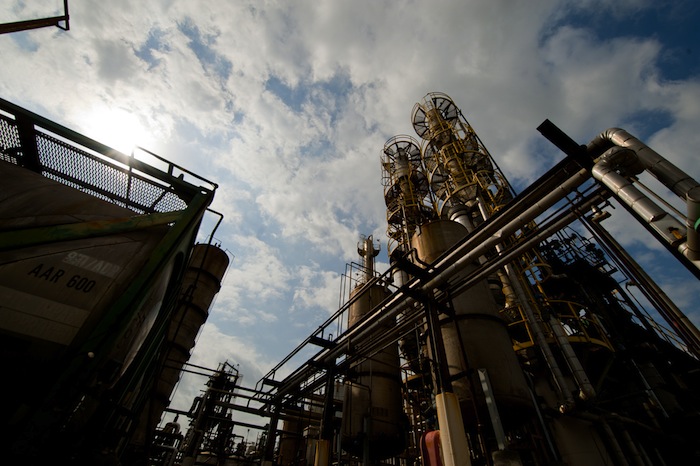
    A refinery unit in Pasadena, Texas, the setting for this no workers comp example
    A refinery unit in Pasadena, Texas. Photo: Honeywell, via Wikimedia Commons, CC BY-SA 3.0.

    Can I sue my employer if there’s no workers comp in Texas?

    Yes. Without workers’ comp, there’s no comp claim to file, so the injury claim goes against the employer directly.

    And the employer loses three defenses. It is not a defense that the worker was contributorily negligent, that the worker assumed the risk, or that a fellow employee’s negligence caused the injury. Tex. Lab. Code Ann. § 406.033(a). That matters in Andre’s case. The employer can’t win by saying he should have jumped clear, or that a co-worker was driving the forklift.

    Two defenses do survive. The employer can argue the worker meant to cause the injury, or was intoxicated when it happened. Id. § 406.033(c).

    Public employers are a different story. The choice to skip coverage belongs to private employers, not public ones. Tex. Lab. Code Ann. § 406.002(a).

    What does an injured worker have to prove when there’s no workers comp?

    Negligence. The worker must prove negligence by the employer, or by an agent or servant of the employer acting within the general scope of the job. Tex. Lab. Code Ann. § 406.033(d). In plain terms, the company answers for a supervisor or co-worker who was careless on the clock.

    So in Andre’s case, the questions are concrete. Did anyone report the bad brake? Did a supervisor keep the forklift running anyway? Inspection logs, repair tickets, and texts about the brake are the kind of proof that answers them.

    Once negligence is proven, the damages work like any other Texas injury suit. They include economic losses, like medical bills and lost pay. Tex. Civ. Prac. & Rem. Code Ann. § 41.001(4). They also include noneconomic losses, such as physical pain, mental anguish, and physical impairment. Id. § 41.001(12).

    With no workers comp, can a boss make a worker sign away the right to sue?

    Not before the injury. A waiver signed before the injury or death is void and unenforceable. Tex. Lab. Code Ann. § 406.033(e).

    After an injury, the rules are strict. A waiver counts only if the worker signs it voluntarily and knows its effect, signs it no earlier than the 10th business day after the first injury report, has first had a medical evaluation from a nonemergency care doctor, and gets it in a writing that states the true intent of the parties. Id. § 406.033(f). The waiver language also has to be conspicuous, in larger type or contrasting colors. Id. § 406.033(g).

    Here’s the catch. A release handed over in the first week after an injury, before the 10th business day, doesn’t meet that test. Say Andre’s supervisor offers $2,000 and a release three days after the forklift accident. Under the 10-day rule, that release fails. Tex. Lab. Code Ann. § 406.033(f)(2).

    How does a worker find out, and how long is there to sue?

    The employer has to say. Every employer must tell each employee whether it has workers’ comp, including new hires at the time they’re hired. Tex. Lab. Code Ann. § 406.005(a), (b). It also has to post a notice about its coverage at conspicuous spots at the workplace. Id. § 406.005(c).

    The deadline to sue is the usual one for injury claims: two years after the claim accrues. Tex. Civ. Prac. & Rem. Code Ann. § 16.003(a). For the bigger picture on job injuries, see the workplace injury article, and for plant blasts, the refinery explosion article.

    This article is general information about Texas law. If you need legal advice about your own situation, contact a licensed attorney.

    Supporting text

    The exact language behind each part of this no workers comp article, in the order it is cited.

    No workers comp defenses and proof: the statute text

    Tex. Lab. Code Ann. § 406.033(a)

    Supports: the three defenses an employer with no workers comp loses, because this subsection lists them.

    (a) In an action against an employer by or on behalf of an employee who is not covered by workers’ compensation insurance obtained in the manner authorized by Section 406.003 to recover damages for personal injuries or death sustained by an employee in the course and scope of the employment, it is not a defense that: (1) the employee was guilty of contributory negligence; (2) the employee assumed the risk of injury or death; or (3) the injury or death was caused by the negligence of a fellow employee.

    Tex. Lab. Code Ann. § 406.033(d)

    Supports: the worker’s duty to prove negligence, because this subsection puts that burden on the plaintiff.

    (d) In an action described by Subsection (a), the plaintiff must prove negligence of the employer or of an agent or servant of the employer acting within the general scope of the agent’s or servant’s employment.

    Tex. Lab. Code Ann. § 406.002(a)

    Supports: the point that coverage is optional for most private employers, because this subsection makes it elective.

    (a) Except for public employers and as otherwise provided by law, an employer may elect to obtain workers’ compensation insurance coverage.

    Tex. Lab. Code Ann. § 406.033(c)

    Supports: the two defenses that remain, because this subsection keeps intent and intoxication.

    (c) The employer may defend the action on the ground that the injury was caused: (1) by an act of the employee intended to bring about the injury; or (2) while the employee was in a state of intoxication.

    Damages: the statute text

    Tex. Civ. Prac. & Rem. Code Ann. § 41.001(4)

    Supports: the economic damages a worker with no workers comp can seek, because this definition covers actual money losses.

    (4) “Economic damages” means compensatory damages intended to compensate a claimant for actual economic or pecuniary loss; the term does not include exemplary damages or noneconomic damages.

    Tex. Civ. Prac. & Rem. Code Ann. § 41.001(12)

    Supports: the noneconomic losses, because this definition names pain, anguish, and impairment.

    (12) “Noneconomic damages” means damages awarded for the purpose of compensating a claimant for physical pain and suffering, mental or emotional pain or anguish, loss of consortium, disfigurement, physical impairment, loss of companionship and society, inconvenience, loss of enjoyment of life, injury to reputation, and all other nonpecuniary losses of any kind other than exemplary damages.

    No workers comp waivers: the statute text

    Tex. Lab. Code Ann. § 406.033(e)

    Supports: the rule against waivers signed before an injury, because this subsection makes them void.

    (e) A cause of action described in Subsection (a) may not be waived by an employee before the employee’s injury or death. Any agreement by an employee to waive a cause of action or any right described in Subsection (a) before the employee’s injury or death is void and unenforceable.

    Tex. Lab. Code Ann. § 406.033(f)

    Supports: the four conditions for a waiver after an injury, because this subsection lists them.

    (f) A cause of action described by Subsection (a) may not be waived by an employee after the employee’s injury unless: (1) the employee voluntarily enters into the waiver with knowledge of the waiver’s effect; (2) the waiver is entered into not earlier than the 10th business day after the date of the initial report of injury; (3) the employee, before signing the waiver, has received a medical evaluation from a nonemergency care doctor; and (4) the waiver is in a writing under which the true intent of the parties is specifically stated in the document.

    Tex. Lab. Code Ann. § 406.033(g)

    Supports: the conspicuous-type requirement, because this subsection defines it.

    (g) The waiver provisions required under Subsection (f) must be conspicuous and appear on the face of the agreement. To be conspicuous, the waiver provisions must appear in a type larger than the type contained in the body of the agreement or in contrasting colors.

    Notice and the deadline: the statute text

    Tex. Lab. Code Ann. § 406.005(a), (b)

    Supports: the employer’s duty to tell workers whether it has no workers comp, because this subsection requires notice either way.

    (a) An employer shall notify each employee as provided by this section whether or not the employer has workers’ compensation insurance coverage. (b) The employer shall notify a new employee of the existence or absence of workers’ compensation insurance coverage at the time the employee is hired.

    Tex. Lab. Code Ann. § 406.005(c)

    Supports: the posted notice, because this subsection requires it at the workplace.

    (c) Each employer shall post a notice of whether the employer has workers’ compensation insurance coverage at conspicuous locations at the employer’s place of business as necessary to provide reasonable notice to the employees.

    Tex. Civ. Prac. & Rem. Code Ann. § 16.003(a)

    Supports: the two-year deadline for a no workers comp injury suit, because this subsection covers personal injury suits.

    (a) Except as provided by Sections 16.010, 16.0031, and 16.0045, a person must bring suit for … personal injury … not later than two years after the day the cause of action accrues.
  • Refinery Explosion: Workers Hurt in a Blast Keep Powerful Rights

    Refinery Explosion: Workers Hurt in a Blast Keep Powerful Rights

    Refinery explosion: the short answer

    After a refinery explosion in Texas, a worker whose employer carries workers’ compensation generally collects those benefits instead of suing the employer. Tex. Lab. Code Ann. § 408.001(a). However, the worker can also sue other companies whose carelessness helped cause the blast. Id. § 417.001(a). In addition, a family can seek exemplary damages from an employer whose gross negligence caused a death. Id. § 408.001(b).

    A refinery explosion can change a family’s life in one loud second. For example, say Marco works for a maintenance contractor at a plant on the Houston Ship Channel in Pasadena when a unit blows during a repair job. To begin with, this article walks through a Ship Channel refinery explosion under Texas law, from who can be held responsible to the deadlines that protect the claim. The rules are statewide, so the same law applies to a plant in Baytown, Beaumont, or Corpus Christi.

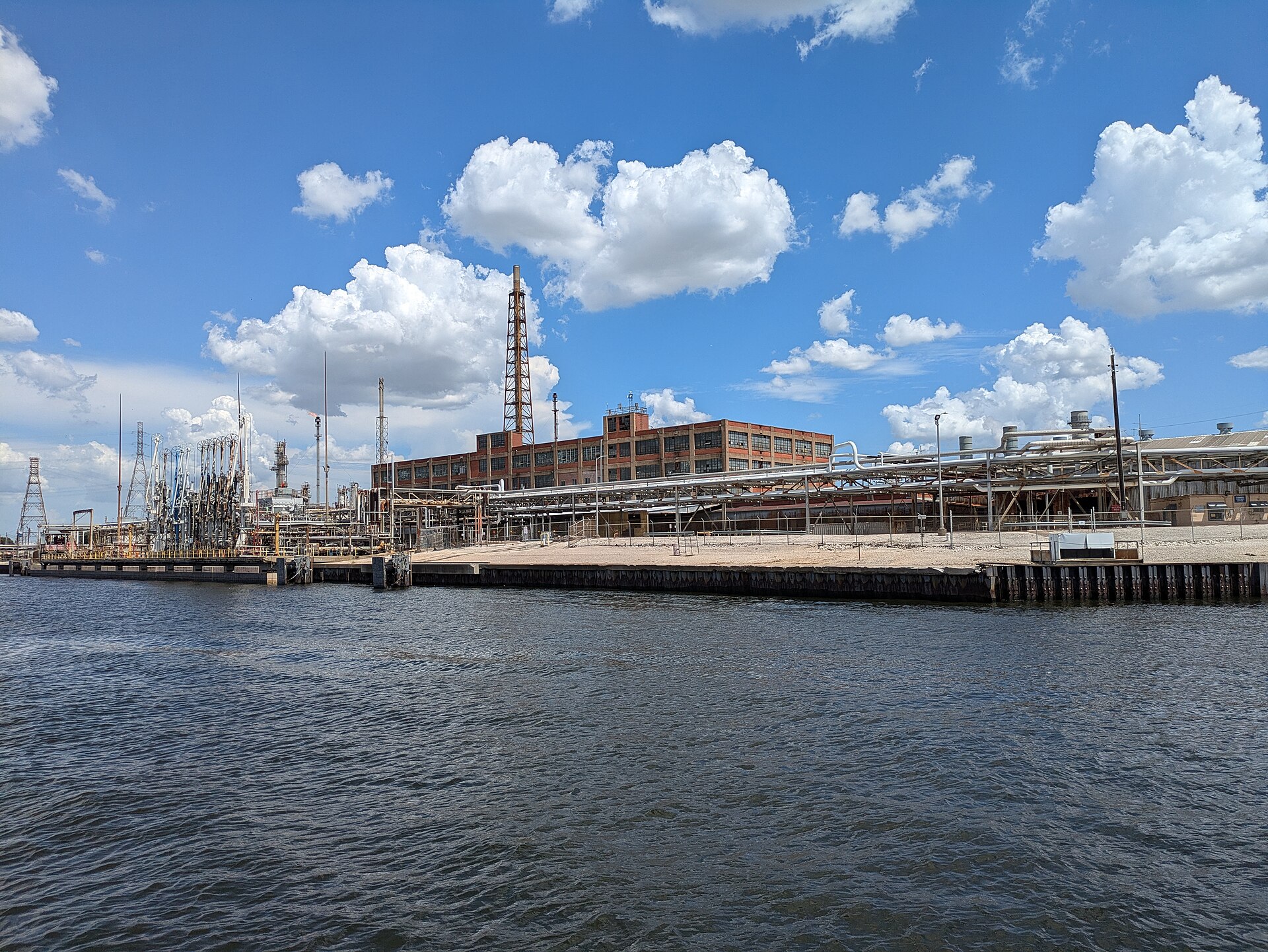
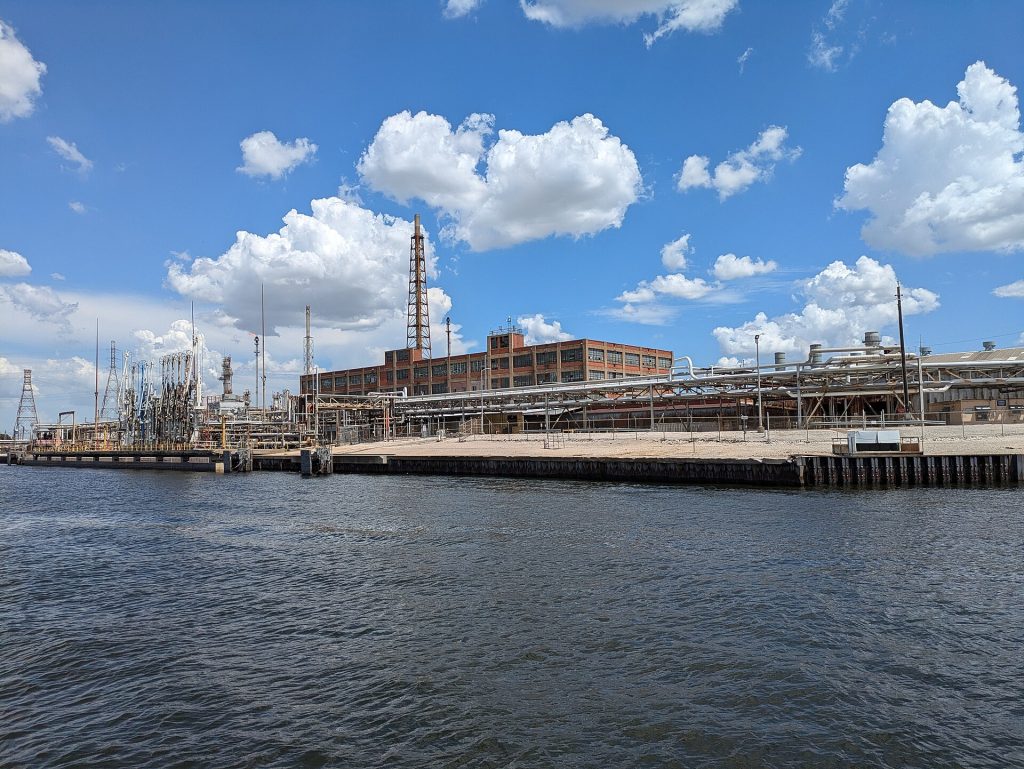
    A refinery seen from the water on the Houston Ship Channel, the setting for this refinery explosion example
    A refinery seen from the Houston Ship Channel in Houston. Photo: Rifleman 82, Wikimedia Commons, CC BY-SA 4.0.

    Who can be held responsible for a refinery explosion in Texas?

    First, every injury claim in Texas starts with negligence. In short, a company is responsible when it owed a legal duty, broke that duty, and caused harm. Greater Hous. Transp. Co. v. Phillips, 801 S.W.2d 523, 525 (Tex. 1990). Because of this, several companies may fit that test at once after a refinery explosion.

    Next comes the employer. In Texas, most private employers choose whether to carry workers’ compensation. Tex. Lab. Code Ann. § 406.002(a). Also, when the employer does carry it, comp benefits are the worker’s only remedy against that employer. Id. § 408.001(a).

    However, that limit protects only the employer. In particular, the worker can still sue a third party, such as the plant owner, another contractor on site, or the maker of a failed valve, and collect comp benefits at the same time. Id. § 417.001(a). For example, in Marco’s case, his employer is the contractor. As a result, the plant owner and any other company on the unit are possible third parties.

    Ship Channel plants: when the owner answers to contract workers

    In fact, many people hurt in a refinery explosion work for contractors, not for the plant. Because of that, a special statute governs their claims against the plant owner. In particular, it applies only when the injury comes from work that builds, repairs, renovates, or modifies part of the property. Tex. Civ. Prac. & Rem. Code Ann. § 95.002.

    Under that statute, the owner is responsible when two things are true. First, the owner exercised or kept some control over how the work was done, beyond starting, stopping, or inspecting it. Second, the owner actually knew of the danger and failed to adequately warn. Id. § 95.003.

    In other words, the claim against the owner turns on control and knowledge. Because of that, records showing who directed the job and who knew about the hazard carry real weight in a contract worker’s refinery explosion claim.

    What if the employer has no workers’ comp?

    However, some Texas employers do not carry workers’ compensation. In fact, these employers are often called nonsubscribers. As a result, when a nonsubscriber’s worker is hurt on the job and sues, the employer loses three common defenses. Tex. Lab. Code Ann. § 406.033(a).

    Specifically, the employer cannot defend by arguing that the worker was careless, that the worker accepted the risk, or that a coworker caused the injury. Id. Even so, the worker must still prove the employer or one of its agents was negligent. Id. § 406.033(d).

    Can a family sue after a deadly refinery explosion?

    Yes. In fact, Texas law makes a company liable when its own carelessness, or its workers’ carelessness, causes a death. Tex. Civ. Prac. & Rem. Code Ann. § 71.002(b). In addition, that wrongful death claim belongs to the surviving spouse, children, and parents. Id. § 71.004(a).

    Even so, when the employer carries comp, the family usually cannot recover ordinary damages from that employer. Tex. Lab. Code Ann. § 408.001(a). However, Texas protects one important exception. Specifically, a spouse or heirs of the body can recover exemplary damages when the employer’s gross negligence or intentional act caused the death. Id. § 408.001(b). Likewise, the Texas Constitution sets out the same right against any company that causes a death through gross neglect. Tex. Const. art. XVI, § 26.

    For this purpose, gross negligence has the meaning given in the state’s damages chapter. Tex. Lab. Code Ann. § 408.001(c). Also, claims against third parties remain open to the family, just as they are for an injured worker. Id. § 417.001(a).

    How long do I have to sue after a refinery explosion?

    In general, a personal injury lawsuit must be filed within two years after the claim accrues. Tex. Civ. Prac. & Rem. Code Ann. § 16.003(a). However, for a death claim, the two years starts on the date of death. Id. § 16.003(b).

    In addition, the workers’ comp system has shorter steps. First, the employer must be told about the injury within 30 days. Tex. Lab. Code Ann. § 409.001(a). Then, the comp claim must be filed with the state within one year. Id. § 409.003.

    Finally, location matters too. Specifically, under the general venue rule, a lawsuit is filed in the county where all or a substantial part of the events happened. Tex. Civ. Prac. & Rem. Code Ann. § 15.002(a)(1). For example, Pasadena is in Harris County, so a Pasadena refinery explosion would generally point to the Harris County courts in Houston. For a quick list of these clocks, see the Texas deadlines tool.

    What the companies’ insurers will try

    For example, insurers for the plant and other contractors may try to shift blame onto the injured worker. That matters because Texas uses a shared-fault rule. Even so, an injured person can recover as long as their share of fault is not more than 50 percent. Tex. Civ. Prac. & Rem. Code Ann. § 33.001. Any award is then reduced by the injured person’s own percentage. Id. § 33.012(a).

    In contrast, a company found more than 50 percent responsible can owe the entire award, not just its share. Id. § 33.013(b)(1). As a result, the fight over percentages often decides how much a refinery explosion claim is worth.

    Also, the comp carrier has its own stake. In particular, when it pays benefits, it steps into the worker’s rights against the third party. Tex. Lab. Code Ann. § 417.001(b). In short, part of a third-party recovery may go back to the carrier.

    Common misconceptions about blast claims at work

    First, one common belief is that workers’ comp ends every lawsuit. In fact, comp blocks suits against a covered employer, but claims against outside companies stay open. Id. § 417.001(a).

    Next, many people believe that a worker who made any mistake recovers nothing. Instead, Texas bars recovery only when the injured person is more than 50 percent at fault. Tex. Civ. Prac. & Rem. Code Ann. § 33.001. In addition, against a nonsubscribing employer, the worker’s own carelessness is not a defense at all. Tex. Lab. Code Ann. § 406.033(a).

    What can someone hurt in a refinery explosion recover?

    In general, damages in a refinery explosion lawsuit against a third party fall into two main groups. First, economic damages cover actual money losses, such as medical bills and lost pay. Tex. Civ. Prac. & Rem. Code Ann. § 41.001(4).

    Second, noneconomic damages cover human losses. For example, these include physical pain, mental anguish, disfigurement, physical impairment, and loss of enjoyment of life. Id. § 41.001(12). For more, see the guide to economic and noneconomic damages, the refinery and plant explosions topic page, and the workplace injuries topic page.

    This article is general information about Texas law. If you need legal advice about your own situation, contact a licensed attorney.

    Supporting text

    The exact language behind each part of this refinery explosion article, in the order it is cited.

    Refinery explosion short answer: the workers’ comp text

    Tex. Lab. Code Ann. § 408.001(a)

    Supports: the short answer’s first point, because this subsection makes workers’ compensation benefits the exclusive remedy against a covered employer.

    (a) Recovery of workers’ compensation benefits is the exclusive remedy of an employee covered by workers’ compensation insurance coverage or a legal beneficiary against the employer or an agent or employee of the employer for the death of or a work-related injury sustained by the employee.

    Tex. Lab. Code Ann. § 417.001(a)

    Supports: the point that an injured worker can sue other companies after a refinery explosion, because this subsection allows a claim against a third party along with workers’ compensation benefits.

    (a) An employee or legal beneficiary may seek damages from a third party who is or becomes liable to pay damages for an injury or death that is compensable under this subtitle and may also pursue a claim for workers’ compensation benefits under this subtitle.

    Tex. Lab. Code Ann. § 408.001(b)

    Supports: the point that a family can still seek exemplary damages after a deadly refinery explosion, because this subsection keeps that claim open when the employer’s gross negligence caused the death.

    (b) This section does not prohibit the recovery of exemplary damages by the surviving spouse or heirs of the body of a deceased employee whose death was caused by an intentional act or omission of the employer or by the employer’s gross negligence.

    Who is responsible for a refinery explosion: the negligence and coverage text

    Greater Hous. Transp. Co. v. Phillips, 801 S.W.2d 523, 525 (Tex. 1990)

    Supports: the three parts of a negligence claim, because this passage lists duty, breach, and damages caused by the breach.

    The common law doctrine of negligence consists of three elements: 1) a legal duty owed by one person to another; 2) a breach of that duty; and 3) damages proximately resulting from the breach.

    Tex. Lab. Code Ann. § 406.002(a)

    Supports: the point that most private Texas employers choose whether to carry workers’ comp, because this subsection makes coverage elective.

    (a) Except for public employers and as otherwise provided by law, an employer may elect to obtain workers’ compensation insurance coverage.

    Plant owners and contract workers: the statute text

    Tex. Civ. Prac. & Rem. Code Ann. § 95.002

    Supports: the scope of the plant owner rule, because this section limits Chapter 95 to claims arising from work that builds, repairs, renovates, or modifies an improvement.

    This chapter applies only to a claim:(1) against a property owner, contractor, or subcontractor for personal injury, death, or property damage to an owner, a contractor, or a subcontractor or an employee of a contractor or subcontractor; and(2) that arises from the condition or use of an improvement to real property where the contractor or subcontractor constructs, repairs, renovates, or modifies the improvement.

    Tex. Civ. Prac. & Rem. Code Ann. § 95.003

    Supports: the two things a contract worker must show against the plant owner in a refinery explosion claim, because this section names control over the work and actual knowledge of the danger.

    A property owner is not liable for personal injury, death, or property damage to a contractor, subcontractor, or an employee of a contractor or subcontractor who constructs, repairs, renovates, or modifies an improvement to real property, including personal injury, death, or property damage arising from the failure to provide a safe workplace unless:(1) the property owner exercises or retains some control over the manner in which the work is performed, other than the right to order the work to start or stop or to inspect progress or receive reports; and(2) the property owner had actual knowledge of the danger or condition resulting in the personal injury, death, or property damage and failed to adequately warn.

    Employers without workers’ comp: the statute text

    Tex. Lab. Code Ann. § 406.033(a)

    Supports: the defenses a nonsubscribing employer loses, because this subsection lists the worker’s own negligence, assumed risk, and a coworker’s negligence.

    (a) In an action against an employer by or on behalf of an employee who is not covered by workers’ compensation insurance obtained in the manner authorized by Section 406.003 to recover damages for personal injuries or death sustained by an employee in the course and scope of the employment, it is not a defense that:(1) the employee was guilty of contributory negligence;(2) the employee assumed the risk of injury or death; or(3) the injury or death was caused by the negligence of a fellow employee.

    Tex. Lab. Code Ann. § 406.033(d)

    Supports: the point that the worker must still prove the employer was negligent, because this subsection puts that burden on the worker.

    (d) In an action described by Subsection (a), the plaintiff must prove negligence of the employer or of an agent or servant of the employer acting within the general scope of the agent’s or servant’s employment.

    Deadly blasts: the wrongful death and exemplary damages text

    Tex. Civ. Prac. & Rem. Code Ann. § 71.002(b)

    Supports: the wrongful death claim after a refinery explosion, because this subsection makes a company liable when its own or its workers’ carelessness causes a death.

    (b) A person is liable for damages arising from an injury that causes an individual’s death if the injury was caused by the person’s or his agent’s or servant’s wrongful act, neglect, carelessness, unskillfulness, or default.

    Tex. Civ. Prac. & Rem. Code Ann. § 71.004(a)

    Supports: the list of family members who benefit from a wrongful death claim, because this subsection names the spouse, children, and parents.

    (a) An action to recover damages as provided by this subchapter is for the exclusive benefit of the surviving spouse, children, and parents of the deceased.

    Tex. Const. art. XVI, § 26

    Supports: the constitutional basis for exemplary damages after a death, because this section makes a company that causes a death by gross neglect answer to the family.

    Every person, corporation, or company, that may commit a homicide, through wilful act, or omission, or gross neglect, shall be responsible, in exemplary damages, to the surviving husband, widow, heirs of his or her body, or such of them as there may be, without regard to any criminal proceeding that may or may not be had in relation to the homicide.

    Tex. Lab. Code Ann. § 408.001(c)

    Supports: the definition of gross negligence, because this subsection borrows the meaning from the damages chapter of the Civil Practice and Remedies Code.

    (c) In this section, “gross negligence” has the meaning assigned by Section 41.001, Civil Practice and Remedies Code.

    Refinery explosion deadlines to sue: the statute text

    Tex. Civ. Prac. & Rem. Code Ann. § 16.003(a)

    Supports: the two-year deadline to sue after a refinery explosion injury, because this subsection sets two years for personal injury claims.

    (a) Except as provided by Sections 16.010, 16.0031, and 16.0045, a person must bring suit for trespass for injury to the estate or to the property of another, conversion of personal property, taking or detaining the personal property of another, personal injury, forcible entry and detainer, and forcible detainer not later than two years after the day the cause of action accrues.

    Tex. Civ. Prac. & Rem. Code Ann. § 16.003(b)

    Supports: the deadline for a death claim, because this subsection starts the two years on the date of death.

    (b) A person must bring suit not later than two years after the day the cause of action accrues in an action for injury resulting in death. The cause of action accrues on the death of the injured person.

    Workers’ comp steps and venue: the statute text

    Tex. Lab. Code Ann. § 409.001(a)

    Supports: the 30-day notice step, because this subsection requires notice to the employer within 30 days of the injury.

    (a) An employee or a person acting on the employee’s behalf shall notify the employer of the employee of an injury not later than the 30th day after the date on which:(1) the injury occurs; or

    Tex. Lab. Code Ann. § 409.003

    Supports: the one-year claim filing step, because this section sets one year to file the workers’ compensation claim.

    An employee or a person acting on the employee’s behalf shall file with the division a claim for compensation for an injury not later than one year after the date on which:(1) the injury occurred; or

    Tex. Civ. Prac. & Rem. Code Ann. § 15.002(a)(1)

    Supports: the point about where a refinery explosion lawsuit is usually filed, because this subdivision points to the county where the events happened.

    (a) Except as otherwise provided by this subchapter or Subchapter B or C, all lawsuits shall be brought:(1) in the county in which all or a substantial part of the events or omissions giving rise to the claim occurred;

    Shared fault: the statute text

    Tex. Civ. Prac. & Rem. Code Ann. § 33.001

    Supports: the 51 percent bar, because this section stops recovery only when the injured person is more than half at fault.

    In an action to which this chapter applies, a claimant may not recover damages if his percentage of responsibility is greater than 50 percent.

    Tex. Civ. Prac. & Rem. Code Ann. § 33.012(a)

    Supports: the reduction for shared fault, because this subsection cuts the award by the injured person’s own percentage.

    (a) If the claimant is not barred from recovery under Section 33.001, the court shall reduce the amount of damages to be recovered by the claimant with respect to a cause of action by a percentage equal to the claimant’s percentage of responsibility.

    Tex. Civ. Prac. & Rem. Code Ann. § 33.013(b)(1)

    Supports: the point that a company found more than half at fault can owe the whole award, because this subdivision makes that company jointly and severally liable.

    (b) Notwithstanding Subsection (a), each liable defendant is, in addition to the defendant’s liability under Subsection (a), jointly and severally liable for the damages recoverable by the claimant under Section 33.012 with respect to a cause of action if:(1) the percentage of responsibility attributed to the defendant with respect to a cause of action is greater than 50 percent; or

    Refinery explosion damages and subrogation: the statute text

    Tex. Lab. Code Ann. § 417.001(b)

    Supports: the point that the comp carrier steps into the worker’s claim, because this subsection gives the carrier subrogation rights against the third party.

    (b) If a benefit is claimed by an injured employee or a legal beneficiary of the employee, the insurance carrier is subrogated to the rights of the injured employee and may enforce the liability of the third party in the name of the injured employee or the legal beneficiary.

    Tex. Civ. Prac. & Rem. Code Ann. § 41.001(4)

    Supports: the economic damages a refinery explosion victim can recover, because this definition covers actual money losses.

    (4) “Economic damages” means compensatory damages intended to compensate a claimant for actual economic or pecuniary loss; the term does not include exemplary damages or noneconomic damages.

    Tex. Civ. Prac. & Rem. Code Ann. § 41.001(12)

    Supports: the noneconomic damages, because this definition lists pain, mental anguish, disfigurement, physical impairment, and other human losses.

    (12) “Noneconomic damages” means damages awarded for the purpose of compensating a claimant for physical pain and suffering, mental or emotional pain or anguish, loss of consortium, disfigurement, physical impairment, loss of companionship and society, inconvenience, loss of enjoyment of life, injury to reputation, and all other nonpecuniary losses of any kind other than exemplary damages.
  • Discovery Rule: How Much Time Can a Hidden Illness Get Now?

    Discovery Rule: How Much Time Can a Hidden Illness Get Now?

    Discovery rule: the short answer

    The discovery rule can delay the start of the deadline to sue. For a latent occupational disease, the Supreme Court of Texas held that a claim accrues when symptoms would put a reasonable person on notice of an injury and the worker knows, or should have known, that it is likely work-related. Childs v. Haussecker, 974 S.W.2d 31, 33 (Tex. 1998).

    The discovery rule matters for workers in Baytown, and anywhere else in Texas, whose illness from work exposure shows up slowly. Because the rule is statewide, Baytown is only the example here. For more local ground, see the Baytown city guide.

    The Fred Hartman Bridge in Baytown, Texas, the setting for this discovery rule example
    The Fred Hartman Bridge in Baytown. Photo: Carol M. Highsmith, Library of Congress, public domain.

    The two-year deadline and the discovery rule

    First, Texas generally requires a personal injury suit within two years after the day the cause of action accrues. Tex. Civ. Prac. & Rem. Code Ann. § 16.003(a). For more, read how the two-year deadline works. In Childs, the court applied the discovery rule to silicosis claims, including one by a worker who said he got sick from his work as a sandblaster. Childs, 974 S.W.2d at 34.

    How the discovery rule protects a Baytown worker

    For example, picture Luis, an invented Baytown plant worker whose breathing slowly worsens over several years. Under Childs, his claim does not accrue until his symptoms would put a reasonable person on notice of an injury and he knows, or should have known, that it is likely work-related. Id. at 33. For more on job injuries, read workplace injury basics.

    This article is general information about Texas law. If you need legal advice about your own situation, contact a licensed attorney.

    Supporting text

    The exact language behind each part of this discovery rule article, in the order it is cited.

    Childs v. Haussecker, 974 S.W.2d 31, 33 (Tex. 1998)

    Supports: the discovery rule for latent occupational disease, because this passage sets out when such a claim accrues.

    Accordingly, we adopt the following rule in latent occupational disease cases: a cause of action accrues whenever . . . symptoms manifest themselves to a degree or for a duration that would put a reasonable person on notice that he or she suffers from some injury and he or she knows, or in the exercise of reasonable diligence should have known, that the injury is likely work-related.

    Tex. Civ. Prac. & Rem. Code Ann. § 16.003(a)

    Supports: the general two-year deadline, because this subsection requires a personal injury suit within two years after the cause of action accrues.

    (a) Except as provided by Sections 16.010, 16.0031, and 16.0045, a person must bring suit for . . . personal injury . . . not later than two years after the day the cause of action accrues.

    Childs, 974 S.W.2d at 34

    Supports: that the case involved silicosis from sandblasting work, because this passage describes one worker’s claim.

    In Martinez v. Humble Sand & Gravel, Inc., Jose Martinez sued numerous manufacturers and suppliers of sandblasting equipment and materials, claiming he contracted silicosis from his work as a sandblaster.

    Childs, 974 S.W.2d at 33

    Supports: the example of the Baytown worker, because this discovery rule passage ties accrual to notice of injury and its likely work-related cause.

    Accordingly, we adopt the following rule in latent occupational disease cases: a cause of action accrues whenever . . . symptoms manifest themselves to a degree or for a duration that would put a reasonable person on notice that he or she suffers from some injury and he or she knows, or in the exercise of reasonable diligence should have known, that the injury is likely work-related.
  • Workplace injury in Texas: what it is, and the rights injured workers have

    The short answer

    A workplace injury is any harm a worker suffers because of the job. In Texas, what happens next turns on one question: did the employer buy workers’ compensation insurance? If it did, the worker gets medical care and wage benefits without having to prove anyone was at fault. If it didn’t, the worker can sue the employer, and the law takes away the employer’s best excuses. Either way, the worker can’t legally be fired for filing a good-faith claim.

    A workplace injury in Texas can happen in a refinery, a warehouse, a hospital, a construction site, or behind the wheel of a company truck. Texas law gives those workers real rights, but the rules work differently than in most injury cases, and the details depend on choices the employer made long before anyone got hurt.

    What counts as a workplace injury in Texas

    Most people picture a sudden accident: a fall from a ladder, a hand caught in a machine, a forklift collision, a burn, a crash during a delivery run. Those count. So can injuries that build up over time, like damage from repetitive motion or an illness caused by exposure to chemicals or dust on the job. The law calls the second group “occupational diseases” and gives them their own reporting clock, discussed below.

    The first question: does the employer carry workers’ comp?

    Texas lets most private employers decide for themselves whether to buy workers’ compensation insurance. Tex. Lab. Code Ann. § 406.002(a). Employers that don’t buy it are called “nonsubscribers.” That one decision sends an injured worker down one of two very different paths.

    Path one: the employer has workers’ comp

    Workers’ compensation is a no-fault system. When the Legislature created it in 1913, the goal was to let injured workers recover without proving the employer was at fault, and without regard to the worker’s own mistakes. Kroger Co. v. Keng, 23 S.W.3d 347, 349 (Tex. 2000). A worker who slipped up, or whose coworker slipped up, still gets benefits.

    Those benefits include all health care reasonably required by the injury, when it’s needed. Tex. Lab. Code Ann. § 408.021(a). They also include income benefits that replace part of lost wages, generally 70 percent of the difference between what the worker earned before the injury and what the worker can earn after it. Tex. Lab. Code Ann. § 408.103(a).

    The trade-off is real. When an employer carries workers’ comp, those benefits are generally the worker’s only remedy against the employer. Tex. Lab. Code Ann. § 408.001(a). There’s one important exception: when a worker is killed by the employer’s intentional act or gross negligence, the surviving spouse or the worker’s descendants can still pursue exemplary (punishment) damages. Id. § 408.001(b).

    Path two: the employer opted out

    An employer that skips workers’ comp keeps its premium money, but it pays a price in court. The injured worker can sue for negligence, and the employer can’t defend by arguing that the worker was careless, that the worker accepted the risk of the job, or that a coworker caused the injury. Tex. Lab. Code Ann. § 406.033(a).

    The Texas Supreme Court has made clear how far that goes. A nonsubscribing employer can’t even ask a jury to reduce the worker’s damages by assigning the worker a share of the blame. The court said the Legislature intended that an employee’s fault “would neither defeat nor diminish” the recovery. Keng, 23 S.W.3d at 352.

    The worker still has to prove the employer, or someone acting for it, was negligent. Tex. Lab. Code Ann. § 406.033(d). But an employer can’t get around these rules with fine print signed on the first day of work: any agreement to waive these rights before an injury is void. Id. § 406.033(e).

    Picture Daniel, an invented warehouse worker in Pasadena. A pallet rack his employer never repaired collapses on him. If the employer is a nonsubscriber, it can’t blame Daniel for standing too close or argue that a coworker stacked the boxes wrong. The question is whether the company was negligent.

    Other companies can be responsible too

    Workplace injuries often involve businesses other than the employer: a contractor who left a hazard on a job site, a manufacturer that sold a defective machine, or a driver who hit a worker’s company vehicle. A worker can claim workers’ comp benefits and also seek damages from that third party. Tex. Lab. Code Ann. § 417.001(a).

    Protection from retaliation

    Many workers worry that reporting an injury will cost them their job. Texas law says an employer may not fire or otherwise discriminate against a worker for filing a workers’ comp claim in good faith, hiring a lawyer for the claim, or testifying in a claim proceeding. Tex. Lab. Code Ann. § 451.001.

    Workplace injury deadlines in Texas

    The clock starts quickly. In the workers’ comp system, the employer must be told about the injury within 30 days, or within 30 days of when the worker knew or should have known an occupational disease was related to the job. Tex. Lab. Code Ann. § 409.001(a). A claim for compensation must be filed with the state’s workers’ comp division within one year. Tex. Lab. Code Ann. § 409.003. Most personal-injury lawsuits, including suits against nonsubscribers and third parties, must be filed within two years. Tex. Civ. Prac. & Rem. Code Ann. § 16.003(a). The Texas deadlines tool collects these and other limits in one place.

    Common misconceptions

    • “If it was partly my fault, I can’t get anything.” Workers’ comp pays regardless of fault, and a nonsubscriber can’t use the worker’s carelessness to cut the recovery.
    • “Every Texas employer has workers’ comp.” Coverage is generally a choice for private employers, and some opt out.
    • “I signed a waiver when I was hired, so I gave up my rights.” A waiver signed before the injury is void under the Labor Code.
    • “Workers’ comp means no one can be sued.” It generally bars suits against a covered employer, not claims against other companies that caused the injury.

    For more, see the workplace injuries overview, the industry guides on oilfield injuries and refinery and plant explosions, and what counts as a personal injury claim in Texas.

    This article is general information about Texas law. If you need legal advice about your own situation, contact a licensed Texas personal injury attorney.

    Supporting text

    The exact language of each source cited above, in the order it is cited.

    Tex. Lab. Code Ann. § 406.002(a)

    Supports: most private employers can choose whether to buy workers’ comp.

    (a) Except for public employers and as otherwise provided by law, an employer may elect to obtain workers’ compensation insurance coverage.

    Kroger Co. v. Keng, 23 S.W.3d 347, 349 (Tex. 2000)

    Supports: workers’ comp was created in 1913 to let injured workers recover without proving the employer’s fault and regardless of their own negligence.

    The Texas Legislature enacted the Act in 1913 in response to the needs of workers, who, despite escalating industrial accidents, were increasingly being denied recovery. … The Act allowed injured workers, whose employers subscribed to workers’ compensation insurance, to recover without establishing the employer’s fault and without regard to the employee’s negligence.

    Tex. Lab. Code Ann. § 408.021(a)

    Supports: workers’ comp covers all health care reasonably required by the injury, when needed.

    (a) An employee who sustains a compensable injury is entitled to all health care reasonably required by the nature of the injury as and when needed. …

    Tex. Lab. Code Ann. § 408.103(a)

    Supports: income benefits are generally 70 percent of the difference between pre-injury and post-injury earnings.

    (a) Subject to Sections 408.061 and 408.062, the amount of a temporary income benefit is equal to: (1) 70 percent of the amount computed by subtracting the employee’s weekly earnings after the injury from the employee’s average weekly wage; or (2) for the first 26 weeks, 75 percent of the amount computed by subtracting the employee’s weekly earnings after the injury from the employee’s average weekly wage if the employee earns less than $10 an hour.

    Tex. Lab. Code Ann. § 408.001(a)

    Supports: workers’ comp benefits are generally the worker’s only remedy against a covered employer.

    (a) Recovery of workers’ compensation benefits is the exclusive remedy of an employee covered by workers’ compensation insurance coverage or a legal beneficiary against the employer or an agent or employee of the employer for the death of or a work-related injury sustained by the employee.

    Tex. Lab. Code Ann. § 408.001(b)

    Supports: the family of a worker killed by the employer’s intentional act or gross negligence can still seek exemplary damages.

    (b) This section does not prohibit the recovery of exemplary damages by the surviving spouse or heirs of the body of a deceased employee whose death was caused by an intentional act or omission of the employer or by the employer’s gross negligence.

    Tex. Lab. Code Ann. § 406.033(a)

    Supports: a nonsubscriber can’t defend by blaming the worker’s carelessness, assumed risk, or a coworker.

    (a) In an action against an employer by or on behalf of an employee who is not covered by workers’ compensation insurance obtained in the manner authorized by Section 406.003 to recover damages for personal injuries or death sustained by an employee in the course and scope of the employment, it is not a defense that: (1) the employee was guilty of contributory negligence; (2) the employee assumed the risk of injury or death; or (3) the injury or death was caused by the negligence of a fellow employee.

    Kroger Co. v. Keng, 23 S.W.3d 347, 352 (Tex. 2000)

    Supports: a nonsubscriber can’t ask the jury to reduce damages for the worker’s share of fault.

    It is evident from the Workers’ Compensation Act’s scheme and section 406.033’s evolution that by precluding contributory negligence as a defense the Legislature intended that an employee’s fault would neither defeat nor diminish his or her recovery. … We therefore hold that a nonsubscribing employer is not entitled to a jury question on its employee’s alleged comparative responsibility.

    Tex. Lab. Code Ann. § 406.033(d)

    Supports: the worker must still prove the employer’s negligence.

    (d) In an action described by Subsection (a), the plaintiff must prove negligence of the employer or of an agent or servant of the employer acting within the general scope of the agent’s or servant’s employment.

    Tex. Lab. Code Ann. § 406.033(e)

    Supports: a waiver signed before the injury is void.

    (e) A cause of action described in Subsection (a) may not be waived by an employee before the employee’s injury or death. Any agreement by an employee to waive a cause of action or any right described in Subsection (a) before the employee’s injury or death is void and unenforceable.

    Tex. Lab. Code Ann. § 417.001(a)

    Supports: a worker can claim workers’ comp and also seek damages from a third party.

    (a) An employee or legal beneficiary may seek damages from a third party who is or becomes liable to pay damages for an injury or death that is compensable under this subtitle and may also pursue a claim for workers’ compensation benefits under this subtitle.

    Tex. Lab. Code Ann. § 451.001

    Supports: an employer may not fire or discriminate against a worker for a good-faith claim, hiring a lawyer, or testifying.

    A person may not discharge or in any other manner discriminate against an employee because the employee has: (1) filed a workers’ compensation claim in good faith; (2) hired a lawyer to represent the employee in a claim; (3) instituted or caused to be instituted in good faith a proceeding under Subtitle A; or (4) testified or is about to testify in a proceeding under Subtitle A.

    Tex. Lab. Code Ann. § 409.001(a)

    Supports: the employer must be notified within 30 days of the injury, or of learning an occupational disease is job-related.

    (a) An employee or a person acting on the employee’s behalf shall notify the employer of the employee of an injury not later than the 30th day after the date on which: (1) the injury occurs; or (2) if the injury is an occupational disease, the employee knew or should have known that the injury may be related to the employment.

    Tex. Lab. Code Ann. § 409.003

    Supports: a workers’ comp claim must be filed with the division within one year.

    An employee or a person acting on the employee’s behalf shall file with the division a claim for compensation for an injury not later than one year after the date on which: (1) the injury occurred; or (2) if the injury is an occupational disease, the employee knew or should have known that the disease was related to the employee’s employment.

    Tex. Civ. Prac. & Rem. Code Ann. § 16.003(a)

    Supports: most personal-injury lawsuits must be filed within two years.

    (a) Except as provided by Sections 16.010, 16.0031, and 16.0045, a person must bring suit for trespass for injury to the estate or to the property of another, conversion of personal property, taking or detaining the personal property of another, personal injury, forcible entry and detainer, and forcible detainer not later than two years after the day the cause of action accrues.