Refinery explosion: the short answer
After a refinery explosion in Texas, a worker whose employer carries workers’ compensation generally collects those benefits instead of suing the employer. Tex. Lab. Code Ann. § 408.001(a). However, the worker can also sue other companies whose carelessness helped cause the blast. Id. § 417.001(a). In addition, a family can seek exemplary damages from an employer whose gross negligence caused a death. Id. § 408.001(b).
A refinery explosion can change a family’s life in one loud second. For example, say Marco works for a maintenance contractor at a plant on the Houston Ship Channel in Pasadena when a unit blows during a repair job. To begin with, this article walks through a Ship Channel refinery explosion under Texas law, from who can be held responsible to the deadlines that protect the claim. The rules are statewide, so the same law applies to a plant in Baytown, Beaumont, or Corpus Christi.
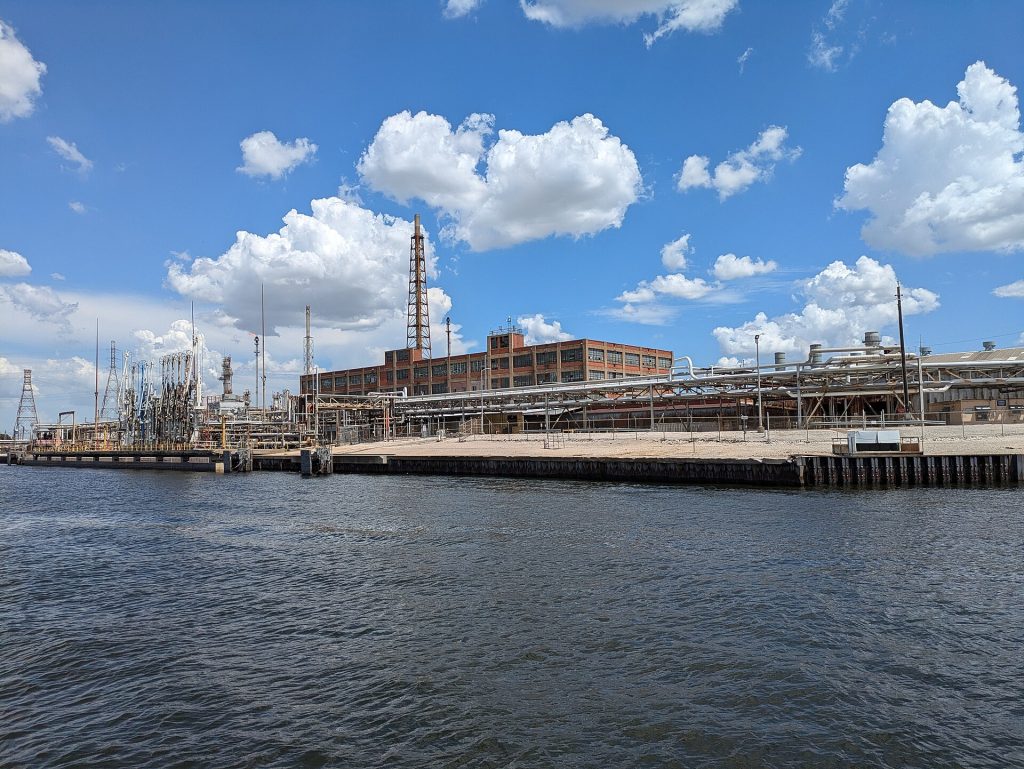
Who can be held responsible for a refinery explosion in Texas?
First, every injury claim in Texas starts with negligence. In short, a company is responsible when it owed a legal duty, broke that duty, and caused harm. Greater Hous. Transp. Co. v. Phillips, 801 S.W.2d 523, 525 (Tex. 1990). Because of this, several companies may fit that test at once after a refinery explosion.
Next comes the employer. In Texas, most private employers choose whether to carry workers’ compensation. Tex. Lab. Code Ann. § 406.002(a). Also, when the employer does carry it, comp benefits are the worker’s only remedy against that employer. Id. § 408.001(a).
However, that limit protects only the employer. In particular, the worker can still sue a third party, such as the plant owner, another contractor on site, or the maker of a failed valve, and collect comp benefits at the same time. Id. § 417.001(a). For example, in Marco’s case, his employer is the contractor. As a result, the plant owner and any other company on the unit are possible third parties.
Ship Channel plants: when the owner answers to contract workers
In fact, many people hurt in a refinery explosion work for contractors, not for the plant. Because of that, a special statute governs their claims against the plant owner. In particular, it applies only when the injury comes from work that builds, repairs, renovates, or modifies part of the property. Tex. Civ. Prac. & Rem. Code Ann. § 95.002.
Under that statute, the owner is responsible when two things are true. First, the owner exercised or kept some control over how the work was done, beyond starting, stopping, or inspecting it. Second, the owner actually knew of the danger and failed to adequately warn. Id. § 95.003.
In other words, the claim against the owner turns on control and knowledge. Because of that, records showing who directed the job and who knew about the hazard carry real weight in a contract worker’s refinery explosion claim.
What if the employer has no workers’ comp?
However, some Texas employers do not carry workers’ compensation. In fact, these employers are often called nonsubscribers. As a result, when a nonsubscriber’s worker is hurt on the job and sues, the employer loses three common defenses. Tex. Lab. Code Ann. § 406.033(a).
Specifically, the employer cannot defend by arguing that the worker was careless, that the worker accepted the risk, or that a coworker caused the injury. Id. Even so, the worker must still prove the employer or one of its agents was negligent. Id. § 406.033(d).
Can a family sue after a deadly refinery explosion?
Yes. In fact, Texas law makes a company liable when its own carelessness, or its workers’ carelessness, causes a death. Tex. Civ. Prac. & Rem. Code Ann. § 71.002(b). In addition, that wrongful death claim belongs to the surviving spouse, children, and parents. Id. § 71.004(a).
Even so, when the employer carries comp, the family usually cannot recover ordinary damages from that employer. Tex. Lab. Code Ann. § 408.001(a). However, Texas protects one important exception. Specifically, a spouse or heirs of the body can recover exemplary damages when the employer’s gross negligence or intentional act caused the death. Id. § 408.001(b). Likewise, the Texas Constitution sets out the same right against any company that causes a death through gross neglect. Tex. Const. art. XVI, § 26.
For this purpose, gross negligence has the meaning given in the state’s damages chapter. Tex. Lab. Code Ann. § 408.001(c). Also, claims against third parties remain open to the family, just as they are for an injured worker. Id. § 417.001(a).
How long do I have to sue after a refinery explosion?
In general, a personal injury lawsuit must be filed within two years after the claim accrues. Tex. Civ. Prac. & Rem. Code Ann. § 16.003(a). However, for a death claim, the two years starts on the date of death. Id. § 16.003(b).
In addition, the workers’ comp system has shorter steps. First, the employer must be told about the injury within 30 days. Tex. Lab. Code Ann. § 409.001(a). Then, the comp claim must be filed with the state within one year. Id. § 409.003.
Finally, location matters too. Specifically, under the general venue rule, a lawsuit is filed in the county where all or a substantial part of the events happened. Tex. Civ. Prac. & Rem. Code Ann. § 15.002(a)(1). For example, Pasadena is in Harris County, so a Pasadena refinery explosion would generally point to the Harris County courts in Houston. For a quick list of these clocks, see the Texas deadlines tool.
What the companies’ insurers will try
For example, insurers for the plant and other contractors may try to shift blame onto the injured worker. That matters because Texas uses a shared-fault rule. Even so, an injured person can recover as long as their share of fault is not more than 50 percent. Tex. Civ. Prac. & Rem. Code Ann. § 33.001. Any award is then reduced by the injured person’s own percentage. Id. § 33.012(a).
In contrast, a company found more than 50 percent responsible can owe the entire award, not just its share. Id. § 33.013(b)(1). As a result, the fight over percentages often decides how much a refinery explosion claim is worth.
Also, the comp carrier has its own stake. In particular, when it pays benefits, it steps into the worker’s rights against the third party. Tex. Lab. Code Ann. § 417.001(b). In short, part of a third-party recovery may go back to the carrier.
Common misconceptions about blast claims at work
First, one common belief is that workers’ comp ends every lawsuit. In fact, comp blocks suits against a covered employer, but claims against outside companies stay open. Id. § 417.001(a).
Next, many people believe that a worker who made any mistake recovers nothing. Instead, Texas bars recovery only when the injured person is more than 50 percent at fault. Tex. Civ. Prac. & Rem. Code Ann. § 33.001. In addition, against a nonsubscribing employer, the worker’s own carelessness is not a defense at all. Tex. Lab. Code Ann. § 406.033(a).
What can someone hurt in a refinery explosion recover?
In general, damages in a refinery explosion lawsuit against a third party fall into two main groups. First, economic damages cover actual money losses, such as medical bills and lost pay. Tex. Civ. Prac. & Rem. Code Ann. § 41.001(4).
Second, noneconomic damages cover human losses. For example, these include physical pain, mental anguish, disfigurement, physical impairment, and loss of enjoyment of life. Id. § 41.001(12). For more, see the guide to economic and noneconomic damages, the refinery and plant explosions topic page, and the workplace injuries topic page.
This article is general information about Texas law. If you need legal advice about your own situation, contact a licensed attorney.
Supporting text
The exact language behind each part of this refinery explosion article, in the order it is cited.
Refinery explosion short answer: the workers’ comp text
Tex. Lab. Code Ann. § 408.001(a)
Supports: the short answer’s first point, because this subsection makes workers’ compensation benefits the exclusive remedy against a covered employer.
(a) Recovery of workers’ compensation benefits is the exclusive remedy of an employee covered by workers’ compensation insurance coverage or a legal beneficiary against the employer or an agent or employee of the employer for the death of or a work-related injury sustained by the employee.
Tex. Lab. Code Ann. § 417.001(a)
Supports: the point that an injured worker can sue other companies after a refinery explosion, because this subsection allows a claim against a third party along with workers’ compensation benefits.
(a) An employee or legal beneficiary may seek damages from a third party who is or becomes liable to pay damages for an injury or death that is compensable under this subtitle and may also pursue a claim for workers’ compensation benefits under this subtitle.
Tex. Lab. Code Ann. § 408.001(b)
Supports: the point that a family can still seek exemplary damages after a deadly refinery explosion, because this subsection keeps that claim open when the employer’s gross negligence caused the death.
(b) This section does not prohibit the recovery of exemplary damages by the surviving spouse or heirs of the body of a deceased employee whose death was caused by an intentional act or omission of the employer or by the employer’s gross negligence.
Who is responsible for a refinery explosion: the negligence and coverage text
Greater Hous. Transp. Co. v. Phillips, 801 S.W.2d 523, 525 (Tex. 1990)
Supports: the three parts of a negligence claim, because this passage lists duty, breach, and damages caused by the breach.
The common law doctrine of negligence consists of three elements: 1) a legal duty owed by one person to another; 2) a breach of that duty; and 3) damages proximately resulting from the breach.
Tex. Lab. Code Ann. § 406.002(a)
Supports: the point that most private Texas employers choose whether to carry workers’ comp, because this subsection makes coverage elective.
(a) Except for public employers and as otherwise provided by law, an employer may elect to obtain workers’ compensation insurance coverage.
Plant owners and contract workers: the statute text
Tex. Civ. Prac. & Rem. Code Ann. § 95.002
Supports: the scope of the plant owner rule, because this section limits Chapter 95 to claims arising from work that builds, repairs, renovates, or modifies an improvement.
This chapter applies only to a claim:(1) against a property owner, contractor, or subcontractor for personal injury, death, or property damage to an owner, a contractor, or a subcontractor or an employee of a contractor or subcontractor; and(2) that arises from the condition or use of an improvement to real property where the contractor or subcontractor constructs, repairs, renovates, or modifies the improvement.
Tex. Civ. Prac. & Rem. Code Ann. § 95.003
Supports: the two things a contract worker must show against the plant owner in a refinery explosion claim, because this section names control over the work and actual knowledge of the danger.
A property owner is not liable for personal injury, death, or property damage to a contractor, subcontractor, or an employee of a contractor or subcontractor who constructs, repairs, renovates, or modifies an improvement to real property, including personal injury, death, or property damage arising from the failure to provide a safe workplace unless:(1) the property owner exercises or retains some control over the manner in which the work is performed, other than the right to order the work to start or stop or to inspect progress or receive reports; and(2) the property owner had actual knowledge of the danger or condition resulting in the personal injury, death, or property damage and failed to adequately warn.
Employers without workers’ comp: the statute text
Tex. Lab. Code Ann. § 406.033(a)
Supports: the defenses a nonsubscribing employer loses, because this subsection lists the worker’s own negligence, assumed risk, and a coworker’s negligence.
(a) In an action against an employer by or on behalf of an employee who is not covered by workers’ compensation insurance obtained in the manner authorized by Section 406.003 to recover damages for personal injuries or death sustained by an employee in the course and scope of the employment, it is not a defense that:(1) the employee was guilty of contributory negligence;(2) the employee assumed the risk of injury or death; or(3) the injury or death was caused by the negligence of a fellow employee.
Tex. Lab. Code Ann. § 406.033(d)
Supports: the point that the worker must still prove the employer was negligent, because this subsection puts that burden on the worker.
(d) In an action described by Subsection (a), the plaintiff must prove negligence of the employer or of an agent or servant of the employer acting within the general scope of the agent’s or servant’s employment.
Deadly blasts: the wrongful death and exemplary damages text
Tex. Civ. Prac. & Rem. Code Ann. § 71.002(b)
Supports: the wrongful death claim after a refinery explosion, because this subsection makes a company liable when its own or its workers’ carelessness causes a death.
(b) A person is liable for damages arising from an injury that causes an individual’s death if the injury was caused by the person’s or his agent’s or servant’s wrongful act, neglect, carelessness, unskillfulness, or default.
Tex. Civ. Prac. & Rem. Code Ann. § 71.004(a)
Supports: the list of family members who benefit from a wrongful death claim, because this subsection names the spouse, children, and parents.
(a) An action to recover damages as provided by this subchapter is for the exclusive benefit of the surviving spouse, children, and parents of the deceased.
Supports: the constitutional basis for exemplary damages after a death, because this section makes a company that causes a death by gross neglect answer to the family.
Every person, corporation, or company, that may commit a homicide, through wilful act, or omission, or gross neglect, shall be responsible, in exemplary damages, to the surviving husband, widow, heirs of his or her body, or such of them as there may be, without regard to any criminal proceeding that may or may not be had in relation to the homicide.
Tex. Lab. Code Ann. § 408.001(c)
Supports: the definition of gross negligence, because this subsection borrows the meaning from the damages chapter of the Civil Practice and Remedies Code.
(c) In this section, “gross negligence” has the meaning assigned by Section 41.001, Civil Practice and Remedies Code.
Refinery explosion deadlines to sue: the statute text
Tex. Civ. Prac. & Rem. Code Ann. § 16.003(a)
Supports: the two-year deadline to sue after a refinery explosion injury, because this subsection sets two years for personal injury claims.
(a) Except as provided by Sections 16.010, 16.0031, and 16.0045, a person must bring suit for trespass for injury to the estate or to the property of another, conversion of personal property, taking or detaining the personal property of another, personal injury, forcible entry and detainer, and forcible detainer not later than two years after the day the cause of action accrues.
Tex. Civ. Prac. & Rem. Code Ann. § 16.003(b)
Supports: the deadline for a death claim, because this subsection starts the two years on the date of death.
(b) A person must bring suit not later than two years after the day the cause of action accrues in an action for injury resulting in death. The cause of action accrues on the death of the injured person.
Workers’ comp steps and venue: the statute text
Tex. Lab. Code Ann. § 409.001(a)
Supports: the 30-day notice step, because this subsection requires notice to the employer within 30 days of the injury.
(a) An employee or a person acting on the employee’s behalf shall notify the employer of the employee of an injury not later than the 30th day after the date on which:(1) the injury occurs; or
Supports: the one-year claim filing step, because this section sets one year to file the workers’ compensation claim.
An employee or a person acting on the employee’s behalf shall file with the division a claim for compensation for an injury not later than one year after the date on which:(1) the injury occurred; or
Tex. Civ. Prac. & Rem. Code Ann. § 15.002(a)(1)
Supports: the point about where a refinery explosion lawsuit is usually filed, because this subdivision points to the county where the events happened.
(a) Except as otherwise provided by this subchapter or Subchapter B or C, all lawsuits shall be brought:(1) in the county in which all or a substantial part of the events or omissions giving rise to the claim occurred;
Shared fault: the statute text
Tex. Civ. Prac. & Rem. Code Ann. § 33.001
Supports: the 51 percent bar, because this section stops recovery only when the injured person is more than half at fault.
In an action to which this chapter applies, a claimant may not recover damages if his percentage of responsibility is greater than 50 percent.
Tex. Civ. Prac. & Rem. Code Ann. § 33.012(a)
Supports: the reduction for shared fault, because this subsection cuts the award by the injured person’s own percentage.
(a) If the claimant is not barred from recovery under Section 33.001, the court shall reduce the amount of damages to be recovered by the claimant with respect to a cause of action by a percentage equal to the claimant’s percentage of responsibility.
Tex. Civ. Prac. & Rem. Code Ann. § 33.013(b)(1)
Supports: the point that a company found more than half at fault can owe the whole award, because this subdivision makes that company jointly and severally liable.
(b) Notwithstanding Subsection (a), each liable defendant is, in addition to the defendant’s liability under Subsection (a), jointly and severally liable for the damages recoverable by the claimant under Section 33.012 with respect to a cause of action if:(1) the percentage of responsibility attributed to the defendant with respect to a cause of action is greater than 50 percent; or
Refinery explosion damages and subrogation: the statute text
Tex. Lab. Code Ann. § 417.001(b)
Supports: the point that the comp carrier steps into the worker’s claim, because this subsection gives the carrier subrogation rights against the third party.
(b) If a benefit is claimed by an injured employee or a legal beneficiary of the employee, the insurance carrier is subrogated to the rights of the injured employee and may enforce the liability of the third party in the name of the injured employee or the legal beneficiary.
Tex. Civ. Prac. & Rem. Code Ann. § 41.001(4)
Supports: the economic damages a refinery explosion victim can recover, because this definition covers actual money losses.
(4) “Economic damages” means compensatory damages intended to compensate a claimant for actual economic or pecuniary loss; the term does not include exemplary damages or noneconomic damages.
Tex. Civ. Prac. & Rem. Code Ann. § 41.001(12)
Supports: the noneconomic damages, because this definition lists pain, mental anguish, disfigurement, physical impairment, and other human losses.
(12) “Noneconomic damages” means damages awarded for the purpose of compensating a claimant for physical pain and suffering, mental or emotional pain or anguish, loss of consortium, disfigurement, physical impairment, loss of companionship and society, inconvenience, loss of enjoyment of life, injury to reputation, and all other nonpecuniary losses of any kind other than exemplary damages.
