JackHitsBack

Category: Premises liability

  • Apartment Complex Injury: Who Owns That Hidden Danger Now?

    Apartment Complex Injury: Who Owns That Hidden Danger Now?

    Apartment complex injury: the short answer

    In a Texas apartment complex injury case, the landlord generally owes no duty for conditions inside the leased unit, but it can be liable for a defect in a part of the property it still controls. Johnson Cnty. Sheriff’s Posse, Inc. v. Endsley, 926 S.W.2d 284, 285 (Tex. 1996). In other words, the key question is who controls the spot where the injury happened, such as a shared stairway. However, the injured person must still prove the owner knew or should have known of the danger and failed to use reasonable care. Keetch v. Kroger Co., 845 S.W.2d 262, 264 (Tex. 1992).

    An apartment complex injury can start with a cracked stair, a loose railing, or a broken walkway light. For example, say Marisol rents an apartment off Long Point Road in Spring Branch (77055), a neighborhood in Houston. Then, one evening she falls on a broken step in the shared stairway and breaks her wrist. Because these rules are statewide, Spring Branch is only the setting.
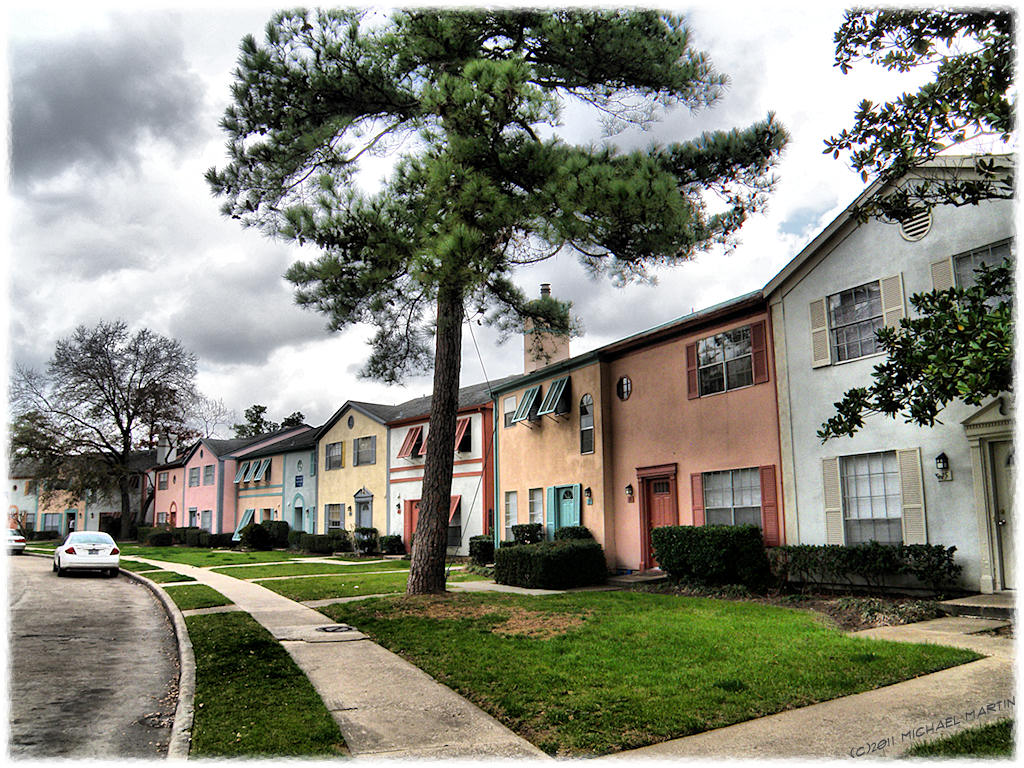
    Two-story apartment buildings along a tree-lined walkway in Spring Branch, the setting for this apartment complex injury example
    Apartment buildings in Houston’s Spring Branch area. Photo: Michael Martin, Wikimedia Commons, CC BY-SA 2.0.

    Who is responsible for an apartment complex injury in Texas?

    First, Texas law starts with a general rule. A landlord usually owes no duty to tenants or their guests for dangerous conditions inside the leased space. Endsley, 926 S.W.2d at 285. This is because the landlord has handed possession of that space to the tenant. Id.

    However, the same opinion lists exceptions that protect injured people. A landlord may be liable for a defect in a part of the property that remains under its control. Id. In addition, a landlord who makes repairs may be liable for doing them carelessly. Id. Likewise, a landlord who hides a defect it knows about may also be liable. Id.

    In Marisol’s example, the complex manages the stairway that every tenant uses. As a result, the broken step sits in an area the landlord controls. Even so, her claim still has to meet the four elements below.

    What an apartment complex injury claim must prove

    Texas courts use four elements for a premises claim like this one. Keetch, 845 S.W.2d at 264. First, the owner knew or reasonably should have known about the condition. Second, the condition posed an unreasonable risk of harm. Third, the owner did not use reasonable care to reduce or remove the risk. Finally, that failure caused the injury. Id.

    In addition, the Texas Supreme Court describes the owner’s duty as making safe, or warning about, hidden dangers the owner knows or should know about but the visitor does not. Austin v. Kroger Tex., L.P., 465 S.W.3d 193, 203 (Tex. 2015). As a result, proof of what the landlord knew is a central part of the claim. For example, repair requests, earlier complaints, and photos of a defect that lasted for weeks can help show that knowledge. Similarly, the same elements apply in a store fall, as this slip and fall article explains.

    When must a Texas landlord fix a dangerous condition?

    Also, Texas has a repair statute for residential rentals. A landlord must make a diligent effort to repair a condition when three things are true. Tex. Prop. Code Ann. § 92.052(a). First, the tenant gives notice to the person or place where rent is normally paid. Second, the tenant is not behind on rent when the notice is given. Third, the condition materially affects the physical health or safety of an ordinary tenant. Id. However, the statute generally does not require the landlord to repair a condition the tenant caused, unless it came from normal wear and tear. Id. § 92.052(b).

    Importantly, this repair statute does not take away the right to sue over an injury. The statute says it does not affect any right a landlord or tenant may have to bring an action for personal injury. Id. § 92.061. In short, a repair notice can matter twice. First, it starts the repair duty. Second, it can show the landlord knew about the problem.

    What the insurer will argue, and the proof that answers it

    When a landlord has liability insurance, its insurer usually handles the claim and looks for defenses. First, it may argue the danger was open and obvious. Texas law says a landowner generally has no duty to warn about hazards that are open and obvious or already known to the visitor. Austin, 465 S.W.3d at 204. Second, it may argue the landlord did not know about the defect and had no reason to know. Keetch, 845 S.W.2d at 264See . Third, it may argue the injury happened inside the unit, where the landlord’s duty is narrower. Endsley, 926 S.W.2d at 285See . Finally, it may blame the injured person, which brings in the shared fault rule below.

    Because each defense turns on facts, early proof matters. Injured tenants and guests commonly protect a claim with a few steps. First, they report the fall to the leasing office in writing and keep a copy. Then, they photograph the defect, the lighting, and any warning signs before repairs change the scene. Also, they save repair requests, the lease, and texts with management. In addition, they collect the names of neighbors who saw the fall or knew about the defect. Finally, prompt medical records tie the injury to the fall.

    How shared fault affects an apartment complex injury claim

    In general, Texas uses a proportionate responsibility system. Specifically, an injured person who is more than 50 percent responsible recovers nothing. Tex. Civ. Prac. & Rem. Code Ann. § 33.001. Otherwise, the damages are reduced by that person’s percentage of responsibility. Id. § 33.012(a).

    For example, say a jury finds Marisol 20 percent responsible for not watching her step and awards $50,000. As a result, her recovery drops by 20 percent, to $40,000. In contrast, a finding of 51 percent would bar recovery entirely. For more detail, see this article on the 51 percent rule.

    What can be recovered after an apartment complex injury?

    Generally, Texas law sorts damages into two main groups. Economic damages pay for actual money losses, such as medical bills and lost wages. Tex. Civ. Prac. & Rem. Code Ann. § 41.001(4). Noneconomic damages cover losses like physical pain, mental anguish, disfigurement, physical impairment, and loss of enjoyment of life. Id. § 41.001(12).

    For a broken wrist like Marisol’s, both groups can apply. For instance, the bills and missed paychecks are economic losses. Meanwhile, the pain of healing and months of trouble with daily tasks are noneconomic losses. In addition, this guide to economic and noneconomic damages explains the difference in more depth.

    How long do I have to sue after an apartment complex injury in Texas?

    In most cases, a personal injury lawsuit must be filed within two years after the day the claim accrues. Tex. Civ. Prac. & Rem. Code Ann. § 16.003(a). However, the statute points to exceptions in other sections, so the exact date deserves an early check. Id. Also, the Texas deadlines tool and this statute of limitations article cover the details.

    For Marisol, the clock would start on the day of her fall. Spring Branch is in Harris County, and the county’s civil courthouse sits at 201 Caroline Street in downtown Houston. For more on property claims in general, see the premises liability topic page.

    This article is general information about Texas law. If you need legal advice about your own situation, contact a licensed attorney.

    Supporting text

    The exact language behind each part of this apartment complex injury article, in the order it is cited.

    Who is responsible for an apartment complex injury: the case text

    Johnson Cnty. Sheriff’s Posse, Inc. v. Endsley, 926 S.W.2d 284, 285 (Tex. 1996)

    Supports: first, who is responsible for an apartment complex injury, because this passage states the general rule for leased space and its exceptions for repairs, hidden defects, and areas the landlord controls.

    A lessor generally has no duty to tenants or their invitees for dangerous conditions on the leased premises. … This general rule stems from the notion that a lessor relinquishes possession or occupancy of the premises to the lessee. … For example, a lessor who makes repairs may be liable for injuries resulting from the lessor’s negligence in making the repairs. … A lessor who conceals defects on the leased premises of which the lessor is aware may also be liable. … In addition, a lessor may be liable for injuries caused by a defect on a portion of premises that remain under the lessor’s control.

    Keetch v. Kroger Co., 845 S.W.2d 262, 264 (Tex. 1992)

    Supports: next, the four elements of an apartment complex injury claim, because this passage lists knowledge, unreasonable risk, lack of reasonable care, and causation.

    The elements are: (1) Actual or constructive knowledge of some condition on the premises by the owner/operator; (2) That the condition posed an unreasonable risk of harm; (3) That the owner/operator did not exercise reasonable care to reduce or eliminate the risk; and (4) That the owner/operator’s failure to use such care proximately caused the plaintiff’s injuries.

    Austin v. Kroger Tex., L.P., 465 S.W.3d 193, 203 (Tex. 2015)

    Supports: in addition, the duty to make safe or warn about hidden dangers, because this passage describes that duty in the Court’s own words.

    Applying the general rule, the Court has repeatedly described a landowner’s duty as a duty to make safe or warn against any concealed, unreasonably dangerous conditions of which the landowner is, or reasonably should be, aware but the invitee is not.

    Hidden dangers and repair duties in an apartment complex injury

    Tex. Prop. Code Ann. § 92.052(a)

    Supports: next, the three conditions that trigger the landlord’s repair duty, since this subsection lists notice, rent status, and a condition affecting health or safety.

    (a) A landlord shall make a diligent effort to repair or remedy a condition if: (1) the tenant specifies the condition in a notice to the person to whom or to the place where rent is normally paid; (2) the tenant is not delinquent in the payment of rent at the time notice is given; and (3) the condition: (A) materially affects the physical health or safety of an ordinary tenant; or …

    Tex. Prop. Code Ann. § 92.052(b)

    Supports: however, the limit for conditions the tenant caused, because this subsection removes the repair duty for those conditions unless they came from normal wear and tear.

    (b) Unless the condition was caused by normal wear and tear, the landlord does not have a duty during the lease term or a renewal or extension to repair or remedy a condition caused by: (1) the tenant …

    Tex. Prop. Code Ann. § 92.061

    Supports: also, the point that the repair statute leaves the right to sue over an apartment complex injury in place, because this section preserves personal injury actions.

    Otherwise, this subchapter does not affect any other right of a landlord or tenant under contract, statutory law, or common law that is consistent with the purposes of this subchapter or any right a landlord or tenant may have to bring an action for personal injury or property damage under the law of this state.

    Defenses and shared fault in an apartment complex injury

    Austin v. Kroger Tex., L.P., 465 S.W.3d 193, 204 (Tex. 2015)

    Supports: however, the open and obvious defense an insurer may raise, because this passage states the general no-duty rule for known or obvious hazards.

    a landowner generally has no duty to warn of hazards that are open and obvious or known to the invitee.

    Tex. Civ. Prac. & Rem. Code Ann. § 33.001

    Supports: then, the bar on recovery above 50 percent fault, because this section sets that cutoff.

    In an action to which this chapter applies, a claimant may not recover damages if his percentage of responsibility is greater than 50 percent.

    Tex. Civ. Prac. & Rem. Code Ann. § 33.012(a)

    Supports: as a result, the reduction of damages by the injured person’s share of fault in an apartment complex injury claim, because this subsection requires that reduction.

    (a) If the claimant is not barred from recovery under Section 33.001, the court shall reduce the amount of damages to be recovered by the claimant with respect to a cause of action by a percentage equal to the claimant’s percentage of responsibility.

    Damages and deadlines for an apartment complex injury

    Tex. Civ. Prac. & Rem. Code Ann. § 41.001(4)

    Supports: in short, the meaning of economic damages, because this subdivision defines them as actual money losses.

    (4) “Economic damages” means compensatory damages intended to compensate a claimant for actual economic or pecuniary loss; the term does not include exemplary damages or noneconomic damages.

    Tex. Civ. Prac. & Rem. Code Ann. § 41.001(12)

    Supports: in contrast, the meaning of noneconomic damages, because this subdivision lists pain, mental anguish, impairment, and similar losses.

    (12) “Noneconomic damages” means damages awarded for the purpose of compensating a claimant for physical pain and suffering, mental or emotional pain or anguish, loss of consortium, disfigurement, physical impairment, loss of companionship and society, inconvenience, loss of enjoyment of life, injury to reputation, and all other nonpecuniary losses of any kind other than exemplary damages.

    Tex. Civ. Prac. & Rem. Code Ann. § 16.003(a)

    Supports: finally, the two-year deadline to sue after an apartment complex injury and its listed exceptions, because this subsection sets the period for personal injury suits.

    (a) Except as provided by Sections 16.010, 16.0031, and 16.0045, a person must bring suit for trespass for injury to the estate or to the property of another, conversion of personal property, taking or detaining the personal property of another, personal injury, forcible entry and detainer, and forcible detainer not later than two years after the day the cause of action accrues.
  • Slip and Fall: What Do Injured People Need to Prove Now?

    Slip and Fall: What Do Injured People Need to Prove Now?

    Slip and fall: the short answer

    In a Texas slip and fall case, a store owes customers (the law calls them invitees) reasonable care against dangers it knew about or would have found with reasonable care. CMH Homes, Inc. v. Daenen, 15 S.W.3d 97, 101 (Tex. 2000). However, the store is not an insurer, so the injured customer must prove four elements. Id; Keetch v. Kroger Co., 845 S.W.2d 262, 264 (Tex. 1992).

    For example, say Grace slips on spilled water in a grocery store in Katy. Because these rules are statewide, Katy is only the setting.

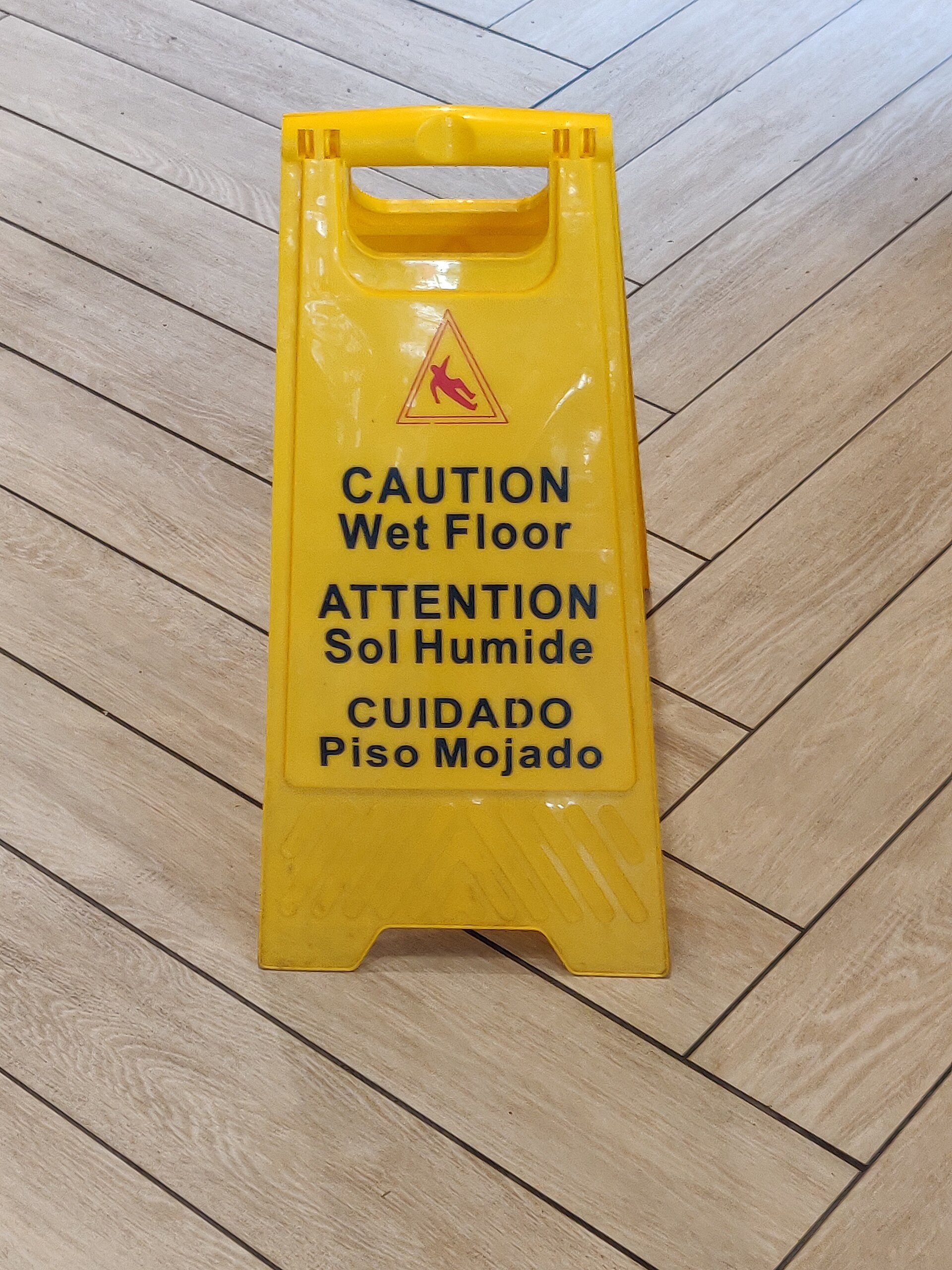
    A yellow wet floor caution sign on a tile floor, the subject of this slip and fall example
    A wet floor caution sign. Photo: Kurt Kaiser, Wikimedia Commons, CC0.

    What a slip and fall claim must show

    First, Grace must show the store knew or should have known about the condition. Then, she must show the condition posed an unreasonable risk of harm, the store did not use reasonable care to reduce or remove it, and that failure caused her injuries. Keetch, 845 S.W.2d at 264.

    When the store caused the slip and fall hazard

    In addition, if the store created the hazard, that fact may support an inference that the store knew about it. Id. at 265. Even so, the jury still must find that the store knew or should have known. Id. For more detail, see premises liability and the Texas deadlines tool.

    This article is general information about Texas law. If you need legal advice about your own situation, contact a licensed attorney.

    Supporting text

    The exact language behind each part of this slip and fall article, in the order it is cited.

    CMH Homes, Inc. v. Daenen, 15 S.W.3d 97, 101 (Tex. 2000)

    Supports: first, the duty a store owes customers, because this passage states the duty owed to an invitee.

    The duty owed by an owner or occupier of premises to an invitee is not that of an insurer. … The duty owed is to exercise reasonable care to protect against danger from a condition on the land that creates an unreasonable risk of harm of which the owner or occupier knew or by the exercise of reasonable care would discover.

    Keetch v. Kroger Co., 845 S.W.2d 262, 264 (Tex. 1992)

    Supports: in addition, the four elements of a slip and fall claim, because this passage lists them.

    The elements are: (1) Actual or constructive knowledge of some condition on the premises by the owner/operator; (2) That the condition posed an unreasonable risk of harm; (3) That the owner/operator did not exercise reasonable care to reduce or eliminate the risk; and (4) That the owner/operator’s failure to use such care proximately caused the plaintiff’s injuries.

    Keetch, 845 S.W.2d at 265

    Supports: also, the inference when the store created the hazard, because this passage allows it while still requiring a jury finding.

    The fact that the owner or occupier of a premises created a condition that posed an unreasonable risk of harm may support an inference of knowledge. … However, the jury still must find that the owner or occupier knew or should have known of the condition.
  • Dallas appeals court erases grocery-store assault verdict because the winning theory was never pleaded

    On October 13, 2026, a Texas appeals court in Dallas threw out a jury verdict against the grocery chain Fiesta Mart in a lawsuit brought by a shopper who was attacked by another person inside its Garland store, and ruled that the shopper and spouse take nothing. Fiesta Mart, L.L.C. v. Rodriguez, No. 05-24-00382-CV, slip op. at 2–3 (Tex. App.—Dallas Oct. 13, 2026) (mem. op.).

    Texas courts treat a claim against a property owner over a crime committed by a third person as premises liability, not general negligence. Id., slip op. at 1–2. Before trial, the judge granted the store summary judgment on the premises liability claim. The jury then rejected one negligence theory, “negligent activity,” but found the store liable on another, “negligent undertaking.” Id., slip op. at 2.

    The appeals court held that the undertaking theory never appeared in the shoppers’ written pleadings. Id., slip op. at 27. Texas uses notice pleading, but a petition still has to give fair notice of the claim and the key facts behind it. Id., slip op. at 25. Because the store objected before the case went to the jury, the theory was not tried by consent, and submitting it was an abuse of discretion. Id., slip op. at 29.

    Why it matters

    The ruling does not decide whether the store acted carelessly. It turns on how the claim was labeled and pleaded. In Texas, a claim over a crime on someone else’s property generally rises or falls as premises liability, and a jury can decide only the theories that appear in the pleadings or that the other side allows in without objection. For background, see the premises liability overview and the legal glossary.

    Source: Fiesta Mart, L.L.C. v. Rodriguez, No. 05-24-00382-CV (Tex. App.—Dallas Oct. 13, 2026) (mem. op.).

    Supporting text

    The exact language of each source cited above, in the order it is cited.

    Fiesta Mart, L.L.C. v. Rodriguez, No. 05-24-00382-CV, slip op. at 2–3 (Tex. App.—Dallas Oct. 13, 2026) (mem. op.)

    Supports: the appeals court reversed and rendered a take-nothing judgment for Fiesta, which operates the Garland store.

    … we conclude appellees’ pleadings failed to allege facts giving rise to the undertaking duty. We therefore reverse the trial court’s judgment and render a take nothing judgment for Fiesta. …
    Fiesta operates a grocery store in Garland.

    Fiesta Mart, L.L.C. v. Rodriguez, No. 05-24-00382-CV, slip op. at 1–2

    Supports: claims against a property owner over third-party crimes are premises liability claims, not general negligence.

    … a damages action brought against a premises possessor for criminal acts of third parties sounds in premises liability. … General negligence duties do not support a judgment against a premises possessor for damages caused by third party criminal acts.

    Fiesta Mart, L.L.C. v. Rodriguez, No. 05-24-00382-CV, slip op. at 2

    Supports: the store won summary judgment on the premises claim, and the jury split on the two negligence theories.

    The trial court granted appellee Fiesta Mart, L.L.C. d/b/a Fiesta summary judgment on the premises liability cause of action but denied summary judgment on appellants’ negligence cause of action. … The jury returned a defense verdict on negligent activity but a plaintiff verdict on negligent undertaking, apportioned liability between Fiesta and the criminal actor, and found damages.

    Fiesta Mart, L.L.C. v. Rodriguez, No. 05-24-00382-CV, slip op. at 27

    Supports: the undertaking theory was not in the pleadings.

    Even with the most liberal reading of appellees’ second amended petition, we conclude it does not allege an undertaking theory, either explicitly or by the alleged facts.

    Fiesta Mart, L.L.C. v. Rodriguez, No. 05-24-00382-CV, slip op. at 25

    Supports: Texas notice pleading still requires fair notice of the claim and its key facts.

    Our rules provide for notice pleading, but the pleadings must give fair notice of the claim and the essential factual allegations that support it.

    Fiesta Mart, L.L.C. v. Rodriguez, No. 05-24-00382-CV, slip op. at 29

    Supports: no trial by consent, and submitting the theory was an abuse of discretion.

    We conclude that Fiesta did not try the negligent undertaking claim by consent. Because there was no pleading to support the submission of a negligent undertaking claim, and because the claim arises in premises liability rather than in negligence, the trial court abused its discretion in submitting the case on a negligent undertaking theory.
  • Fort Worth appeals court reverses Texas Live! security-guard verdict: the plaintiffs never proved which company owed a duty

    On October 15, 2026, a Texas appeals court in Fort Worth reversed a judgment that grew out of a fight at Texas Live!, an entertainment center in Arlington, where a security guard hit a patron in the head with a glass bottle. The patron and his wife sued the guard, the guard’s employer (a security company), and several companies tied to the entertainment center. Arlington Pavilion, LLC v. Rodriguez, No. 02-25-00287-CV, slip op. at 2 (Tex. App.—Fort Worth Oct. 15, 2026) (mem. op.).

    At trial, those related companies were treated as one “Texas Live!” group. The jury found that group and the security company negligent, awarded several million dollars in compensatory damages, and added more than $55 million in punitive damages. Id., slip op. at 3.

    The appeals court held that because the plaintiffs never showed which separate company owed a duty, there was no evidence that any of those companies was liable, and that error also tainted the findings against the security company. Id.. The court rendered judgment for the entertainment-center companies and the guard, sent the claim against the security company back for a new trial, and vacated a separate sanctions order. Id., slip op. at 4.

    Why it matters

    Many Texas venues are run by a web of affiliated companies. This ruling shows that duty has to be proved company by company: a shared brand name is not enough. For background on injuries at businesses open to the public, see the premises liability overview, and the legal glossary for terms like “duty” and “punitive damages.”

    Source: Arlington Pavilion, LLC v. Rodriguez, No. 02-25-00287-CV (Tex. App.—Fort Worth Oct. 15, 2026) (mem. op.).

    Supporting text

    The exact language of each source cited above, in the order it is cited.

    Arlington Pavilion, LLC v. Rodriguez, No. 02-25-00287-CV, slip op. at 2 (Tex. App.—Fort Worth Oct. 15, 2026) (mem. op.)

    Supports: the facts: a guard hit a patron with a glass bottle, and the patron and his wife sued the guard, his employer, and the entertainment-center companies.

    After a security guard at a multi-business entertainment center hit Appellee Abel Rodriguez in the head with a glass bottle, Abel and his wife, Appellee Cynthia Rodriguez, sued to recover for their injuries. But when they did so, they sued not only the guard (Appellant Hasan Perryman) but also the guard’s employer (Appellant Inner-Parish Security Corp.) and a group of entities several steps removed—entities affiliated with the entertainment center . . . .

    Arlington Pavilion, LLC v. Rodriguez, No. 02-25-00287-CV, slip op. at 3 (Tex. App.—Fort Worth Oct. 15, 2026) (mem. op.)

    Supports: the jury’s findings and the compensatory and punitive damages.

    The jury found the Texas Live! bundle and Inner-Parish liable for negligence, apportioning liability between them and awarding several million dollars in compensatory damages. The jury then imposed more than $55 million in punitive damages on the Texas Live! bundle, Inner-Parish, and even Perryman, despite his not having been found liable for anything.

    Arlington Pavilion, LLC v. Rodriguez, No. 02-25-00287-CV, slip op. at 3 (Tex. App.—Fort Worth Oct. 15, 2026) (mem. op.)

    Supports: the holding that no evidence showed which company owed a duty, and that the error tainted the findings against the security company.

    First and foremost, the Rodriguezes’ failure to distinguish between the Entities—or between the Entities and their nonparty affiliates—means there was no evidence of each individual Entity’s alleged duty, and thus no evidence of the Entities’ liability. This error had the secondary effect of tainting the jury’s findings as to Inner-Parish.

    Arlington Pavilion, LLC v. Rodriguez, No. 02-25-00287-CV, slip op. at 4 (Tex. App.—Fort Worth Oct. 15, 2026) (mem. op.)

    Supports: the outcome: judgment for the companies and the guard, a new trial against the security company, and the sanctions order vacated.

    And as for the trial court’s post-judgment sanctions order, it too was erroneous, as it was not authorized under Rule of Civil Procedure 215.3 or as an exercise of inherent authority. Thus, all told, we will reverse the judgment, render a take-nothing judgment as to the Entities and Perryman, remand the Rodriguezes’ negligence claim against Inner-Parish for a new trial, and vacate the post-judgment sanctions order.
  • Texas Supreme Court: companies named in a trampoline park waiver can require arbitration

    On Friday, October 16, 2026, the Supreme Court of Texas ruled that companies named in a trampoline park’s release form can send a child’s injury lawsuit to arbitration, even though those companies never signed the form. UATP Mgmt., LLC v. Geter, No. 24-0905 (Tex. Oct. 16, 2026) (per curiam).

    The case began when a child was hurt at an Urban Air trampoline park in Beaumont. Before the child went in, a parent signed a release and arbitration agreement with the local park. The form listed several related companies and individuals as “protected parties.” Id., slip op. at 2. The family later sued in court. The lower courts agreed the local park could require arbitration but said the unsigned protected parties could not.

    The Supreme Court disagreed in a short unsigned (per curiam) opinion. It held three things. First, the agreement binds the child because a parent signed it, as Texas law permits. Id., slip op. at 4–5. Second, a court, not the arbitrator, decides whether a non-signer can enforce the agreement. Id., slip op. at 6. Third, because the form expressly named the protected parties, they are third-party beneficiaries who can use the arbitration clause. Id., slip op. at 8.

    Why it matters

    Waivers and arbitration clauses now show up at trampoline parks, gyms, camps, and many other places families visit. This decision means the paperwork signed at the front desk can decide not only whether a claim goes to a judge and jury, but also which businesses get the benefit of that choice. It does not decide whether anyone was at fault for the injury. For background on injuries at businesses open to the public, see the premises liability overview.

    Source: UATP Mgmt., LLC v. Geter, No. 24-0905 (Tex. Oct. 16, 2026) (per curiam).

    Supporting text

    The exact language of each source cited above, in the order it is cited.

    UATP Mgmt., LLC v. Geter, No. 24-0905, slip op. at 2 (Tex. Oct. 16, 2026) (per curiam)

    Supports: the facts: an injury at an Urban Air park in Beaumont and a release signed before entry.

    Chiniqua Geter sued on behalf of her minor daughter, K.G., for injuries K.G. sustained while playing at an Urban Air trampoline park in Beaumont, Texas. … Before entering the play area of the park, Geter signed a release and indemnification agreement …

    UATP Mgmt., LLC v. Geter, No. 24-0905, slip op. at 4–5

    Supports: the child is bound because a parent signed for her.

    The arbitration agreement binds K.G. because Geter signed it on K.G.’s behalf as her parent as Texas law permits. The direct-benefits estoppel doctrine is not required to reach that conclusion. …
    As we recognized in Ha, “parents may sign arbitration agreements on behalf of their children” under the Family Code …

    UATP Mgmt., LLC v. Geter, No. 24-0905, slip op. at 6

    Supports: courts, not arbitrators, decide whether non-signers may enforce the agreement.

    We hold that it is for the courts, not an arbitrator, to decide whether the non-signatory protected parties may invoke the agreement.

    UATP Mgmt., LLC v. Geter, No. 24-0905, slip op. at 8

    Supports: the protected parties may invoke the arbitration clause, and the disposition.

    As third-party beneficiaries of the agreement, the protected parties may invoke the arbitration provision. * * * Without hearing oral argument, see Tex. R. App. P. 59.1, we grant the petition for review and reverse the portion of the court of appeals’ judgment affirming the trial court’s denial of the motion to compel arbitration as to the protected parties. The remainder of the court of appeals’ judgment, unchallenged on appeal, remains in effect.