Apartment complex injury: the short answer
In a Texas apartment complex injury case, the landlord generally owes no duty for conditions inside the leased unit, but it can be liable for a defect in a part of the property it still controls. Johnson Cnty. Sheriff’s Posse, Inc. v. Endsley, 926 S.W.2d 284, 285 (Tex. 1996). In other words, the key question is who controls the spot where the injury happened, such as a shared stairway. However, the injured person must still prove the owner knew or should have known of the danger and failed to use reasonable care. Keetch v. Kroger Co., 845 S.W.2d 262, 264 (Tex. 1992).
An apartment complex injury can start with a cracked stair, a loose railing, or a broken walkway light. For example, say Marisol rents an apartment off Long Point Road in Spring Branch (77055), a neighborhood in Houston. Then, one evening she falls on a broken step in the shared stairway and breaks her wrist. Because these rules are statewide, Spring Branch is only the setting.
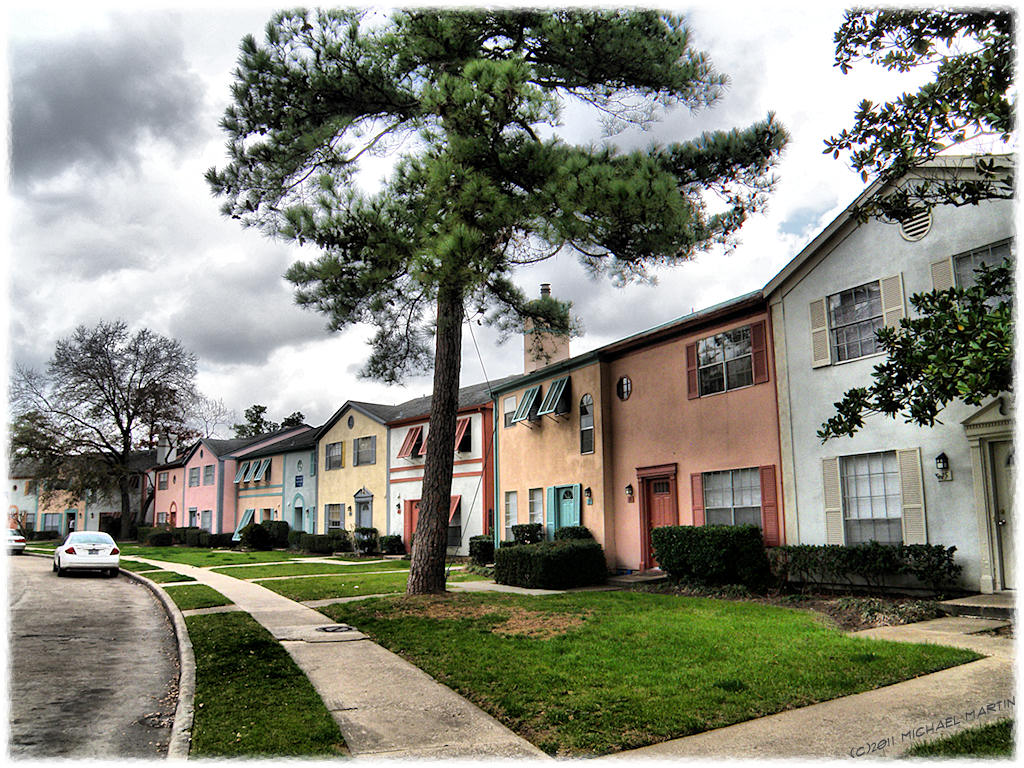
Who is responsible for an apartment complex injury in Texas?
First, Texas law starts with a general rule. A landlord usually owes no duty to tenants or their guests for dangerous conditions inside the leased space. Endsley, 926 S.W.2d at 285. This is because the landlord has handed possession of that space to the tenant. Id.
However, the same opinion lists exceptions that protect injured people. A landlord may be liable for a defect in a part of the property that remains under its control. Id. In addition, a landlord who makes repairs may be liable for doing them carelessly. Id. Likewise, a landlord who hides a defect it knows about may also be liable. Id.
In Marisol’s example, the complex manages the stairway that every tenant uses. As a result, the broken step sits in an area the landlord controls. Even so, her claim still has to meet the four elements below.
What an apartment complex injury claim must prove
Texas courts use four elements for a premises claim like this one. Keetch, 845 S.W.2d at 264. First, the owner knew or reasonably should have known about the condition. Second, the condition posed an unreasonable risk of harm. Third, the owner did not use reasonable care to reduce or remove the risk. Finally, that failure caused the injury. Id.
In addition, the Texas Supreme Court describes the owner’s duty as making safe, or warning about, hidden dangers the owner knows or should know about but the visitor does not. Austin v. Kroger Tex., L.P., 465 S.W.3d 193, 203 (Tex. 2015). As a result, proof of what the landlord knew is a central part of the claim. For example, repair requests, earlier complaints, and photos of a defect that lasted for weeks can help show that knowledge. Similarly, the same elements apply in a store fall, as this slip and fall article explains.
When must a Texas landlord fix a dangerous condition?
Also, Texas has a repair statute for residential rentals. A landlord must make a diligent effort to repair a condition when three things are true. Tex. Prop. Code Ann. § 92.052(a). First, the tenant gives notice to the person or place where rent is normally paid. Second, the tenant is not behind on rent when the notice is given. Third, the condition materially affects the physical health or safety of an ordinary tenant. Id. However, the statute generally does not require the landlord to repair a condition the tenant caused, unless it came from normal wear and tear. Id. § 92.052(b).
Importantly, this repair statute does not take away the right to sue over an injury. The statute says it does not affect any right a landlord or tenant may have to bring an action for personal injury. Id. § 92.061. In short, a repair notice can matter twice. First, it starts the repair duty. Second, it can show the landlord knew about the problem.
What the insurer will argue, and the proof that answers it
When a landlord has liability insurance, its insurer usually handles the claim and looks for defenses. First, it may argue the danger was open and obvious. Texas law says a landowner generally has no duty to warn about hazards that are open and obvious or already known to the visitor. Austin, 465 S.W.3d at 204. Second, it may argue the landlord did not know about the defect and had no reason to know. Keetch, 845 S.W.2d at 264See . Third, it may argue the injury happened inside the unit, where the landlord’s duty is narrower. Endsley, 926 S.W.2d at 285See . Finally, it may blame the injured person, which brings in the shared fault rule below.
Because each defense turns on facts, early proof matters. Injured tenants and guests commonly protect a claim with a few steps. First, they report the fall to the leasing office in writing and keep a copy. Then, they photograph the defect, the lighting, and any warning signs before repairs change the scene. Also, they save repair requests, the lease, and texts with management. In addition, they collect the names of neighbors who saw the fall or knew about the defect. Finally, prompt medical records tie the injury to the fall.
How shared fault affects an apartment complex injury claim
In general, Texas uses a proportionate responsibility system. Specifically, an injured person who is more than 50 percent responsible recovers nothing. Tex. Civ. Prac. & Rem. Code Ann. § 33.001. Otherwise, the damages are reduced by that person’s percentage of responsibility. Id. § 33.012(a).
For example, say a jury finds Marisol 20 percent responsible for not watching her step and awards $50,000. As a result, her recovery drops by 20 percent, to $40,000. In contrast, a finding of 51 percent would bar recovery entirely. For more detail, see this article on the 51 percent rule.
What can be recovered after an apartment complex injury?
Generally, Texas law sorts damages into two main groups. Economic damages pay for actual money losses, such as medical bills and lost wages. Tex. Civ. Prac. & Rem. Code Ann. § 41.001(4). Noneconomic damages cover losses like physical pain, mental anguish, disfigurement, physical impairment, and loss of enjoyment of life. Id. § 41.001(12).
For a broken wrist like Marisol’s, both groups can apply. For instance, the bills and missed paychecks are economic losses. Meanwhile, the pain of healing and months of trouble with daily tasks are noneconomic losses. In addition, this guide to economic and noneconomic damages explains the difference in more depth.
How long do I have to sue after an apartment complex injury in Texas?
In most cases, a personal injury lawsuit must be filed within two years after the day the claim accrues. Tex. Civ. Prac. & Rem. Code Ann. § 16.003(a). However, the statute points to exceptions in other sections, so the exact date deserves an early check. Id. Also, the Texas deadlines tool and this statute of limitations article cover the details.
For Marisol, the clock would start on the day of her fall. Spring Branch is in Harris County, and the county’s civil courthouse sits at 201 Caroline Street in downtown Houston. For more on property claims in general, see the premises liability topic page.
This article is general information about Texas law. If you need legal advice about your own situation, contact a licensed attorney.
Supporting text
The exact language behind each part of this apartment complex injury article, in the order it is cited.
Who is responsible for an apartment complex injury: the case text
Johnson Cnty. Sheriff’s Posse, Inc. v. Endsley, 926 S.W.2d 284, 285 (Tex. 1996)
Supports: first, who is responsible for an apartment complex injury, because this passage states the general rule for leased space and its exceptions for repairs, hidden defects, and areas the landlord controls.
A lessor generally has no duty to tenants or their invitees for dangerous conditions on the leased premises. … This general rule stems from the notion that a lessor relinquishes possession or occupancy of the premises to the lessee. … For example, a lessor who makes repairs may be liable for injuries resulting from the lessor’s negligence in making the repairs. … A lessor who conceals defects on the leased premises of which the lessor is aware may also be liable. … In addition, a lessor may be liable for injuries caused by a defect on a portion of premises that remain under the lessor’s control.
Keetch v. Kroger Co., 845 S.W.2d 262, 264 (Tex. 1992)
Supports: next, the four elements of an apartment complex injury claim, because this passage lists knowledge, unreasonable risk, lack of reasonable care, and causation.
The elements are: (1) Actual or constructive knowledge of some condition on the premises by the owner/operator; (2) That the condition posed an unreasonable risk of harm; (3) That the owner/operator did not exercise reasonable care to reduce or eliminate the risk; and (4) That the owner/operator’s failure to use such care proximately caused the plaintiff’s injuries.
Austin v. Kroger Tex., L.P., 465 S.W.3d 193, 203 (Tex. 2015)
Supports: in addition, the duty to make safe or warn about hidden dangers, because this passage describes that duty in the Court’s own words.
Applying the general rule, the Court has repeatedly described a landowner’s duty as a duty to make safe or warn against any concealed, unreasonably dangerous conditions of which the landowner is, or reasonably should be, aware but the invitee is not.
Hidden dangers and repair duties in an apartment complex injury
Tex. Prop. Code Ann. § 92.052(a)
Supports: next, the three conditions that trigger the landlord’s repair duty, since this subsection lists notice, rent status, and a condition affecting health or safety.
(a) A landlord shall make a diligent effort to repair or remedy a condition if: (1) the tenant specifies the condition in a notice to the person to whom or to the place where rent is normally paid; (2) the tenant is not delinquent in the payment of rent at the time notice is given; and (3) the condition: (A) materially affects the physical health or safety of an ordinary tenant; or …
Tex. Prop. Code Ann. § 92.052(b)
Supports: however, the limit for conditions the tenant caused, because this subsection removes the repair duty for those conditions unless they came from normal wear and tear.
(b) Unless the condition was caused by normal wear and tear, the landlord does not have a duty during the lease term or a renewal or extension to repair or remedy a condition caused by: (1) the tenant …
Supports: also, the point that the repair statute leaves the right to sue over an apartment complex injury in place, because this section preserves personal injury actions.
Otherwise, this subchapter does not affect any other right of a landlord or tenant under contract, statutory law, or common law that is consistent with the purposes of this subchapter or any right a landlord or tenant may have to bring an action for personal injury or property damage under the law of this state.
Defenses and shared fault in an apartment complex injury
Austin v. Kroger Tex., L.P., 465 S.W.3d 193, 204 (Tex. 2015)
Supports: however, the open and obvious defense an insurer may raise, because this passage states the general no-duty rule for known or obvious hazards.
a landowner generally has no duty to warn of hazards that are open and obvious or known to the invitee.
Tex. Civ. Prac. & Rem. Code Ann. § 33.001
Supports: then, the bar on recovery above 50 percent fault, because this section sets that cutoff.
In an action to which this chapter applies, a claimant may not recover damages if his percentage of responsibility is greater than 50 percent.
Tex. Civ. Prac. & Rem. Code Ann. § 33.012(a)
Supports: as a result, the reduction of damages by the injured person’s share of fault in an apartment complex injury claim, because this subsection requires that reduction.
(a) If the claimant is not barred from recovery under Section 33.001, the court shall reduce the amount of damages to be recovered by the claimant with respect to a cause of action by a percentage equal to the claimant’s percentage of responsibility.
Damages and deadlines for an apartment complex injury
Tex. Civ. Prac. & Rem. Code Ann. § 41.001(4)
Supports: in short, the meaning of economic damages, because this subdivision defines them as actual money losses.
(4) “Economic damages” means compensatory damages intended to compensate a claimant for actual economic or pecuniary loss; the term does not include exemplary damages or noneconomic damages.
Tex. Civ. Prac. & Rem. Code Ann. § 41.001(12)
Supports: in contrast, the meaning of noneconomic damages, because this subdivision lists pain, mental anguish, impairment, and similar losses.
(12) “Noneconomic damages” means damages awarded for the purpose of compensating a claimant for physical pain and suffering, mental or emotional pain or anguish, loss of consortium, disfigurement, physical impairment, loss of companionship and society, inconvenience, loss of enjoyment of life, injury to reputation, and all other nonpecuniary losses of any kind other than exemplary damages.
Tex. Civ. Prac. & Rem. Code Ann. § 16.003(a)
Supports: finally, the two-year deadline to sue after an apartment complex injury and its listed exceptions, because this subsection sets the period for personal injury suits.
(a) Except as provided by Sections 16.010, 16.0031, and 16.0045, a person must bring suit for trespass for injury to the estate or to the property of another, conversion of personal property, taking or detaining the personal property of another, personal injury, forcible entry and detainer, and forcible detainer not later than two years after the day the cause of action accrues.
