No workers comp: the short answer
When a Texas employer has no workers comp, a worker hurt on the job can sue the employer, and the employer can’t defend by blaming the worker’s own negligence, saying the worker assumed the risk, or blaming a co-worker. Tex. Lab. Code Ann. § 406.033(a). The worker still has to prove the employer, or someone acting for it, was negligent. Id. § 406.033(d).
Most private employers in Texas get to choose whether to carry workers’ compensation insurance. Tex. Lab. Code Ann. § 406.002(a). So some don’t. For example, say Andre works at a plant supply yard off Highway 225 in Pasadena, and his employer has no workers comp. A forklift with a bad brake pins his leg. The rules below are statewide, so Pasadena is just the setting.
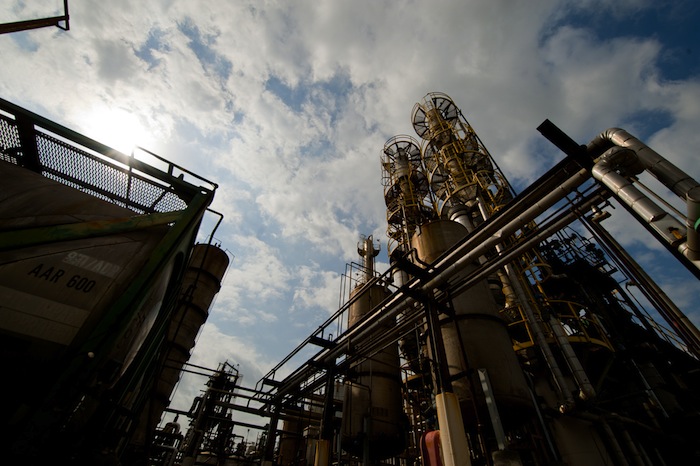
Can I sue my employer if there’s no workers comp in Texas?
Yes. Without workers’ comp, there’s no comp claim to file, so the injury claim goes against the employer directly.
And the employer loses three defenses. It is not a defense that the worker was contributorily negligent, that the worker assumed the risk, or that a fellow employee’s negligence caused the injury. Tex. Lab. Code Ann. § 406.033(a). That matters in Andre’s case. The employer can’t win by saying he should have jumped clear, or that a co-worker was driving the forklift.
Two defenses do survive. The employer can argue the worker meant to cause the injury, or was intoxicated when it happened. Id. § 406.033(c).
Public employers are a different story. The choice to skip coverage belongs to private employers, not public ones. Tex. Lab. Code Ann. § 406.002(a).
What does an injured worker have to prove when there’s no workers comp?
Negligence. The worker must prove negligence by the employer, or by an agent or servant of the employer acting within the general scope of the job. Tex. Lab. Code Ann. § 406.033(d). In plain terms, the company answers for a supervisor or co-worker who was careless on the clock.
So in Andre’s case, the questions are concrete. Did anyone report the bad brake? Did a supervisor keep the forklift running anyway? Inspection logs, repair tickets, and texts about the brake are the kind of proof that answers them.
Once negligence is proven, the damages work like any other Texas injury suit. They include economic losses, like medical bills and lost pay. Tex. Civ. Prac. & Rem. Code Ann. § 41.001(4). They also include noneconomic losses, such as physical pain, mental anguish, and physical impairment. Id. § 41.001(12).
With no workers comp, can a boss make a worker sign away the right to sue?
Not before the injury. A waiver signed before the injury or death is void and unenforceable. Tex. Lab. Code Ann. § 406.033(e).
After an injury, the rules are strict. A waiver counts only if the worker signs it voluntarily and knows its effect, signs it no earlier than the 10th business day after the first injury report, has first had a medical evaluation from a nonemergency care doctor, and gets it in a writing that states the true intent of the parties. Id. § 406.033(f). The waiver language also has to be conspicuous, in larger type or contrasting colors. Id. § 406.033(g).
Here’s the catch. A release handed over in the first week after an injury, before the 10th business day, doesn’t meet that test. Say Andre’s supervisor offers $2,000 and a release three days after the forklift accident. Under the 10-day rule, that release fails. Tex. Lab. Code Ann. § 406.033(f)(2).
How does a worker find out, and how long is there to sue?
The employer has to say. Every employer must tell each employee whether it has workers’ comp, including new hires at the time they’re hired. Tex. Lab. Code Ann. § 406.005(a), (b). It also has to post a notice about its coverage at conspicuous spots at the workplace. Id. § 406.005(c).
The deadline to sue is the usual one for injury claims: two years after the claim accrues. Tex. Civ. Prac. & Rem. Code Ann. § 16.003(a). For the bigger picture on job injuries, see the workplace injury article, and for plant blasts, the refinery explosion article.
This article is general information about Texas law. If you need legal advice about your own situation, contact a licensed attorney.
Supporting text
The exact language behind each part of this no workers comp article, in the order it is cited.
No workers comp defenses and proof: the statute text
Tex. Lab. Code Ann. § 406.033(a)
Supports: the three defenses an employer with no workers comp loses, because this subsection lists them.
(a) In an action against an employer by or on behalf of an employee who is not covered by workers’ compensation insurance obtained in the manner authorized by Section 406.003 to recover damages for personal injuries or death sustained by an employee in the course and scope of the employment, it is not a defense that: (1) the employee was guilty of contributory negligence; (2) the employee assumed the risk of injury or death; or (3) the injury or death was caused by the negligence of a fellow employee.
Tex. Lab. Code Ann. § 406.033(d)
Supports: the worker’s duty to prove negligence, because this subsection puts that burden on the plaintiff.
(d) In an action described by Subsection (a), the plaintiff must prove negligence of the employer or of an agent or servant of the employer acting within the general scope of the agent’s or servant’s employment.
Tex. Lab. Code Ann. § 406.002(a)
Supports: the point that coverage is optional for most private employers, because this subsection makes it elective.
(a) Except for public employers and as otherwise provided by law, an employer may elect to obtain workers’ compensation insurance coverage.
Tex. Lab. Code Ann. § 406.033(c)
Supports: the two defenses that remain, because this subsection keeps intent and intoxication.
(c) The employer may defend the action on the ground that the injury was caused: (1) by an act of the employee intended to bring about the injury; or (2) while the employee was in a state of intoxication.
Damages: the statute text
Tex. Civ. Prac. & Rem. Code Ann. § 41.001(4)
Supports: the economic damages a worker with no workers comp can seek, because this definition covers actual money losses.
(4) “Economic damages” means compensatory damages intended to compensate a claimant for actual economic or pecuniary loss; the term does not include exemplary damages or noneconomic damages.
Tex. Civ. Prac. & Rem. Code Ann. § 41.001(12)
Supports: the noneconomic losses, because this definition names pain, anguish, and impairment.
(12) “Noneconomic damages” means damages awarded for the purpose of compensating a claimant for physical pain and suffering, mental or emotional pain or anguish, loss of consortium, disfigurement, physical impairment, loss of companionship and society, inconvenience, loss of enjoyment of life, injury to reputation, and all other nonpecuniary losses of any kind other than exemplary damages.
No workers comp waivers: the statute text
Tex. Lab. Code Ann. § 406.033(e)
Supports: the rule against waivers signed before an injury, because this subsection makes them void.
(e) A cause of action described in Subsection (a) may not be waived by an employee before the employee’s injury or death. Any agreement by an employee to waive a cause of action or any right described in Subsection (a) before the employee’s injury or death is void and unenforceable.
Tex. Lab. Code Ann. § 406.033(f)
Supports: the four conditions for a waiver after an injury, because this subsection lists them.
(f) A cause of action described by Subsection (a) may not be waived by an employee after the employee’s injury unless: (1) the employee voluntarily enters into the waiver with knowledge of the waiver’s effect; (2) the waiver is entered into not earlier than the 10th business day after the date of the initial report of injury; (3) the employee, before signing the waiver, has received a medical evaluation from a nonemergency care doctor; and (4) the waiver is in a writing under which the true intent of the parties is specifically stated in the document.
Tex. Lab. Code Ann. § 406.033(g)
Supports: the conspicuous-type requirement, because this subsection defines it.
(g) The waiver provisions required under Subsection (f) must be conspicuous and appear on the face of the agreement. To be conspicuous, the waiver provisions must appear in a type larger than the type contained in the body of the agreement or in contrasting colors.
Notice and the deadline: the statute text
Tex. Lab. Code Ann. § 406.005(a), (b)
Supports: the employer’s duty to tell workers whether it has no workers comp, because this subsection requires notice either way.
(a) An employer shall notify each employee as provided by this section whether or not the employer has workers’ compensation insurance coverage. (b) The employer shall notify a new employee of the existence or absence of workers’ compensation insurance coverage at the time the employee is hired.
Tex. Lab. Code Ann. § 406.005(c)
Supports: the posted notice, because this subsection requires it at the workplace.
(c) Each employer shall post a notice of whether the employer has workers’ compensation insurance coverage at conspicuous locations at the employer’s place of business as necessary to provide reasonable notice to the employees.
Tex. Civ. Prac. & Rem. Code Ann. § 16.003(a)
Supports: the two-year deadline for a no workers comp injury suit, because this subsection covers personal injury suits.
(a) Except as provided by Sections 16.010, 16.0031, and 16.0045, a person must bring suit for … personal injury … not later than two years after the day the cause of action accrues.
