Bad weather driving: the short answer
Bad weather driving rules require truck drivers to use extreme caution and reduce speed when fog, rain, or smoke hurts visibility or traction. 49 C.F.R. § 392.14 (2025). Then, if conditions become dangerous enough, the driver must stop until the truck can be safely operated. Id..
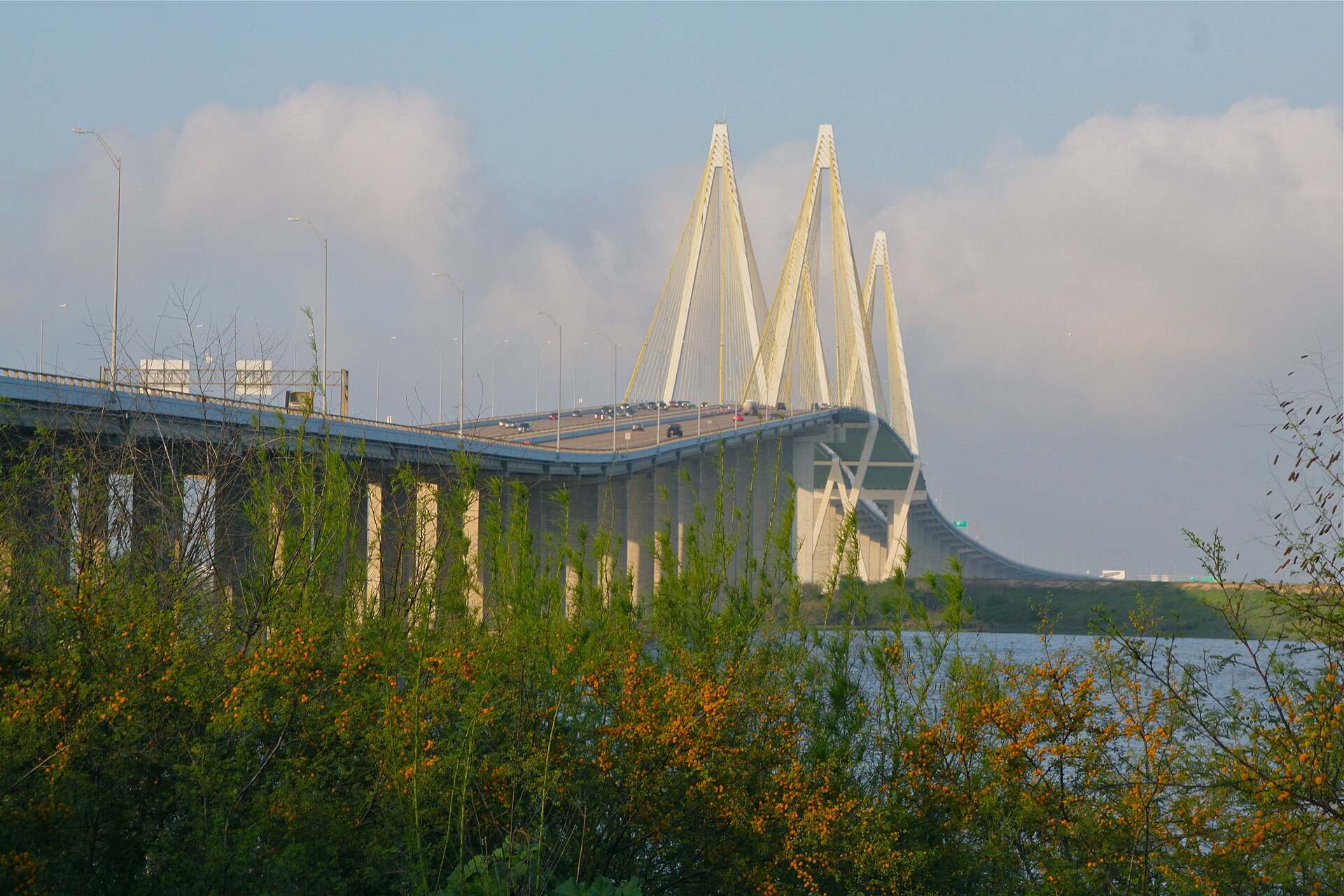
Bad weather driving is also covered by Texas law, which bars any driver from going faster than is reasonable and prudent under the circumstances. Tex. Transp. Code Ann. § 545.351(a). For example, say Maria is crossing the Fred Hartman Bridge on State Highway 146 toward Baytown (77520) when heavy fog rolls in. Because the Texas speed rule applies statewide, the bridge is just the setting.
Bad weather driving duties for truckers
First, the federal rule lists snow, ice, sleet, fog, mist, rain, dust, and smoke as examples of hazardous conditions. 49 C.F.R. § 392.14. As a result, a fog bank that cuts visibility on the bridge triggers the duty to slow down. In short, these rules protect drivers like Maria who share the road with big rigs.
Bad weather driving on the Fred Hartman Bridge
In addition, every Texas driver must control speed as necessary to avoid colliding with another vehicle lawfully on or entering the highway. Tex. Transp. Code Ann. § 545.351(b)(2). Also, drivers must slow to an appropriate reduced speed when weather or highway conditions create a special hazard. Id. § 545.351(c)(5). For more detail, see the Baytown city guide, truck driver hours of service, and the after-a-crash checklist.
This article is general information about Texas law. If you need legal advice about your own situation, contact a licensed attorney.
Supporting text
The exact language behind each part of these bad weather driving rules, in the order it is cited.
Supports: the short answer and the list of hazardous conditions, because this section requires extreme caution, reduced speed, and a stop when conditions become sufficiently dangerous.
Extreme caution in the operation of a commercial motor vehicle shall be exercised when hazardous conditions, such as those caused by snow, ice, sleet, fog, mist, rain, dust, or smoke, adversely affect visibility or traction. Speed shall be reduced when such conditions exist. If conditions become sufficiently dangerous, the operation of the commercial motor vehicle shall be discontinued and shall not be resumed until the commercial motor vehicle can be safely operated. . . .
Tex. Transp. Code Ann. § 545.351(a)
Supports: the statewide speed rule in the intro, because this subsection bars driving faster than is reasonable and prudent under the circumstances.
(a) An operator may not drive at a speed greater than is reasonable and prudent under the circumstances then existing.
Tex. Transp. Code Ann. § 545.351(b)(2)
Supports: the duty to control speed, because this paragraph requires every operator to control speed as necessary to avoid a collision.
(b) An operator: . . . (2) shall control the speed of the vehicle as necessary to avoid colliding with another person or vehicle that is on or entering the highway in compliance with law and the duty of each person to use due care.
Tex. Transp. Code Ann. § 545.351(c)(5)
Supports: the reduced-speed duty in bad weather driving, because this subsection names weather or highway conditions as a special hazard.
(c) An operator shall, consistent with Subsections (a) and (b), drive at an appropriate reduced speed if: . . . (5) a special hazard exists with regard to traffic, including pedestrians, or weather or highway conditions.
