Car accident passenger: the short answer
Yes, a car accident passenger in Texas can bring a claim against any driver whose carelessness caused the crash, including the driver of the car the passenger rode in. Greater Hous. Transp. Co. v. Phillips, 801 S.W.2d 523, 525 (Tex. 1990). Texas courts have also removed family immunity for a spouse behind the wheel, and for a minor child hurt by a parent’s driving. Price v. Price, 732 S.W.2d 316, 319 (Tex. 1987); Jilani v. Jilani, 767 S.W.2d 671, 673 (Tex. 1988).
Every car accident passenger faces the same awkward question: can I bring a claim against the friend, coworker, or relative who was driving? For example, say Priya is riding with a coworker on the Katy Freeway (I-10) near the Sam Houston Tollway in west Houston. Then he drifts out of his lane and hits a pickup. As a result, Priya now faces a broken wrist, medical bills, and missed work, though she did nothing to cause the crash. Also, the answers below are statewide, so the Katy Freeway is only the example.
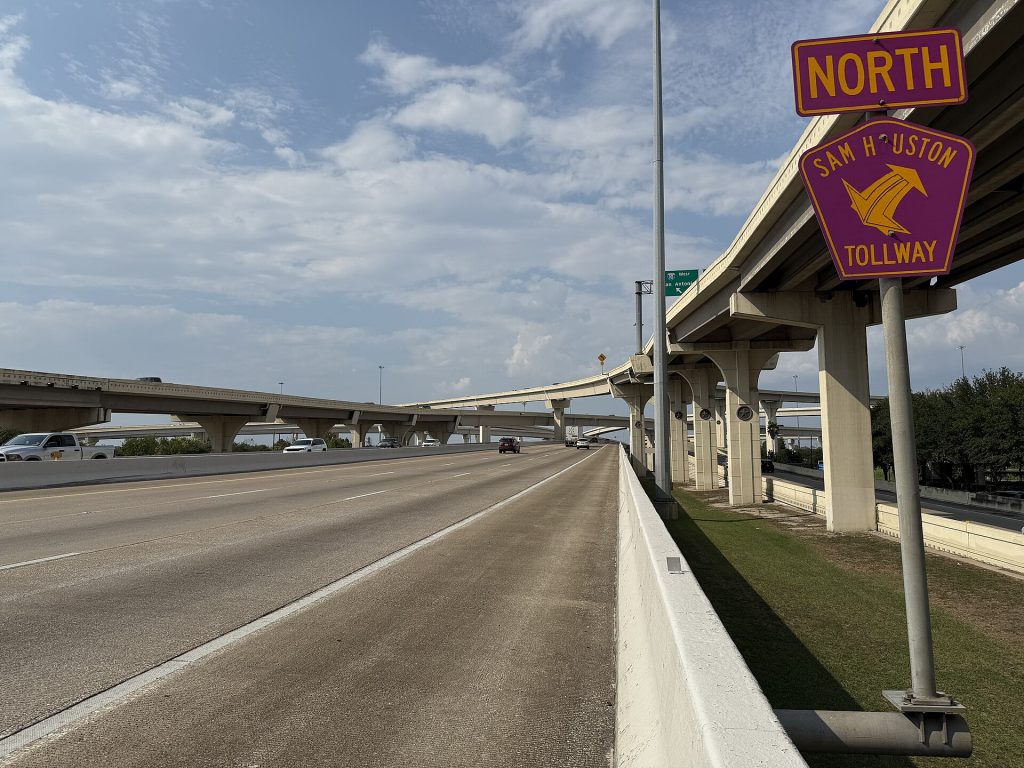
Can a car accident passenger sue the driver they rode with?
Yes. To begin with, a negligence claim needs three things: a duty, a breach of that duty, and harm caused by the breach. Greater Hous. Transp. Co. v. Phillips, 801 S.W.2d 523, 525 (Tex. 1990). In fact, nothing in that test treats the driver of the passenger’s own car differently. In other words, Priya’s coworker answers for his lane change the same way the pickup driver would.
Also, a passenger’s claim can include economic damages, meaning actual money losses such as medical bills and lost pay. Tex. Civ. Prac. & Rem. Code Ann. § 41.001(4). It can also include noneconomic damages, such as physical pain, mental anguish, and physical impairment. Id. § 41.001(12).
In practice, the claim usually runs to the driver’s liability insurance instead of the driver’s savings. However, Texas only requires $30,000 per person and $60,000 per crash for injuries. Tex. Transp. Code Ann. § 601.072(a-1). As a result, several injured passengers can end up sharing one small policy. For example, three badly hurt passengers would split that $60,000 limit for the crash. Id. For more detail, the insurance minimums tool shows these limits side by side.
What if the driver is a spouse or parent?
In short, family ties do not block the claim. In fact, the Texas Supreme Court abolished the old rule that kept spouses from suing each other, and it did so for every type of claim. Price v. Price, 732 S.W.2d 316, 319 (Tex. 1987).
Likewise, the court allowed a car crash claim by a minor child against a parent who drove carelessly. Jilani v. Jilani, 767 S.W.2d 671, 673 (Tex. 1988). Because of these cases, a car accident passenger hurt by a family member’s driving has the same basic claim as anyone else.
Katy Freeway example: a claim against both drivers
Also, more than one driver may share the blame. For example, say the pickup driver on the Katy Freeway was also speeding. Then each at-fault driver generally pays the percentage of the damages that matches their share of responsibility. Tex. Civ. Prac. & Rem. Code Ann. § 33.013(a). However, a driver found more than 50 percent responsible can owe the whole award. Id. § 33.013(b)(1).
In fact, in most crashes, a passenger does nothing to cause it. Even so, an insurer may argue that the passenger distracted the driver. However, that argument can only bar recovery if the passenger is found more than 50 percent at fault. Id. § 33.001. For a list of next steps after a crash, see the after-a-crash checklist.
Who pays a car accident passenger’s medical bills, and how long is there to sue?
First, personal injury protection, or PIP, can pay quickly. Specifically, PIP on the driver’s policy covers medical bills and lost income for a passenger in that car, including a guest. Tex. Ins. Code Ann. § 1952.151. Also, it covers reasonable expenses incurred up to three years after the accident. Id. In addition, PIP covers the named insured and members of the insured’s household. Id. As a result, Priya may also have PIP through her own policy or the policy of a relative she lives with. Furthermore, PIP pays no matter who caused the crash. Id. § 1952.155(a). Finally, an insurer must include PIP in a Texas auto policy unless a named insured rejected it in writing. Id. § 1952.152.
Then there is the deadline. In general, a car accident passenger has two years to file a personal injury lawsuit. Tex. Civ. Prac. & Rem. Code Ann. § 16.003(a). For more on that clock, see the statute of limitations guide.
This article is general information about Texas law. If you need legal advice about your own situation, contact a licensed attorney.
Supporting text
The exact language behind each part of this car accident passenger article, in the order it is cited.
Car accident passenger claims: the case text
Greater Hous. Transp. Co. v. Phillips, 801 S.W.2d 523, 525 (Tex. 1990)
Supports: the point that a car accident passenger can bring a claim against a careless driver, because this passage lists the three parts of every negligence claim: duty, breach, and damages.
The common law doctrine of negligence consists of three elements: 1) a legal duty owed by one person to another; 2) a breach of that duty; and 3) damages proximately resulting from the breach.
Price v. Price, 732 S.W.2d 316, 319 (Tex. 1987)
Supports: the point that a spouse can bring a claim against a spouse, because in this passage the Texas Supreme Court abolished interspousal immunity for every type of claim.
The doctrine of interspousal immunity has previously been abrogated as to some causes of action in this jurisdiction. We now abolish that doctrine completely as to any cause of action.
Jilani v. Jilani, 767 S.W.2d 671, 673 (Tex. 1988)
Supports: the point that a minor child can bring a car crash claim against a parent, because this passage states the court’s holding for automobile cases.
Our holding today is limited to the facts before us: an automobile tort action brought by an unemancipated minor child against a parent …
Damages and insurance limits: the statute text
Tex. Civ. Prac. & Rem. Code Ann. § 41.001(4)
Supports: the money losses a car accident passenger can recover, because this definition covers actual economic loss.
(4) “Economic damages” means compensatory damages intended to compensate a claimant for actual economic or pecuniary loss; the term does not include exemplary damages or noneconomic damages.
Tex. Civ. Prac. & Rem. Code Ann. § 41.001(12)
Supports: the human losses a car accident passenger can recover, because this definition lists pain, mental anguish, and physical impairment.
(12) “Noneconomic damages” means damages awarded for the purpose of compensating a claimant for physical pain and suffering, mental or emotional pain or anguish, loss of consortium, disfigurement, physical impairment, loss of companionship and society, inconvenience, loss of enjoyment of life, injury to reputation, and all other nonpecuniary losses of any kind other than exemplary damages.
Tex. Transp. Code Ann. § 601.072(a-1)
Supports: the minimum liability limits, because this subsection sets $30,000 per person and $60,000 per crash for injuries.
(a-1) Effective January 1, 2011, the minimum amounts of motor vehicle liability insurance coverage required to establish financial responsibility under this chapter are:(1) $30,000 for bodily injury to or death of one person in one collision;(2) $60,000 for bodily injury to or death of two or more persons in one collision, subject to the amount provided by Subdivision (1) for bodily injury to or death of one of the persons; and
Shared fault: the statute text
Tex. Civ. Prac. & Rem. Code Ann. § 33.013(a)
Supports: the point that each at-fault driver in a car accident passenger’s claim pays its own share, because this subsection ties each defendant’s liability to its percentage.
(a) Except as provided in Subsection (b), a liable defendant is liable to a claimant only for the percentage of the damages found by the trier of fact equal to that defendant’s percentage of responsibility with respect to the personal injury, property damage, death, or other harm for which the damages are allowed.
Tex. Civ. Prac. & Rem. Code Ann. § 33.013(b)(1)
Supports: the point that a driver more than half at fault can owe the whole award, because this subdivision makes that driver jointly and severally liable.
(b) Notwithstanding Subsection (a), each liable defendant is, in addition to the defendant’s liability under Subsection (a), jointly and severally liable for the damages recoverable by the claimant under Section 33.012 with respect to a cause of action if:(1) the percentage of responsibility attributed to the defendant with respect to a cause of action is greater than 50 percent; or
Tex. Civ. Prac. & Rem. Code Ann. § 33.001
Supports: the 51 percent bar, because this section stops a car accident passenger’s recovery only when the passenger is more than half at fault.
In an action to which this chapter applies, a claimant may not recover damages if his percentage of responsibility is greater than 50 percent.
Car accident passenger PIP: the statute text
Tex. Ins. Code Ann. § 1952.151
Supports: the point that PIP covers a car accident passenger, because this section names passengers and guest occupants of the named insured’s vehicle.
“Personal injury protection” consists of provisions of an automobile liability insurance policy that provide for payment to the named insured in the policy, members of the insured’s household, and any authorized operator or passenger of the named insured’s motor vehicle, including a guest occupant, of all reasonable expenses that:(1) arise from an accident;(2) are incurred not later than the third anniversary of the date of the accident; and(3) are for:(A) necessary medical, surgical, x-ray, or dental services, including prosthetic devices, and necessary ambulance, hospital, professional nursing, or funeral services;(B) in the case of an income producer, replacement of income lost as the result of the accident; or
Tex. Ins. Code Ann. § 1952.155(a)
Supports: the point that PIP pays no matter who caused the crash, because this subsection makes benefits payable without regard to fault.
(a) The benefits under coverage required by this subchapter are payable without regard to:(1) the fault or nonfault of the named insured or recipient in causing or contributing to the collision; and
Tex. Ins. Code Ann. § 1952.152
Supports: the point that PIP is included unless it was rejected in writing, because this section requires the coverage and allows only a written rejection.
(a) An insurer may not deliver or issue for delivery in this state an automobile liability insurance policy … unless the insurer provides personal injury protection coverage in the policy or supplemental to the policy.(b) The coverage required by this subchapter does not apply if any insured named in the insurance policy rejects the coverage in writing.
Car accident passenger deadline: the statute text
Tex. Civ. Prac. & Rem. Code Ann. § 16.003(a)
Supports: the two-year deadline for a car accident passenger’s lawsuit, because this subsection sets two years for personal injury claims.
(a) Except as provided by Sections 16.010, 16.0031, and 16.0045, a person must bring suit for trespass for injury to the estate or to the property of another, conversion of personal property, taking or detaining the personal property of another, personal injury, forcible entry and detainer, and forcible detainer not later than two years after the day the cause of action accrues.
